The Silicon Curtain: Why China's Tech Dominance Isn't a Win—It's a Systemic Threat You're Ignoring
Forget the trade war headlines. China's quiet, state-backed dominance in critical **global technology** sectors reveals a chilling reality about the future of **digital innovation** and **supply chain control**.
Key Takeaways
- •China's tech lead stems from centralized, state-backed industrial policy, not just market efficiency.
- •Outsourcing foundational tech manufacturing creates critical national security vulnerabilities.
- •The future involves a costly, forced decoupling into parallel, sovereign tech ecosystems.
- •Focus is shifting from cutting-edge design to control over high-volume, essential component production.
The Unspoken Truth: Control, Not Competition, Defines China's Tech Rise
The narrative we are fed is one of fierce, organic competition: American ingenuity battling Chinese manufacturing might. This is a dangerous simplification. The recent surge in Chinese dominance across technologies defining the modern world—from solar panels and electric vehicle batteries to AI infrastructure and rare earth processing—is not merely a story of better pricing. It is the result of a decades-long, centrally coordinated industrial policy, a strategy that treats **global technology** markets as arenas for geopolitical leverage, not just profit.
When we look at the massive scale of production in sectors like lithium-ion batteries (where China controls over 70% of processing capacity), the critical question isn't *how* they got so cheap, but *at what cost* to global diversification and resilience? The unspoken truth is that this dominance centralizes vulnerability. The West has willingly outsourced the foundational elements of its energy transition and digital future to a single, non-market actor. This isn't just about protecting domestic jobs; it's about national security in the age of smart everything.
The Deep Dive: Why Manufacturing Capacity Equals Future Power
The true battleground isn't the smartphone screen; it's the production line. Western focus has remained fixated on the 'last mile'—the consumer product—while China systematically captured the 'first mile': the raw material processing, the specialized machinery, and the intellectual property generated through massive state subsidies. This strategy of **digital innovation** capture is ruthlessly effective.
Consider semiconductors. While the US leads in chip design (the 'brains'), China is aggressively building capacity in mature, high-volume chip nodes essential for automotive, industrial IoT, and defense systems. They are creating a scenario where, even if the West maintains a lead in cutting-edge chips, the bulk of the world's functional electronics will rely on Chinese-controlled foundational components. This creates a powerful choke point. If geopolitical tensions rise, the ability to throttle the supply of these essential, mature chips becomes a far more immediate and disruptive weapon than restricting access to the latest GPU.
Where Do We Go From Here? The Inevitable Decoupling
The current dynamic is unsustainable. The idea that the West can simply 'catch up' through incremental private sector investment is naive. The scale required demands state-level intervention, akin to a new industrial mobilization effort. **What happens next** is a forced, messy, and expensive decoupling. We are moving toward two distinct, increasingly incompatible **global technology** ecosystems.
My bold prediction: Within five years, expect significant, non-tariff barriers—not on finished goods, but on the *provenance* of core components. Governments will mandate 'trusted sourcing' for batteries, solar inverters, and 5G infrastructure, effectively creating parallel, high-cost supply chains in North America and Europe. This will lead to temporary inflation in green energy costs, but it will be framed as the necessary premium for 'technological sovereignty.' The winners won't be the most efficient producers; they will be the nations that successfully de-risk their most critical dependencies. The era of frictionless, globalized **supply chain control** is ending, replaced by strategic redundancy.
Visualizing the Shift (Image Placeholder)
The West must stop admiring the efficiency of the Chinese model and start building its own resilient framework, or find itself technologically beholden.
Gallery
Frequently Asked Questions
What is the main strategic risk of China's dominance in battery technology?
The main risk is dependency on a single, non-market actor for the core components of the global energy transition (EVs and grid storage), creating severe vulnerability to geopolitical leverage or supply disruptions.
How does China's approach to innovation differ from the West's?
The West often relies on venture capital and decentralized competition, while China utilizes massive, long-term state subsidies and directed investment to capture entire industrial chains from raw materials up to final assembly, prioritizing market control over short-term profitability.
What does 'technological sovereignty' mean in this context?
Technological sovereignty means ensuring a nation has the domestic capacity or reliable allied capacity to produce, control, and secure the essential technologies—like advanced chips, renewable energy components, and AI infrastructure—necessary for its economic and military functioning, independent of potential adversaries.
Related News

The Secret Cost of ESA's Space Data Deluge: Who Really Owns the Universe's Secrets?
Five years of ultra-fast data download speeds from space sound like a win, but the real story behind ESA's bandwidth boom is about control, not just science.

The Hidden War: Why Gutting Science Funding Is The Ultimate Political Weapon (And Who's Really Winning)
The failed attempts to slash US science funding reveal a deeper ideological battle over American innovation and global dominance.
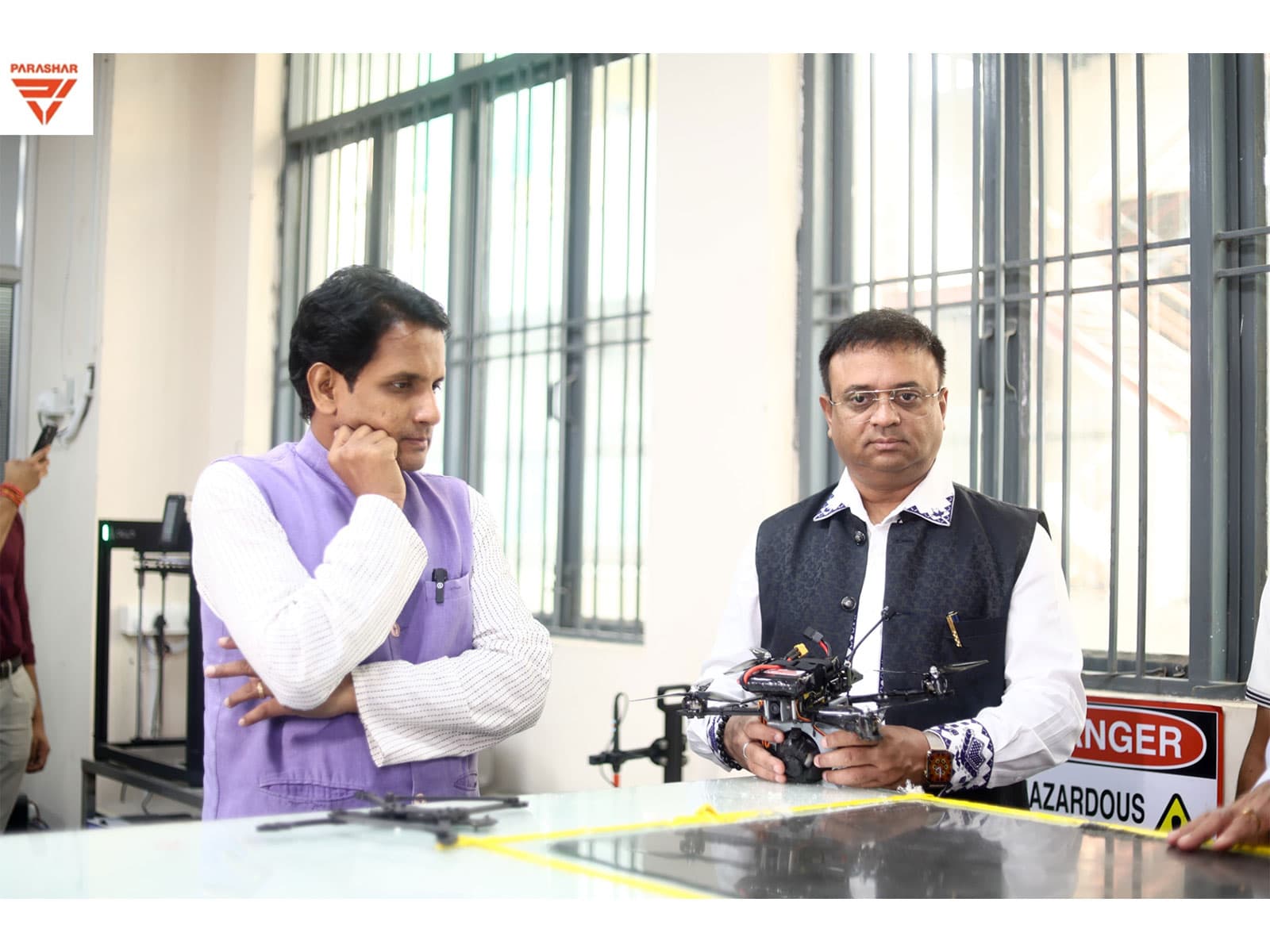
The Quiet Coup: Why the Visit to Parashar Defence Isn't About MSMEs, It's About Strategic Debt
Tuhin A. Sinha's inspection of Parashar Future Defence Technologies signals a critical shift in India's defense industrial base, moving beyond mere 'Make in India' rhetoric.
