The Secret Cost of ESA's Space Data Deluge: Who Really Owns the Universe's Secrets?

Five years of ultra-fast data download speeds from space sound like a win, but the real story behind ESA's bandwidth boom is about control, not just science.
Key Takeaways
- •ESA has successfully increased data download speeds from space missions significantly over five years.
- •The true challenge has shifted from acquiring data to the massive computational power needed to analyze it.
- •Centralized data handling creates new bottlenecks and potential single points of failure.
- •The achievement favors large, state-backed institutions over independent researchers in data analysis.
The Hook: A Quiet Revolution in Bandwidth, A Loud Silence on Control
The European Space Agency (ESA) is celebrating five years of achieving blistering download speeds for its space-based science missions. We’re talking terabytes streaming back from orbit, a testament to engineering prowess. But while the headlines cheer space data transfer rates, the unspoken truth is stark: this flood of information creates a new choke point. The critical question isn't *can* we get the data; it's *who* can process it, *who* sets the standards, and ultimately, *who* controls the narrative derived from the cosmos?
The focus on raw speed—the ability to rapidly pull down petabytes from missions like Gaia or Sentinel—is a massive technological victory. It promises faster scientific breakthroughs in fields ranging from astrophysics to Earth observation. This acceleration in space science capabilities is undeniable. However, this success is predicated on massive, centralized infrastructure. This isn't decentralized, open-source enlightenment; it’s a highly structured pipeline managed by a few powerful entities.
The 'Why It Matters': Centralization is the New Bottleneck
The real winner here isn't necessarily the individual academic researcher; it’s the entities capable of ingesting, storing, and applying machine learning to these colossal datasets. We are witnessing the creation of the ultimate data moat. While ESA facilitates the transfer, the ability to derive actionable intelligence from this sheer volume of raw telemetry—the true currency of modern space exploration—is concentrated. Think about the implications for climate modeling or geopolitical intelligence derived from high-resolution satellite imagery. Speed is great, but access to the computational muscle required to make that speed useful is the real gatekeeper.
This dependency introduces a subtle but profound risk. If the infrastructure that handles this high-volume data transfer becomes a single point of failure—whether through cyber-attack or political pressure—the entire European scientific output grinds to a halt. We are trading the slow, steady drip of limited data for a firehose that requires equally massive, centralized storage farms and processing clusters to manage. This centralization subtly shifts power away from pure discovery towards data management and security.
Contrarian View: The Bureaucratic Burden of Big Data
Many herald this as democratizing science. I argue the opposite. Managing this data volume requires specialized teams, massive government funding, and adherence to rigid protocols. For the small, nimble startup or the independent researcher, the barrier to entry hasn't lowered; it's just moved from 'getting the data' to 'affording the processing power.' The ESA’s achievement is a triumph of state-backed engineering, but it inadvertently creates a dependency on that state apparatus for downstream analysis. The speed is impressive, but the overhead is crippling for anyone outside the established ecosystem. We are building a Ferrari that only authorized mechanics can service.
What Happens Next? The Prediction
Within the next three years, the primary challenge for ESA will pivot entirely from maximizing download speed to managing data sovereignty and accessibility. We will see a significant political push, likely driven by non-EU actors (like China or the US private sector), to establish parallel, high-speed data relay systems that bypass ESA infrastructure for certain commercial applications. This will force ESA to either open its processing architecture significantly, risking proprietary information, or face accusations of creating an information monopoly in European space science. Expect a major policy debate regarding the 'right to process' data generated by publicly funded missions.
Key Takeaways (TL;DR)
- Speed vs. Access: Achieving fast download speeds masks the growing centralization of data processing power.
- New Gatekeepers: The real winners are those who can afford the computational infrastructure to analyze the massive datasets.
- Geopolitical Risk: Over-reliance on centralized data pipelines creates a single, high-value target for cyber threats.
- Future Friction: Expect political battles over data sovereignty as commercial entities seek alternatives to ESA's data pipeline.
Frequently Asked Questions
What is the main benefit of ESA's fast download speeds?
The primary benefit is drastically reduced latency, allowing scientists to access raw data from missions like Earth observation satellites and deep space probes much faster, accelerating research cycles.
Why is data processing capacity a bigger issue than download speed?
While data can be downloaded quickly, the volume (petabytes) requires immense, expensive, and specialized computational resources (like supercomputers and AI frameworks) to extract meaningful scientific insights, creating a new barrier to entry.
How does this relate to data sovereignty?
Data sovereignty concerns arise because the infrastructure managing the high-speed transfer and initial storage is controlled by specific governmental or intergovernmental bodies (like ESA), raising questions about who ultimately has jurisdiction over the derived scientific knowledge.
Related News

The Hidden War: Why Gutting Science Funding Is The Ultimate Political Weapon (And Who's Really Winning)
The failed attempts to slash US science funding reveal a deeper ideological battle over American innovation and global dominance.
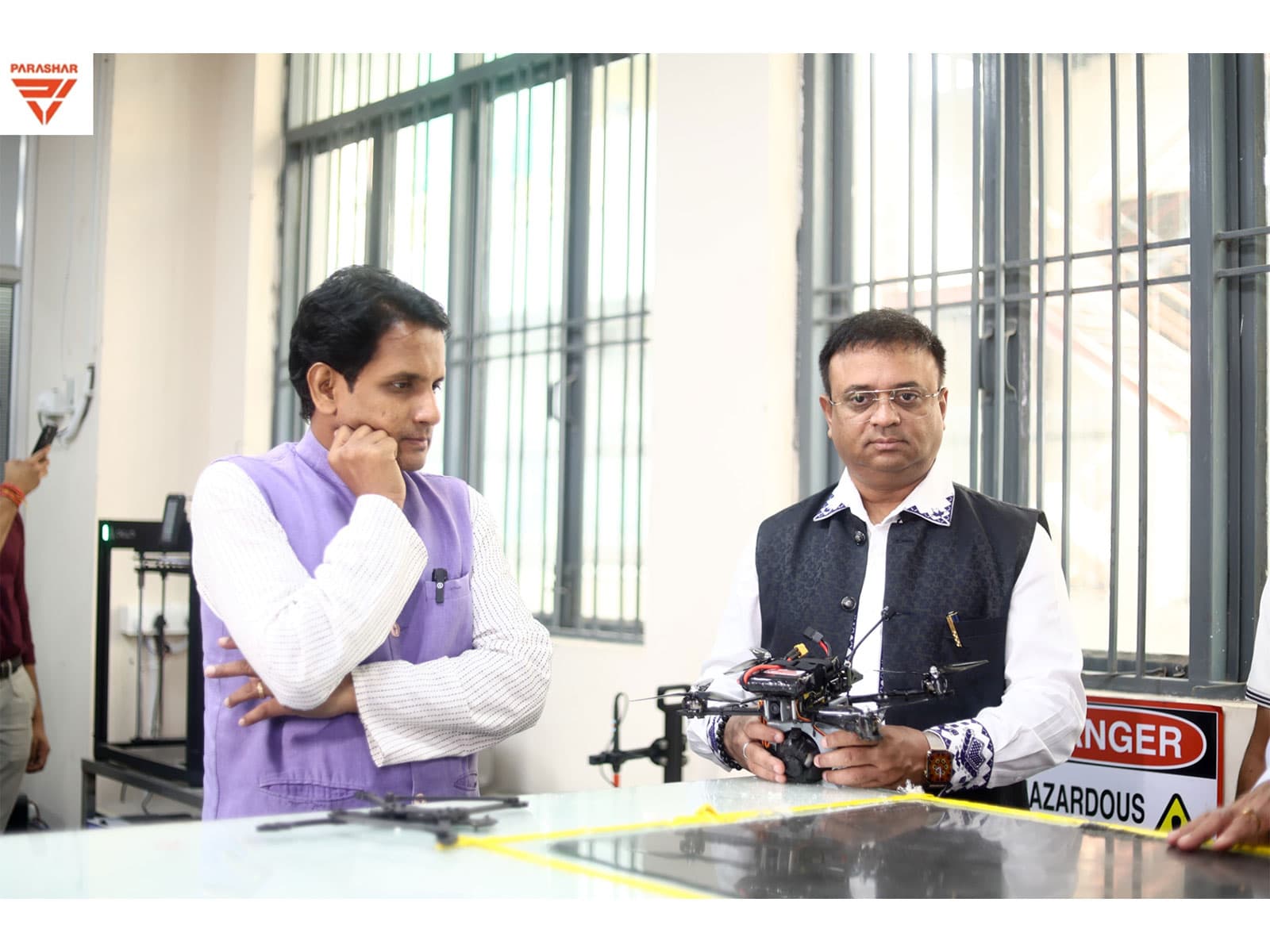
The Quiet Coup: Why the Visit to Parashar Defence Isn't About MSMEs, It's About Strategic Debt
Tuhin A. Sinha's inspection of Parashar Future Defence Technologies signals a critical shift in India's defense industrial base, moving beyond mere 'Make in India' rhetoric.

Bolivia Just Sold Its Lithium Soul: The Hidden Scramble for Global Battery Dominance
Bolivia's new lithium policy pivot isn't about national interest—it's about which foreign power wins the next clean energy war.
