The US-China Science 'Race' Is a Lie: Here's Who's Actually Losing the Innovation War
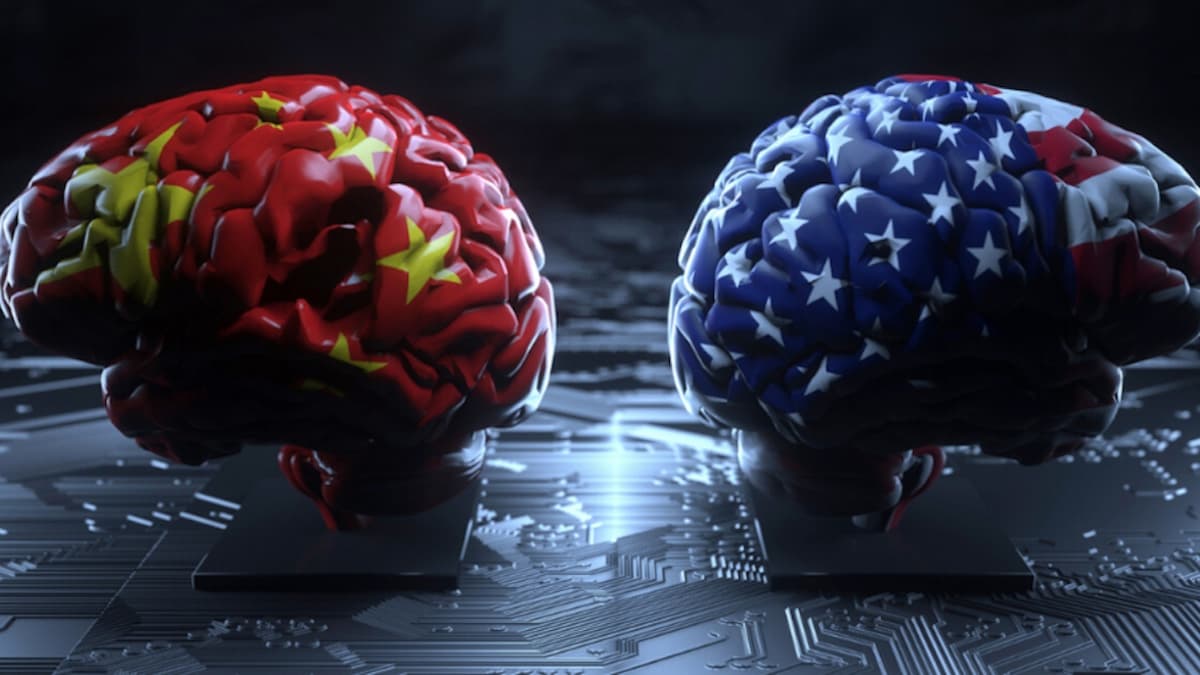
Forget the hype. The real story behind the US-China science race isn't about who publishes more papers, but who controls the foundational technology stack.
Key Takeaways
- •The focus on publication volume masks the real battle for control over foundational technology manufacturing.
- •The decoupling strategy is the most aggressive US industrial policy in decades, aiming for supply chain control.
- •The largest loser is the open global scientific community, facing knowledge fragmentation and duplication.
- •Expect two incompatible technological stacks to emerge globally within five years.
Everyone is talking about the US-China science competition. We read endless reports about patent filings, university collaborations dissolving, and escalating export controls on advanced semiconductors. The narrative is simple: two titans locked in a zero-sum battle for technological supremacy, a modern Sputnik moment played out in labs and cleanrooms. But this framing is fundamentally flawed. It’s not a race; it’s a carefully managed, mutually beneficial decoupling that benefits a third, unseen party.
The Unspoken Truth: It’s Not About Papers, It’s About Power
The obsession with raw output—the sheer volume of published scientific research—is a distraction. China has demonstrably surpassed the US in sheer publication volume in many fields. So, if volume wins, Beijing should be declaring victory. They aren't. Why? Because the quality metrics, the true levers of power—patents that translate into commercial monopolies, control over fundamental physics breakthroughs, and the ability to manufacture cutting-edge hardware—still heavily favor the established Western ecosystem.
The real fight isn't for bragging rights in Nature; it’s for control over the global technology supply chain. When the US restricts access to advanced lithography equipment, they aren't trying to slow down Chinese PhDs; they are trying to freeze the ability of Chinese firms to transition basic science into next-generation military or AI capabilities. This isn't a sprint; it's a strategic chokehold.
The Real Loser: The Open Scientific Community
Who truly loses when the world's two largest economies erect walls around their knowledge bases? The global scientific community. The greatest breakthroughs—from the discovery of DNA structure to the development of the internet—were fueled by open exchange. Now, we are witnessing the fragmentation of knowledge into two distinct, non-communicating spheres. This bifurcation forces researchers worldwide to choose sides, duplicating efforts and slowing down the pace of discovery that benefits humanity universally. The 'race' narrative conveniently masks the massive inefficiency this dual system creates.
Deep Analysis: Decoupling is the New Industrial Policy
The US strategy, often framed defensively, is actually the most aggressive industrial policy seen since the post-WWII era. By weaponizing export controls and scrutinizing foreign investment, Washington is forcing domestic industry to 're-shore' critical capabilities. This artificially inflates the cost and timeline for certain technologies, but it guarantees domestic control over the foundational layer of future economies—quantum computing, advanced materials, and biotech.
Conversely, China’s response is less about matching US output and more about achieving 'invincibility' through self-sufficiency. They are pouring state capital into building domestic champions in every bottleneck area. This is a multi-decade commitment, recognizing that true autonomy requires replacing the entire supply chain, not just cherry-picking a few patents. This is a test of national stamina, not just scientific brilliance.
What Happens Next? The Age of 'Bifurcated Innovation'
My prediction is that within five years, we will see two distinct, largely incompatible technological stacks emerge. One centered around US/Western standards (e.g., advanced microchips, specific AI architectures) and another around Chinese standards. Trade won’t stop, but data flow and hardware compatibility will become increasingly difficult. Companies operating globally will face an impossible choice: build two separate R&D pipelines or focus solely on one sphere of influence. The era of seamless global R&D collaboration is over. We are entering the Age of Bifurcated Innovation, where 'compatibility' becomes a geopolitical weapon.
The ultimate winner won't be the nation that publishes the most papers, but the one whose ecosystem proves most adaptable and resilient when the other side inevitably pulls the plug on a key component. For now, the only certainty is that the cost of scientific research and development is about to skyrocket for everyone.
Frequently Asked Questions
What is the primary metric for success in the US-China science competition?
While publication volume is high-profile, the true metrics are control over critical manufacturing technology (like advanced semiconductors) and the ability to translate basic research into globally dominant commercial products.
How does the current tension impact smaller nations?
Smaller nations are increasingly forced to choose between the US-aligned technology ecosystem and the China-aligned one, leading to difficult trade-offs in infrastructure and digital sovereignty.
Is the 'race' truly adversarial, or is there still cooperation?
Cooperation is rapidly diminishing, especially in sensitive fields like AI and quantum physics. The current trend is strategic decoupling, where collaboration is replaced by competitive duplication.
What is the main danger of bifurcated innovation?
The main danger is inefficiency. Duplicating research efforts across two major spheres significantly slows down the overall pace of global scientific progress and increases R&D costs.
Related News

Davos Unmasked: The Secret War for AI Supremacy Hiding Behind Tariffs and Taiwan Talk
The US-China tech standoff isn't about trade deficits; it's a desperate race for **AI dominance**. We break down the real stakes.

Thucydides' Tech Warning: Why AI Doesn't Change Human Nature (And Who Really Loses in the Next Conflict)
Forget the hype. Thucydides' lessons on power, fear, and human nature are the definitive guide to understanding modern **military technology** and **geopolitical strategy**.

Rajasthan's Tech Push: The Hidden Cost of CM Sharma's Digital Mirage
Is Rajasthan truly leading in digital transformation, or is CM Sharma's tech push masking deeper structural flaws in state investment and digital access?
