The Snowflake Lie: Why Your Perfect Crystal Isn't Science—It’s a Billion-Dollar Illusion
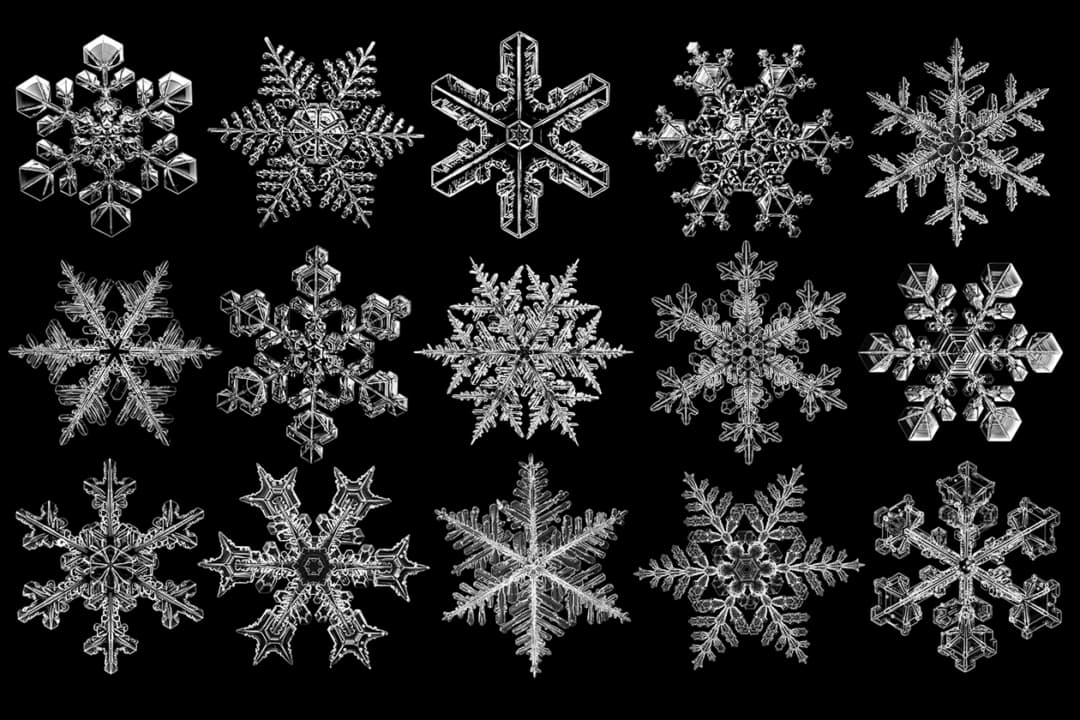
Forget the enchanting beauty. The true science of snowflakes reveals a massive industrial and environmental blind spot.
Key Takeaways
- •Industrial aerosols significantly alter natural snowflake morphology, undermining the myth of perfect uniqueness.
- •Snow crystal analysis is a critical, overlooked tool for tracking historical industrial pollution.
- •The ski industry's reliance on snowmaking creates an energy-intensive feedback loop exacerbating climate issues.
- •Future 'natural' snow quality will likely depend on advanced, engineered atmospheric seeding technologies.
We are fed a beautiful lie. Every holiday card, every slow-motion nature documentary, promises the same comforting narrative: every snowflake is unique. This saccharine sentimentality about snow science masks a far more complex, and frankly, more troubling reality concerning atmospheric physics and climate modeling. The real story of crystal formation isn't about whimsy; it's about industrial aerosol contamination and the engineering challenges of reliable precipitation.
The Myth of Perfect Uniqueness
The standard textbook explanation for ice crystal structure is elegant: a water molecule freezes around a nucleus (a dust particle, pollen, or bacteria), and as it tumbles through varying temperatures and humidity levels in a cloud, its six arms grow in a complex, asymmetrical dance. This leads to the famous conclusion: no two are alike. But here is the unspoken truth: in a heavily polluted troposphere, the 'nucleus' is rarely pristine. It's often a soot particle, a sulfate aerosol, or even industrial effluent.
When the atmosphere is saturated with these anthropogenic nuclei, the growth process is accelerated and often truncated. We are seeing fewer of the classic, complex stellar dendrites and more simple hexagonal plates or columns. The 'uniqueness' is being homogenized by our own emissions. The beauty we celebrate is increasingly an artifact of contamination, not pure nature. Who wins? The atmospheric chemists who can now trace pollution plumes back to specific industrial zones based on crystal morphology. Who loses? The romantic idealists, and perhaps, the farmers betting on reliable snowfall.
Deep Analysis: Snowfall as an Economic Indicator
The study of snow science transcends meteorology; it is a critical economic bellwether. Consider the global ski industry, a multi-billion dollar behemoth reliant on consistent, high-quality powder. When natural snow quality degrades due to warmer temperatures or poor crystal formation mechanics—a direct consequence of altered cloud seeding potential and aerosol loading—the industry pivots hard toward energy-intensive snowmaking. This creates a feedback loop: reduced natural quality demands more artificial snow, increasing energy demands, which exacerbates the very climate conditions hindering natural snow.
Furthermore, the data on crystal symmetry is increasingly used by climate modelers. Deviations from expected symmetry patterns in deep ice cores or high-altitude samples offer a surprisingly direct, physical record of historical pollution spikes. The flake isn't just a pretty object; it’s a microscopic historical ledger written in ice, damning the industrial age. For more on the complexities of ice physics, see the foundational work on crystallography [Wikipedia on Crystallography].
What Happens Next? The Prediction
The next decade will see the complete industrialization of artificial snow optimization. We are moving beyond simple cloud seeding (injecting silver iodide) to 'smart' seeding using genetically engineered biological nuclei—bacteria designed to promote rapid, specific ice nucleation at higher, warmer altitudes. This is the contrarian prediction: the future of 'natural' looking snow will rely entirely on advanced synthetic biology and atmospheric engineering, not chance. We will engineer the uniqueness back into the flakes, creating a manufactured authenticity. This will spark massive regulatory battles over atmospheric manipulation, pitting agricultural interests against energy producers. The fight over who controls the sky’s precipitation will become the next great geopolitical flashpoint, eclipsing debates over water rights.
The illusion of nature's perfect randomness is collapsing under the weight of human intervention. We are not just observing snow; we are becoming its primary architect, often by accident, increasingly by design. See how global weather patterns are shifting according to recent climate reports [Reuters on Climate Science].
Frequently Asked Questions
Why do scientists say every snowflake is unique?
The statement is largely romanticized. While theoretically possible due to the near-infinite combinations of atmospheric conditions, in areas saturated with industrial aerosols, the nucleation process is often rushed or biased, leading to less complex and more similar crystal structures.
What is the role of aerosols in snowflake formation?
Aerosols (like dust, soot, or sulfates) act as ice nuclei (IN) around which water vapor condenses and freezes. The composition and concentration of these nuclei heavily influence the speed and final shape of the growing ice crystal.
Is cloud seeding the same as engineering snowflake uniqueness?
No. Traditional cloud seeding introduces nucleating agents (like silver iodide) to increase precipitation yield. Future engineering aims to precisely control the *structure* of the resulting ice by using tailored biological or synthetic nuclei, which is a far more advanced form of atmospheric manipulation.
How does snowflake analysis relate to economic impact?
The quality and type of natural snow directly affect industries like skiing and agriculture. Poor quality crystals can signal warmer cloud tops or altered atmospheric chemistry, forcing reliance on costly, energy-intensive artificial snowmaking.
Related News

The Exercise Lie: Why Your Daily Workout Is Failing You (And Who Benefits From The Confusion)
The latest science on fitness debunks decades of dogma. Discover the hidden agendas behind modern 'wellness' and the true path to longevity.

The Invisible Power Brokers: Why Biostatisticians, Not Doctors, Are Secretly Running Modern Medicine
The hidden truth about medical research isn't the drug, it's the math. Unmasking the biostatisticians driving clinical trial outcomes.

The 70% Cancer Survival Myth: Who Really Profits From This 'Milestone'?
The US celebrates 70% cancer survival, but this headline masks a brutal truth about access, cost, and the 'forgotten' diagnoses.
