The New Year's Resolution Lie: Why Sport Psychology Proves Your Goals Are Programmed to Fail
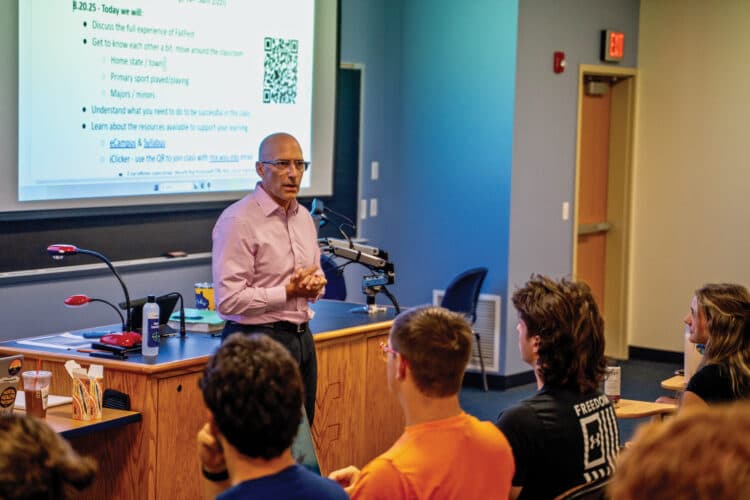
The science of habit formation isn't about willpower; it's about systemic failure. Discover the real psychological reason your 2024 resolutions are dead by February.
Key Takeaways
- •Willpower is a finite resource; sustainable change relies on automating behavior through 'If-Then' implementation intentions.
- •Most resolutions fail because they focus on outcome goals rather than establishing unbreakable process goals.
- •The self-improvement industry profits from the predictable failure of motivation-based goal setting.
- •The future of habit formation is 'Environmental Hacking'—making the right choice the path of least resistance.
The Hook: Willpower is a Myth, and Your Resolutions Prove It
Every January, we engage in the same collective delusion: that sheer force of will can rewrite months of ingrained behavior. We hear experts, like the sports psychology voices emerging from institutions such as West Virginia University, offer 'scientific' tips for sticking to our goals. But here’s the unspoken truth: If willpower were the solution, we wouldn't need an entire industry dedicated to explaining why we fail by Groundhog Day. **The real science isn't about effort; it's about system design, and most of us are designing for collapse.**
The standard advice—set SMART goals, visualize success, find an accountability partner—is surface-level noise. It ignores the deeper neurological reality of habit loops. We are not failing because we are weak; we are failing because our current environments and goal structures are fundamentally incompatible with the brain's drive for efficiency. This isn't a personal failing; it's a predictable outcome of flawed behavioral engineering. When you focus solely on the 'what' (lose 20 pounds) instead of the 'how' (implementing trigger-and-reward cycles), you’ve already lost the battle against your own neurochemistry.
The Meat: Why 'Motivation' is the Enemy of Mastery
Sport psychology experts often emphasize the transition from outcome goals (winning the race) to process goals (maintaining a specific heart rate during training). This is crucial, but its application to general life resolutions is often watered down. The real insight is that motivation is a fickle resource, a finite fuel tank that burns brightest at the start. The successful athlete—and the successful resolution-keeper—doesn't rely on motivation; they rely on **automaticity**.
Consider the concept of 'implementation intentions,' a cornerstone of behavioral science. It’s not enough to say, 'I will go to the gym.' The high-performer structures an 'If-Then' plan: 'IF it is 6:00 AM on Monday, THEN I will put on my running shoes immediately.' This pre-commitment bypasses the conscious decision-making center (the prefrontal cortex), which is easily fatigued, and moves the action to the basal ganglia—the brain's autopilot system. Most people skip this critical step, leaving their success hostage to a mood swing.
The Why It Matters: The Corporate Wellness Industrial Complex
Who truly wins when millions fail their resolutions? The self-help industry, the gym chains that bank on January sign-ups, and the corporate wellness programs promising better employee outcomes. These systems profit from the *symptom* (the failure to change) rather than fixing the *cause* (poor habit scaffolding). They sell temporary motivation because sustainable change doesn't generate recurring revenue. We are being sold motivation when we desperately need robust systems engineering. This pattern mirrors larger economic trends where quick, visible fixes are favored over slow, structural reform—a phenomenon visible in everything from political cycles to infrastructure maintenance.
What Happens Next? The Prediction
The next wave of self-improvement won't be about tracking steps or counting calories; it will be about **'Environmental Hacking.'** We will see a radical shift toward technology and physical space designed to make the desired behavior the path of least resistance. Forget willpower apps; expect personalized, AI-driven scheduling that physically locks you into micro-commitments. Expect smart homes that automatically adjust lighting and temperature to align with your stated sleep goals. The future of habit success lies in making deviation so inconvenient that the desired action becomes the default. Those who master environmental control, not internal discipline, will be the only ones who actually keep their promises.
Gallery



Frequently Asked Questions
What is the single biggest mistake people make when setting New Year's resolutions?
The biggest mistake is focusing too heavily on the desired outcome (e.g., 'I want to lose 30 pounds') rather than defining the precise, immediate, and repeatable daily actions required to achieve it (the process goal). This leaves execution dependent on motivation, which inevitably fades.
How does 'implementation intention' work according to behavioral psychology?
Implementation intention is an 'If-Then' statement that pre-decides your action based on a specific cue. For example: 'IF I finish my dinner, THEN I will immediately put my running shoes by the door.' This bypasses conscious deliberation and automates the response.
Are New Year's resolutions inherently flawed?
They are flawed when approached as an act of sudden, massive willpower. They are highly effective when broken down into tiny, non-negotiable daily micro-habits that require minimal conscious energy and are tied to environmental triggers.
What high-authority sources confirm the limits of willpower?
Research on ego depletion, pioneered by psychologists like Roy Baumeister, suggests that self-control draws from a limited pool of mental energy that can be temporarily exhausted. For further reading on decision fatigue, consult studies published in journals like the Journal of Personality and Social Psychology.

DailyWorld Editorial
AI-Assisted, Human-Reviewed
Reviewed By
DailyWorld Editorial