The Longevity Lie: Why Brazil's 110-Year-Olds Reveal a Darker Truth About Aging Science

Forget the tropical paradise myth. The explosion of centenarians in Brazil hides a critical, undiscussed factor in human longevity research.
Key Takeaways
- •The focus on Brazilian centenarians may be masking severe data selection bias rather than revealing universal genetic secrets.
- •Strong social capital and community support might be the most powerful, yet least funded, factor in extreme human longevity.
- •The pursuit of 110+ distracts from addressing the quality-of-life issues facing the broader aging population (75-95).
- •Future research is predicted to heavily pivot toward socio-environmental factors over purely genetic ones.
The headlines scream about miracles: Brazilians defying the odds, reaching 110 and beyond. Scientists are scrambling to decode the genetics, the diet, the mysterious local water source. But while they chase the fountain of youth in the Amazonian soil, they are missing the elephant in the room. This isn't just about biology; it’s about demographics, data integrity, and who controls the narrative of human longevity.
The Unspoken Truth: Selection Bias, Not Supergenes
When you look at a cluster of exceptional supercentenarians in a specific region, the immediate assumption is a unique environmental factor or a rare genetic jackpot. That's the easy story. The contrarian analysis suggests something far less romantic: robust data selection bias.
In rapidly developing nations like Brazil, where infrastructure and record-keeping have historically lagged, the baseline population data is inherently messy. Who gets counted? Who gets *re-counted*? The individuals who survive to 100+ in areas with poor documentation are often those whose local communities fiercely protect and celebrate them. They become localized legends, incentivizing hyper-vigilance in record verification for that specific cohort, while the 'average' 85-year-old might have less rigorous documentation.
The real winners here aren't the genes; it's the local community structures that act as hyper-efficient, unofficial verification agencies. The scientists seeking universal truths about aging research might be studying a highly localized, socially reinforced anomaly, not a reproducible blueprint for the masses.
The Economic Mirage of Extreme Longevity
Why does this matter on a grand scale? Because the promise of radical life extension drives billions in investment—from biotech startups to pharmaceutical giants. If the secret to 110 is simply having a tight-knit, multigenerational family structure in a specific micro-climate, then the entire multi-billion dollar industry built around synthetic longevity interventions is fundamentally misplaced.
The current narrative pushes the idea that science will *solve* aging. This Brazilian data, if purely social/environmental, implies that the most effective anti-aging strategy remains the one that predates modern medicine: strong social capital and a supportive ecosystem. This undercuts the venture capital narrative that demands a technological 'fix.'
Furthermore, consider the strain. While we romanticize the centenarian, the reality of an aging population without corresponding economic growth creates fiscal nightmares. The focus on 110+ distracts from the more pressing public health crisis: ensuring the quality of life for the 75-95 demographic. (For context on global demographic shifts, see reports from the Reuters archives on global aging trends).
What Happens Next? The Data War
Expect a fierce internal battle within the gerontology community. The scientists who have staked careers on genetic markers will fight to prove their findings are universal. However, the real shift will come when large-scale sociological studies begin to correlate documented extreme longevity not just with blood markers, but with wealth distribution, social support density, and localized political stability. I predict that within five years, the most cited papers on this phenomenon will pivot away from pure DNA sequencing and heavily emphasize socio-environmental factors, effectively de-glamorizing the 'miracle gene' hypothesis.
The future of longevity won't be found in a pill; it will be found in a properly funded, socially integrated community. The Brazilian data is the first major crack in the techno-solutionist facade of immortality.
Frequently Asked Questions
What is the primary scientific focus regarding Brazilian centenarians?
Scientists are primarily investigating genetic markers, unique dietary habits, and specific environmental factors within Brazil that might contribute to this unusual concentration of people living past 110 years old.
What is data selection bias in this context?
It refers to the possibility that records for the very old in areas with developing infrastructure are more rigorously maintained (or selectively celebrated) than for the general population, leading to an overrepresentation of survivors in the studied cohort.
Are these findings relevant to mainstream anti-aging research?
If the findings are primarily rooted in social structure rather than biology, they suggest that current pharmaceutical and genetic research paths may be missing the most effective, albeit non-patentable, longevity boosters.
What is the 'unspoken truth' regarding these long lives?
The unspoken truth is that tight-knit community support and local cultural reinforcement may be a more significant factor in reaching extreme old age than isolated genetic mutations.
Related News
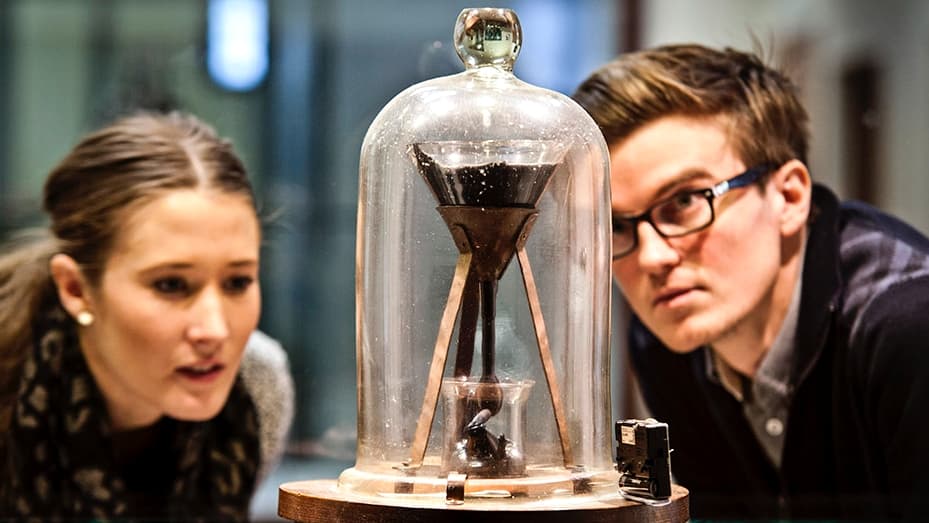
The 98-Year-Old Sticky Mess: Why Academia’s Longest Experiment Is a Monument to Obsolescence (And Who's Paying for It)
The world's longest-running lab experiment, the Pitch Drop, is nearing a century. But this slow science hides a dark secret about funding and relevance.

NASA’s February Sky Guide Is a Distraction: The Real Space Race is Happening in the Shadows
Forget Jupiter alignments. NASA’s February 2026 skywatching tips mask a deeper shift in space dominance and technological focus.

The Hidden Cost of 'Planned' Discovery: Why Science is Killing Serendipity (And Who Benefits)
Is modern, metric-driven science sacrificing accidental breakthroughs? The death of **scientific serendipity** impacts innovation and funding strategy.

DailyWorld Editorial
AI-Assisted, Human-Reviewed
Reviewed By
DailyWorld Editorial