The Hidden Cost of 'Planned' Discovery: Why Science is Killing Serendipity (And Who Benefits)

Is modern, metric-driven science sacrificing accidental breakthroughs? The death of **scientific serendipity** impacts innovation and funding strategy.
Key Takeaways
- •Modern research funding prioritizes measurable deliverables, actively penalizing the inefficient nature of true serendipity.
- •The pressure for immediate impact starves blue-sky research, the historical source of radical breakthroughs.
- •The system currently benefits administrators and large institutions focused on predictable outcomes.
- •The next major scientific revolution may originate outside established, metric-driven academic structures.
The Cult of the Predictable: Why Science Can No Longer Afford Happy Accidents
We fetishize the story of penicillin, the accidental crystallization, the unexpected result. But in the relentless pursuit of measurable KPIs and grant compliance, **scientific serendipity** is being systematically engineered out of the laboratory. The modern research environment, obsessed with 'deliverables' and 'impact factors,' actively punishes the deviation required for true discovery. This isn't just a nostalgic lament; it’s a critical threat to radical innovation in science funding.
The unspoken truth is this: **Serendipity is inefficient.** And inefficiency is the cardinal sin of the modern research complex. Grant applications demand linear progression. Peer review rewards incremental validation, not wild tangents. Researchers, under immense pressure to publish or perish, cannot afford the time sink of chasing a result that doesn't fit the hypothesis. The system is optimized for optimization, not revolution. The winners here are the administrators and the funding bodies who can easily categorize and justify expenditure based on pre-approved roadmaps. The losers are the next Einstein or Fleming, whose bizarre, promising side-experiment gets shelved because the budget review demands adherence to the original scope.

The Metric Trap: When Funding Kills Genius
The shift toward 'translational research' and 'immediate societal benefit' has been devastating. Funding agencies, often guided by political winds rather than pure curiosity, prioritize projects with clear commercial pathways. This leaves fundamental, blue-sky research—the breeding ground for true, game-changing **scientific serendipity**—starved for resources. Consider the history of the transistor or even the discovery of cosmic microwave background radiation; both required significant, seemingly aimless exploration. Today, such exploration is deemed fiscally irresponsible. We are sacrificing the 100-year breakthrough for the 2-year incremental paper.
Furthermore, the rise of massive, highly specialized collaborations, while excellent for complex problem-solving, reduces the individual scientist's autonomy. When every step is logged, validated, and shared across dozens of PIs, the quiet, personal moment of realization—the core of serendipity—is drowned out by bureaucratic process. It’s a move from the lone genius in the attic to the committee in the boardroom.
What Happens Next? The Prediction
If this trend continues, we predict a two-tiered scientific ecosystem. Tier one will be the hyper-funded, predictable, applied research arms of Big Pharma and government labs, producing steady, incremental advances (better drugs, faster microchips). Tier two will be the desperate, underfunded, independent academics and hobbyist inventors—the only ones left with the freedom to fail spectacularly. The next genuine, world-altering paradigm shift will almost certainly come not from a major university grant, but from an outsider operating completely outside the established **science funding** matrix, precisely because they are not constrained by the need to justify the accident.
To survive, established research must actively carve out 'sanctuaries'—areas of research explicitly protected from performance metrics, dedicated solely to the pursuit of the unknown. If they don't, the next great discovery will be made by someone who doesn't know the rules, and they won't be sharing the patent.
Gallery



Frequently Asked Questions
What is the core problem with modern science funding?
The core problem is the obsession with Key Performance Indicators (KPIs) and measurable, short-term impact, which discourages the aimless exploration necessary for accidental, revolutionary discoveries.
How does the pressure to publish affect serendipity?
Researchers avoid pursuing unexpected results that do not fit their grant proposal or hypothesis, fearing negative evaluations or funding cuts if they deviate from the planned path.
What is 'translational research' and how does it relate to this issue?
Translational research focuses on quickly converting basic scientific findings into practical applications. While valuable, an overemphasis on it crowds out fundamental, curiosity-driven research where true, unexpected breakthroughs often originate.
Can serendipity be taught or planned?
While preparation (being prepared to notice the unexpected) is key, true, paradigm-shifting serendipity cannot be strictly planned; it requires freedom from rigid metrics and the tolerance for failure.
Related News
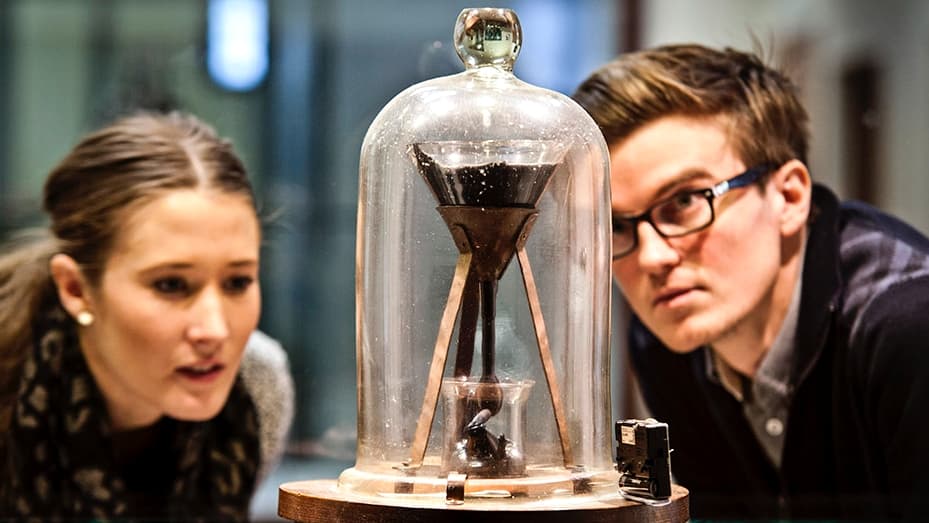
The 98-Year-Old Sticky Mess: Why Academia’s Longest Experiment Is a Monument to Obsolescence (And Who's Paying for It)
The world's longest-running lab experiment, the Pitch Drop, is nearing a century. But this slow science hides a dark secret about funding and relevance.

NASA’s February Sky Guide Is a Distraction: The Real Space Race is Happening in the Shadows
Forget Jupiter alignments. NASA’s February 2026 skywatching tips mask a deeper shift in space dominance and technological focus.

The Testosterone Trap: Why Big Pharma Is Selling Middle-Aged Men a Dangerous Myth
Are men being misled over testosterone replacement therapy (TRT)? The science suggests a billion-dollar industry is preying on natural aging.

DailyWorld Editorial
AI-Assisted, Human-Reviewed
Reviewed By
DailyWorld Editorial