The Hidden Cost of T. Rex Miniatures: Why 'Tiny Dinosaurs' Signal a Crisis in Paleontology Funding

Forget the interstellar news. The real story in science this year is the obsession with the 'tiny T. rex,' revealing deeper institutional decay.
Key Takeaways
- •The celebration of 'tiny T. rex' discoveries signals a lack of funding for large-scale, paradigm-shifting research.
- •Science reporting is increasingly driven by the attention economy, prioritizing easily digestible content over complex, necessary research.
- •A 'Great Scientific Consolidation' is predicted, where pure research retreats as funding favors applied or immediately marketable findings.
- •The hidden agenda is the commodification of discovery, masking deeper institutional stagnation.
The year-end science roundups are predictably saccharine: a little bit of space dust, a cute baby dinosaur, a breakthrough in gene editing. But strip away the popular science gloss, and what you find is a narrative of desperation. This year, the crowning jewel of paleontology wasn't a paradigm shift; it was the discovery of a surprisingly small Tyrannosaurus relative. **Why is the scientific community celebrating a miniature version of a creature we already know?**
The Unspoken Truth: A Distraction from Scarcity
The fervor surrounding the 'tiny T. rex'—a creature so small it barely warrants a footnote in a robust evolutionary timeline—is the loudest signal of funding malaise in the field. When major discoveries in cosmology or deep-sea biology dry up due to budget cuts, paleontologists are forced to mine existing fossil beds for marginalia. The unspoken truth is this: **Big, transformative discoveries require massive, multi-year expeditions and high-tech analysis—the kind of funding that is increasingly scarce.**
Instead, we get easily digestible, marketable fossils that fit neatly into a 30-second news clip. This isn't just about dinosaurs; it’s the entire research ecosystem shifting from fundamental inquiry to generating viral, low-cost content. Who wins? The media outlets that need clicks, and the small specialized labs that can afford to publish incremental findings. Who loses? The public, which gets a skewed view of scientific progress, believing we are on the cusp of revolution when we are actually counting pebbles.
Consider the interstellar visitors mentioned in passing—the 'Oumuamua-like objects. While fascinating, the follow-up investigation funding remains precarious. The scientific establishment is essentially feeding the public a diet of evolutionary nostalgia because it’s cheaper than funding the next generation of particle accelerators or deep-space telescopes. This reliance on 'cute' science stifles the truly risky, high-reward research necessary for genuine leaps forward.
Deep Analysis: The Commodification of Discovery
The narrative arc of modern science reporting is now dictated by the attention economy. A new species of bacteria is invisible; a miniature predator that vaguely resembles the King of the Tyrant Lizards is gold. This intellectual path dependency—where research funding flows toward topics proven to generate immediate public engagement—creates a dangerous feedback loop. We are prioritizing **science communication** over pure, unadulterated **scientific discovery**.
The economic reality is harsh. Government and private funding bodies are risk-averse. They want guaranteed returns on investment, which often means funding projects that confirm existing hypotheses or yield easily marketable results. The marginalia—the 'tiny T. rex'—becomes the proxy for true innovation. This trend impacts everything from climate modeling to fundamental physics. If the benchmark for success is virality, we are sacrificing depth for breadth, and ultimately, we are slowing down genuine progress. See the broader impact of budget constraints on major research institutions like NASA, which faces constant political wrangling over its priorities [Source: Reuters].
What Happens Next? The Great Scientific Consolidation
My prediction is that this trend accelerates. We will see a **Great Scientific Consolidation** over the next five years. Smaller university departments, unable to compete for grants based on viral appeal, will either merge with larger institutions or pivot entirely toward applied engineering solutions that offer immediate, tangible economic returns. Pure, curiosity-driven research will retreat further into the shadows, funded only by eccentric billionaires or highly specialized, niche foundations.
The public will continue to be fed a diet of easily digestible science news, leading to widespread scientific illiteracy regarding complex, long-term issues. The next truly monumental discovery—the one that rewrites textbooks—will likely be made in a poorly funded, overlooked corner of the academic world, and it might take years before the mainstream media recognizes its true importance because it won't fit the established 'viral science' mold. We are conditioning ourselves to ignore the difficult science.
If you want to understand the state of modern research, stop looking at the headline discoveries and start analyzing what the funding bodies are choosing to ignore. The small stuff tells the biggest story about where the money—and thus, the future—isn't going. This is the hidden story behind every 'fun' science headline this year [Source: Wikipedia on Research Funding].
Gallery

Frequently Asked Questions
Why are scientists celebrating smaller fossil finds?
Larger, more significant fossil finds require substantially more funding, time, and complex logistics. Smaller, incremental discoveries are easier and cheaper to publish, serving as necessary content generators when major funding streams for expansive fieldwork are limited.
What is the 'Great Scientific Consolidation' prediction?
This prediction suggests that underfunded research departments will merge or shift focus entirely toward applied technology to secure stable funding, leading to the marginalization of pure, curiosity-driven scientific inquiry.
How does funding impact the type of science we see in the news?
Funding bodies are risk-averse, favoring research with high public engagement potential. This means science news prioritizes viral-friendly topics (like dinosaurs) over complex, crucial but less flashy areas such as advanced physics or long-term climate modeling.
What is the downside of prioritizing viral science?
The downside is a public that becomes scientifically illiterate regarding complex, long-term challenges because the difficult science is consistently overshadowed by easily digestible, less consequential findings.
Related News
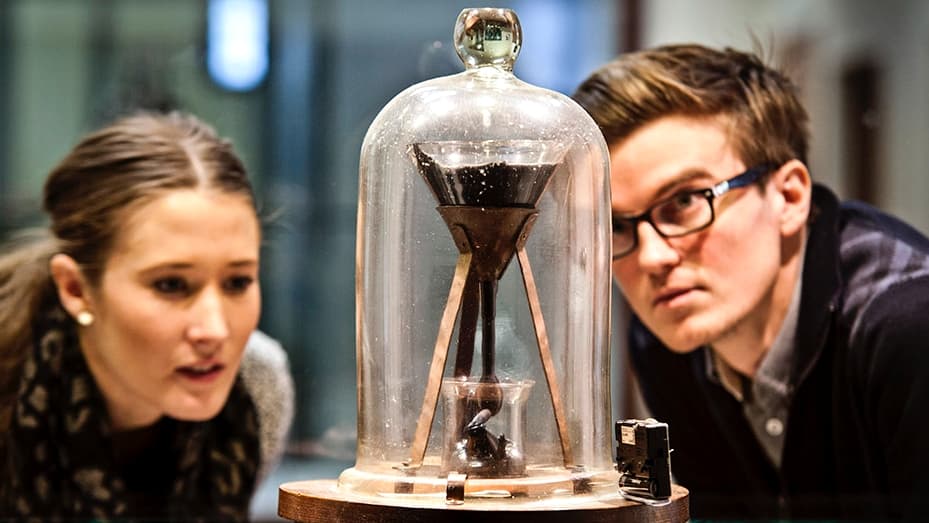
The 98-Year-Old Sticky Mess: Why Academia’s Longest Experiment Is a Monument to Obsolescence (And Who's Paying for It)
The world's longest-running lab experiment, the Pitch Drop, is nearing a century. But this slow science hides a dark secret about funding and relevance.

NASA’s February Sky Guide Is a Distraction: The Real Space Race is Happening in the Shadows
Forget Jupiter alignments. NASA’s February 2026 skywatching tips mask a deeper shift in space dominance and technological focus.

The Hidden Cost of 'Planned' Discovery: Why Science is Killing Serendipity (And Who Benefits)
Is modern, metric-driven science sacrificing accidental breakthroughs? The death of **scientific serendipity** impacts innovation and funding strategy.
