The Hidden Cost of 'Accelerating Science': Who Really Controls the Keys to Disease?

Forget the PR fluff. Unpacking how new scientific tools unlock disease mechanisms reveals a dangerous centralization of power in biotech.
Key Takeaways
- •Modern scientific acceleration relies on prohibitively expensive proprietary technology, centralizing discovery power.
- •The push to 'unlock disease mechanisms' quickly often benefits the instrument manufacturers and IP holders over public health.
- •The future battleground for medical control will be open-source alternatives to proprietary high-throughput research tools.
- •The current trend risks creating a tiered system where only well-funded entities can truly understand emerging health threats.
The narrative pushed by scientific media outlets like SelectScience is always one of unbridled progress: new instruments, faster discoveries, secrets unlocked. But when we examine the core mechanisms of modern medical breakthroughs—specifically how scientists are unlocking disease mechanisms—we must ask a far more critical question: Who owns the shovel digging up these secrets? This isn't just about better microscopes; it's about the infrastructure of medical truth.
The current gold rush in biology centers on high-throughput screening, single-cell sequencing, and complex imaging systems. These tools promise to map diseases like cancer or Alzheimer's down to the molecular level. The promise is democratization of knowledge; the reality, however, is the opposite. These cutting-edge technologies are obscenely expensive, locking their use behind the heavily capitalized doors of major academic institutions or, more frequently, large pharmaceutical corporations.
The Unspoken Truth: Consolidation, Not Liberation
The relentless push to 'accelerate science' is, ironically, leading to intellectual consolidation. When a company develops a proprietary platform capable of mapping the proteome faster than anyone else, they don't just sell data; they sell access to the *process* of discovery. This means that the fundamental understanding of a new disease mechanism becomes tethered to the intellectual property rights and commercial interests of a select few entities. The independent researcher, the contrarian voice, is increasingly sidelined because they cannot afford the entry fee to the modern lab.
We are trading slow, publicly verifiable science for fast, proprietary black boxes. Think about the implications for public health policy. If the definitive understanding of a novel viral pathway is held exclusively by a company that also manufactures the only viable therapeutic, where does the incentive lie? In curing the disease quickly, or in managing the chronic condition for maximum shareholder return? This dynamic fundamentally skews the direction of global biomedical research.
Why This Matters: The Future of Medical Sovereignty
The ability to rapidly decipher disease mechanisms is a form of geopolitical and economic power. Nations that control the foundational data streams and the technology to analyze them will dictate the future standards of care and the pace of pharmaceutical development. We are witnessing a quiet shift in sovereignty—away from public health bodies and towards private, for-profit entities that control the instrumentation.
The true breakthrough won't be a new drug; it will be an open-source, affordable method of deep biological analysis that sidesteps the current hardware oligopoly. Until then, the celebrated 'acceleration' is merely faster data feeding into fewer hands. If you look closely at who is funding the latest 'accelerating science' features, you'll see the manufacturers of the very instruments being lauded. It’s a closed loop of self-congratulation.
Where Do We Go From Here? The Prediction
My prediction is that the next major scientific disruption will not come from a new instrument, but from a legislative or open-source movement demanding radical transparency in core research methodologies. We will see significant public backlash against 'black box' research findings that cannot be independently replicated using accessible technology. Furthermore, expect a surge in state-sponsored initiatives, particularly in non-Western powers, to build parallel, non-proprietary analytical infrastructures to ensure national security through medical autonomy. The battle for the future of medicine will be fought not in the petri dish, but over data standards and hardware accessibility.
Gallery


Frequently Asked Questions
What is the main challenge in modern disease mechanism research beyond funding?
The main challenge is the increasing reliance on highly specialized, proprietary instrumentation, which creates data silos and limits independent verification by smaller research groups.
How does proprietary technology impact the speed of medical cures?
While proprietary technology speeds up initial discovery, it can slow down widespread application and validation if the technology itself is inaccessible or if the IP holder prioritizes chronic management over definitive cures.
What are examples of high-authority sources for understanding biotech investment trends?
You can look at reports from organizations like the World Health Organization (WHO) on technology transfer or analysis from reputable financial news outlets covering major pharmaceutical mergers and acquisitions.
What does 'accelerating science' actually mean in a practical lab setting?
Practically, it means using automation and high-throughput screening to process thousands of samples or experiments simultaneously, drastically reducing the time needed to generate initial mechanistic hypotheses.
Related News
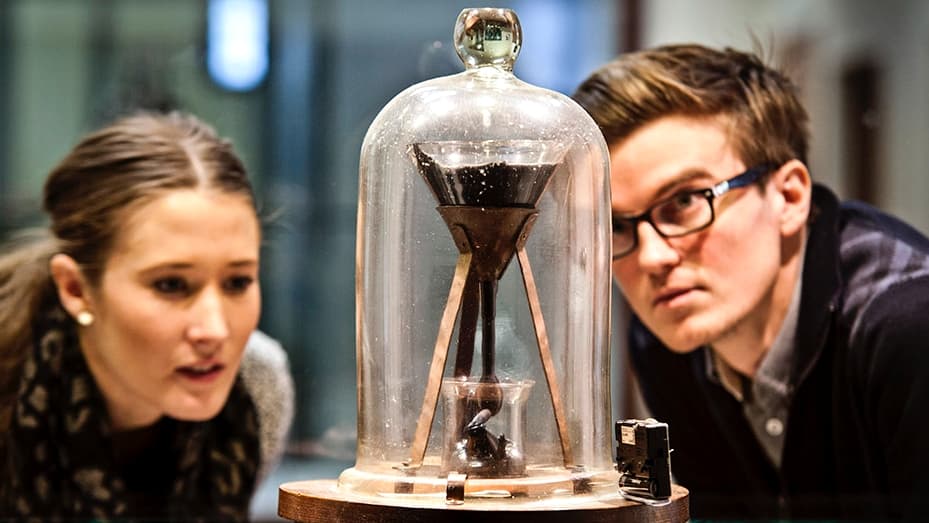
The 98-Year-Old Sticky Mess: Why Academia’s Longest Experiment Is a Monument to Obsolescence (And Who's Paying for It)
The world's longest-running lab experiment, the Pitch Drop, is nearing a century. But this slow science hides a dark secret about funding and relevance.

NASA’s February Sky Guide Is a Distraction: The Real Space Race is Happening in the Shadows
Forget Jupiter alignments. NASA’s February 2026 skywatching tips mask a deeper shift in space dominance and technological focus.

The Hidden Cost of 'Planned' Discovery: Why Science is Killing Serendipity (And Who Benefits)
Is modern, metric-driven science sacrificing accidental breakthroughs? The death of **scientific serendipity** impacts innovation and funding strategy.

DailyWorld Editorial
AI-Assisted, Human-Reviewed
Reviewed By
DailyWorld Editorial