The Drone Did Not Catch the Shoplifter: Who Really Wins When Police Embrace 'Sky Surveillance'?

The Suffolk County drone catching a shoplifter isn't about theft; it's about normalizing pervasive **police technology** and the quiet death of public anonymity.
Key Takeaways
- •The Suffolk County drone deployment is a PR win designed to normalize broader aerial surveillance for minor offenses.
- •The true beneficiaries are the private defense contractors profiting from expanded police tech budgets.
- •This trend accelerates the end of public anonymity, creating a chilling effect on free assembly.
- •Expect mandatory, routine drone integration into standard patrol within three years unless strict regulation is imposed.
The Drone Did Not Catch the Shoplifter: Who Really Wins When Police Embrace 'Sky Surveillance'?
When Suffolk County police deployed a drone to track down an alleged shoplifter, the press celebrated a victory for modern policing. A quick, clean arrest, enabled by advanced **surveillance technology**. But this isn't a story about petty theft; it’s a Trojan horse delivery system for ubiquitous aerial monitoring. We must look past the convenience and examine the inevitable erosion of public space.
The narrative being sold is simple: **Drone technology** equals efficiency. A fleeing suspect, a sprawling retail park—a few minutes later, the case is closed. This immediate gratification masks a far more sinister trend. Every successful, high-profile deployment, no matter how mundane the crime, serves as crucial public relations for the expansion of these surveillance networks. The real winner here isn't the loss prevention officer; it’s the government agencies securing next year's budget increases for expanded drone fleets.
The Unspoken Truth: Normalizing the Panopticon
The unspoken truth is that the threshold for deploying aerial surveillance is dropping precipitously. Today, it’s shoplifting. Tomorrow, it’s jaywalking, littering, or monitoring public gatherings. This isn't about catching criminals; it’s about establishing an infrastructure where no movement in public space goes unlogged. Think of the sheer volume of data being generated—where people travel, who they meet, how long they linger. This data is a goldmine, and its eventual integration with facial recognition and predictive policing algorithms is not a possibility; it is the explicit goal of many law enforcement technology programs.
For the individual, the cost is the death of true anonymity. If you can be tracked from above for a misdemeanor, what happens when you attend a protest or visit a controversial clinic? The chilling effect on free association and expression is profound. We are trading the right to be unobserved for marginal increases in low-level crime apprehension. According to the American Civil Liberties Union (ACLU), the debate over drone use often bypasses serious privacy considerations in favor of operational efficiency.
Deep Analysis: The Privatization of Public Oversight
Who manufactures these drones? Who writes the software? The expansion of police drone programs inevitably means richer contracts for private defense and tech contractors. This creates a powerful feedback loop: contractors lobby for wider use cases, police departments become dependent on proprietary systems, and the public pays for both the hardware and the subsequent lobbying efforts. The core economic driver here is the surveillance-industrial complex, which needs constant, visible deployment to justify its existence. This is not just about public safety; it’s about market penetration in the burgeoning field of public sector **police technology**.
What Happens Next? The Prediction
My prediction is that within three years, municipal police departments across the US will face intense pressure, both internal and external, to integrate drone surveillance into standard patrol procedures, not just high-risk pursuits. This integration will be sold under the guise of 'officer safety' and 'faster response times.' We will see the creation of centralized, municipal drone command centers, blurring the line between tactical response units and routine traffic monitoring. Furthermore, expect legal challenges to fail initially, as courts will likely defer to the 'exigent circumstances' argument used successfully in this Suffolk County case, setting a dangerous precedent for aerial searches without warrants.
The public must demand immediate, strict regulatory frameworks—not just guidelines—on data retention, usage limitations, and public oversight before these systems become so embedded that unwinding them becomes politically impossible. The convenience of catching one shoplifter is a pittance compared to the permanent cost of living under a constant electronic gaze.
Frequently Asked Questions
What is the primary privacy concern with police drone use?
The primary concern is the creation of vast, persistent, searchable records of ordinary citizens' movements and associations in public spaces, which can be repurposed for purposes beyond the initial justification (mission creep).
Are police drones legally allowed to record everything without a warrant?
Generally, under the Fourth Amendment, there is an expectation of privacy regarding what cannot be seen from a public vantage point (like a backyard). However, what is visible from public airspace, especially by a drone hovering overhead, is often legally ambiguous and context-dependent, making case law rapidly evolve.
How does this incident relate to predictive policing?
While this incident involved reactive tracking, the aggregated data collected by these drone operations feeds into the massive datasets used to train predictive policing models, increasing the scope and granularity of future predictions.
What is the 'chilling effect' in the context of surveillance?
The chilling effect is the self-censorship or avoidance of lawful behavior (like attending protests or controversial meetings) because individuals fear their actions will be recorded, cataloged, and potentially used against them by authorities.
Related News

The Great Deception: Why 'Humanizing' Tech in Education Is a Trojan Horse for Data Mining
The push to keep education 'human' while integrating radical technology hides a darker truth about data control.

The AI Deepfake Lie: Why Tech Solutions Will Never Stop Sexualized Image Generation
The fight against AI-generated sexualized images is a technological dead end. Discover the hidden winners and why detection is a losing game.
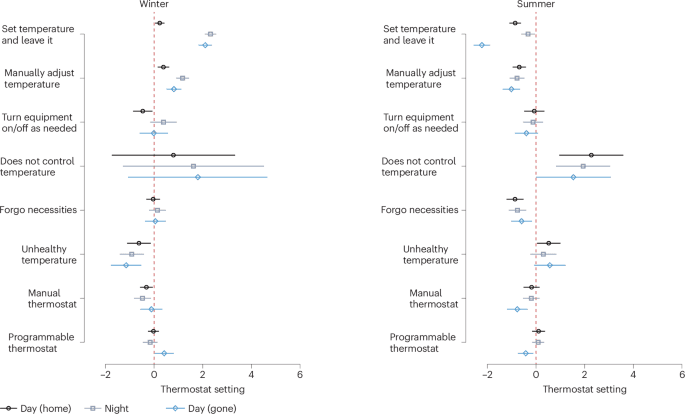
The Climate Lie: Why Your Smart Thermostat Is A Trojan Horse for Energy Control
Forget high-tech fixes. New data reveals US indoor temperature control is a behavioral battlefield, not a technological one. Who profits from this illusion?
