The Digital Dragon: Why China's Lantern Festivals Are the Real Trojan Horse for Global Tech Dominance
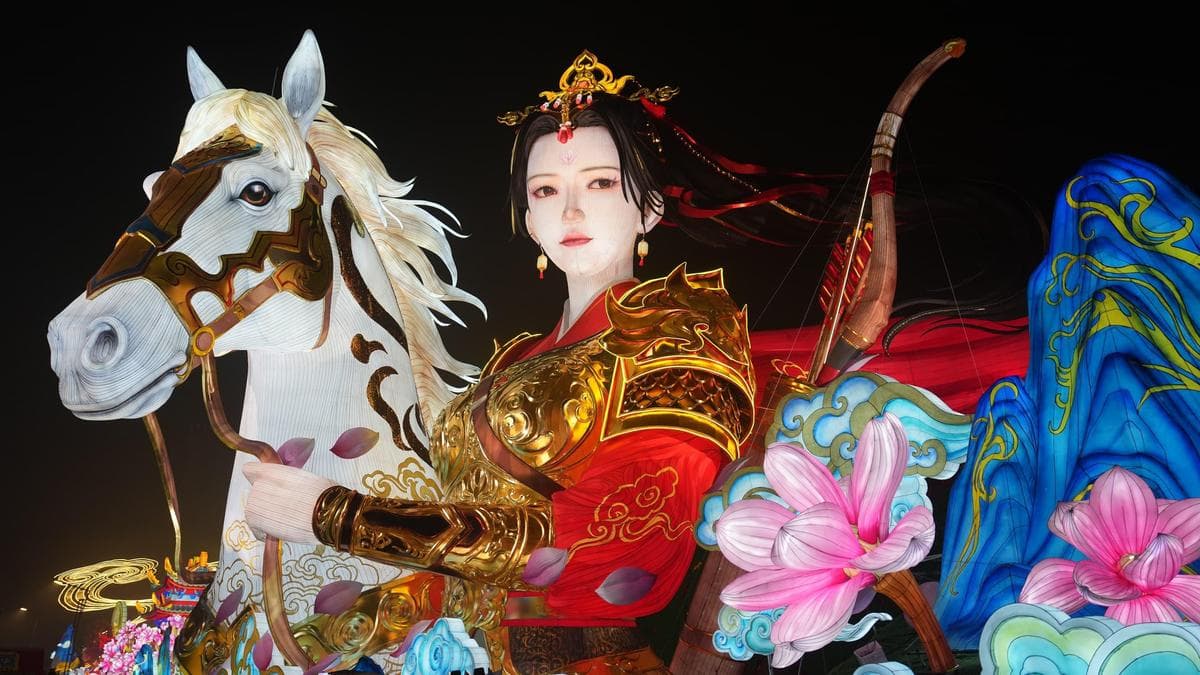
Forget cute lights. The Zigong Lantern Festival is a calculated showcase of **cultural technology** and **digital heritage** integration, signaling a new phase in China's soft power.
Key Takeaways
- •The festival serves as a high-profile testing ground for advanced projection mapping and interactive display technologies.
- •The true winner is the state-backed technology sector, which gains global validation for its immersive platforms.
- •This strategy frames Chinese technology as organically evolved from deep cultural roots, increasing its global appeal.
- •Expect aggressive international marketing of these 'cultural tech solutions' to tourism markets worldwide.
The Glow-Up: More Than Just Paper and Flame
When you see images of the Zigong Lantern Festival—a dazzling, almost psychedelic fusion of ancient artistry and cutting-edge light displays—you are witnessing a masterclass in narrative control. The news reports laud the beautiful blend of **cultural heritage** with advanced engineering. But that’s the surface gloss. The real story is in the **technology** being stress-tested and normalized on a massive, emotionally resonant scale.
This isn't just about pretty lights; it's about the deployment of sophisticated projection mapping, interactive sensor technology, and high-density LED arrays in a public setting that demands flawless execution. Who truly benefits when these spectacles go viral globally? It's not the artisans struggling to keep traditional methods alive. It’s the state-backed tech firms perfecting their immersive experience platforms. This is **cultural technology** theater, designed to export an image of seamless, technologically advanced tradition.

The Unspoken Truth: Soft Power as Software Deployment
The contrarian view here is simple: the festival is a Trojan Horse. Every breathtaking, digitally rendered dragon or glowing historical scene serves as a low-stakes, high-impact demonstration of Chinese innovation capabilities. While Western media focuses on the quaintness of the tradition, they miss the underlying infrastructure. These events are crucial proving grounds for the next generation of smart city interfaces and public engagement software.
The agenda is clear: frame Chinese innovation not as cold Silicon Valley disruption, but as an organic evolution of deep, established culture. This makes their **technology** adoption inherently more palatable to developing nations looking for models that integrate modernity without complete cultural erasure. The losers in this equation are the smaller, independent cultural tourism sectors that cannot afford this level of digital overlay, effectively forcing them to either digitize or fade into irrelevance. This is the new economic reality of cultural preservation.
Why This Matters: The Battle for Aesthetic Hegemony
In the grand scheme, this is a battle for aesthetic hegemony. If the most compelling, emotionally engaging public spectacles are powered by Beijing-aligned platforms, it subtly sets the global standard for what constitutes 'modern' celebration. Look at the rapid adoption of Chinese digital payment systems; this is the cultural equivalent. By embedding advanced **technology** into deeply cherished **cultural heritage**, they create a sticky ecosystem. You don't just consume the art; you interact with the underlying platform.
This strategy bypasses traditional geopolitical friction. It’s harder to sanction a beautiful lantern than it is a server farm. Yet, the principles are identical. It’s a soft, irresistible form of technological influence. Read more about the global impact of digital cultural exports here: Reuters Business Analysis.
Where Do We Go From Here? The Prediction
Prediction: Within five years, expect to see 'Zigong-style' immersive cultural tech packages aggressively marketed to major global cultural tourism hubs—from European capitals struggling with aging infrastructure to burgeoning markets in Southeast Asia. These won't be sold as Chinese imports, but as 'globally proven' interactive exhibition solutions. Furthermore, expect a significant backlash from traditional craft guilds worldwide, who will decry the 'digital sterilization' of authentic art forms, leading to a polarizing global debate on **cultural technology** ethics. For a historical perspective on cultural soft power, see Council on Foreign Relations.
The future of tourism isn't just about seeing something old; it's about interacting with it via a proprietary, high-resolution display system. The Zigong festival is just the opening act for a much larger technological performance.
Gallery





Frequently Asked Questions
What is the primary technological advancement showcased at the Zigong Lantern Festival?
The primary advancement is the sophisticated integration of high-density LED arrays, advanced projection mapping, and interactive sensor technology to create massive, immersive, and dynamic cultural displays.
How does the festival relate to China's global soft power strategy?
It frames Chinese innovation as seamlessly integrated with deep historical tradition, making its technology exports more culturally appealing and less politically confrontational than purely industrial or hardware exports.
Are traditional lantern-making skills being phased out by this technology?
While the festival uses traditional motifs, the emphasis shifts resources and attention toward digital execution, potentially marginalizing traditional artisans who cannot afford or adopt these high-tech overlays.
What is the long-term commercial goal of these displays?
The goal is to create scalable, proprietary 'cultural experience platforms' that can be sold globally for use in smart city projects, theme parks, and major international cultural events.
Related News

The $24 Billion Singapore Gambit: Why Micron's Factory Spells Doom for US Chip Dominance
Micron's massive Singapore investment signals a chilling reality for US tech manufacturing, despite soaring stock prices. The unspoken truth about global semiconductor strategy is laid bare.

The Silent War: Why Russia's New Cancer Tech Isn't About Curing Patients (Yet)
Russian scientists unveil a breakthrough cancer treatment technology. But the real story isn't the science; it's the geopolitical chessboard.
The Digital Oil Grab: Why SLB's AI Play in Libya Signals the End of Traditional Energy Pacts
SLB's deployment of AI in Libya isn't about boosting production; it's about securing future data dominance in volatile energy markets.

DailyWorld Editorial
AI-Assisted, Human-Reviewed
Reviewed By
DailyWorld Editorial