Forget the Hype: The Real Winners and Losers of the 2025 Innovation List

Popular Science's 50 greatest innovations of 2025 miss the point. We dissect the true power shift in modern science.
Key Takeaways
- •The 2025 innovations primarily benefit proprietary interests, centralizing power among a few large funders.
- •Independent and open-source research is being marginalized due to the immense capital required for cutting-edge science.
- •This centralization creates significant systemic risk for global technological infrastructure.
- •Expect a strong counter-movement favoring 'Frugal Science' and open-source alternatives in the near future.
The Unspoken Truth Behind the 2025 Innovation Hype Cycle
Every year, publications like Popular Science roll out their lists of the "50 Greatest Innovations." It’s a predictable exercise in technological optimism, designed to soothe the masses. But look closer at the 2025 roundup, and you won't find the real story. The real story isn't the shiny new gadget; it’s the seismic shift in power dynamics catalyzed by these scientific breakthroughs. We need to talk about who funded these leaps and, more importantly, who gets left behind in this new era of technological advancement.
The headlines celebrate personalized medicine and breakthroughs in quantum computing—standard fare. But the unspoken truth is this: the defining innovations of 2025 are overwhelmingly **proprietary**. They are locked behind the firewalls of a handful of mega-corporations and sovereign wealth funds. This isn't democratization; it's centralization dressed up in lab coats. While we marvel at the efficiency gains in AI model training, the real loser is independent research and open-source development, suffocated by the sheer capital required to play in the major leagues of innovation.
Deep Dive: The Centralization of Genius
Consider the promised revolution in sustainable energy storage. We see reports of a new solid-state battery chemistry. Great. But who owns the patents? A consortium backed by three venture capital giants. The impact of this technology won't be felt first in rural communities or developing nations—it will be felt in the quarterly earnings reports of the backers. This pattern repeats across synthetic biology and advanced materials.
This centralization breeds fragility. When the core infrastructure of tomorrow—from food production algorithms to energy grids—is controlled by a small cohort, systemic risk skyrockets. A single regulatory shift or a strategic pivot by one major player can derail years of progress for everyone else. The very definition of scientific advancement is being rewritten from collaboration to acquisition.

What Happens Next? The Great Decoupling
My prediction for the next three years is the 'Great Decoupling.' As proprietary innovation becomes too expensive and too controlled, we will see a powerful, reactionary surge in decentralized, low-cost, open-source alternatives. Think 'Frugal Science' movements gaining traction, not just in hardware (like Arduino successors) but in core scientific modeling. People will realize that while the corporate innovations are faster, they are ultimately cages. We saw glimpses of this resistance in the open-source software movement decades ago; now it will hit hard science. Watch for open-source genome editing kits and community-run fusion experiments to gain massive traction as a direct counter-narrative to the corporate monoliths.
The battle for the future isn't between the innovations themselves; it’s between open access and walled gardens. The 2025 list is merely the scoreboard for the walled gardens. The real game is being played elsewhere, in the shadows of the labs that can’t afford the PR budgets.
Frequently Asked Questions
What is the main criticism of annual innovation lists like Popular Science's?
The primary criticism is that these lists often focus on commercially viable, high-visibility gadgets rather than fundamental, potentially democratizing scientific shifts, and they fail to analyze the ownership structure behind the technology.
What is meant by the 'Great Decoupling' prediction?
The 'Great Decoupling' predicts a strong, reactionary push toward decentralized, open-source, and low-cost scientific development as a direct response to the increasing proprietary control over major technological breakthroughs.
How does technological centralization affect systemic risk?
When critical technologies in energy, medicine, or AI are controlled by a small number of entities, any failure, strategic change, or regulatory action affecting those entities introduces massive, cascading risks across the entire system.
Where can I find more information on the impact of venture capital on scientific research?
High-authority sources like The Economist or established university research papers often detail the influence of venture capital on research direction and patent acquisition pathways.
Related News
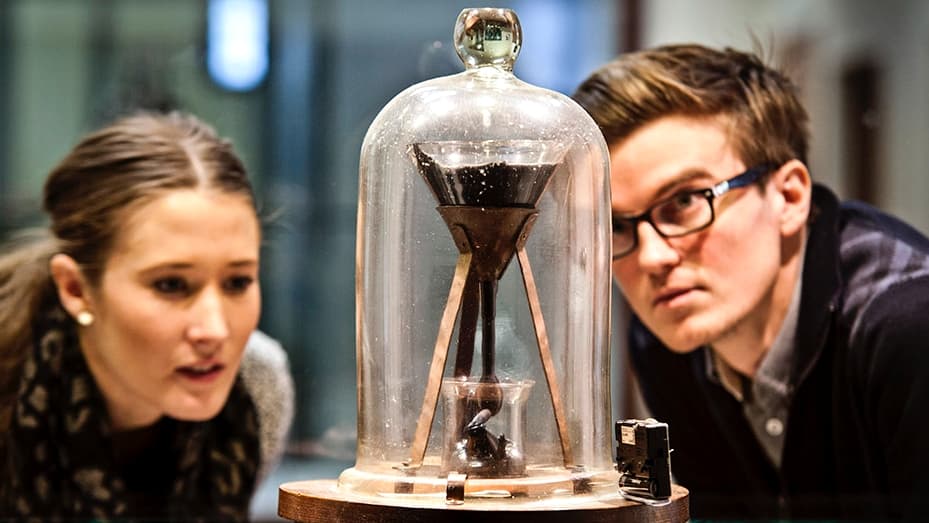
The 98-Year-Old Sticky Mess: Why Academia’s Longest Experiment Is a Monument to Obsolescence (And Who's Paying for It)
The world's longest-running lab experiment, the Pitch Drop, is nearing a century. But this slow science hides a dark secret about funding and relevance.

NASA’s February Sky Guide Is a Distraction: The Real Space Race is Happening in the Shadows
Forget Jupiter alignments. NASA’s February 2026 skywatching tips mask a deeper shift in space dominance and technological focus.

The Hidden Cost of 'Planned' Discovery: Why Science is Killing Serendipity (And Who Benefits)
Is modern, metric-driven science sacrificing accidental breakthroughs? The death of **scientific serendipity** impacts innovation and funding strategy.
