Forget the Hype: The Real, Terrifying Winners of Science's 2025 Breakthroughs

The 2025 science headlines masked the real power shift. Unpacking the untold economic and geopolitical cost of the year's biggest scientific leaps.
Key Takeaways
- •Scientific breakthroughs are centralizing power among wealthy entities, not democratizing knowledge.
- •The true risk is the creation of a biological and cognitive class divide based on access to advanced medicine.
- •Expect regulatory frameworks to fail catastrophically, leading to 'Bio-Hacking States' prioritizing unchecked research.
- •Allocation of scientific capital favors spectacle (space, AI) over urgent global needs (climate adaptation).
The Illusion of Progress: What 2025's 'Miracle' Science Truly Means
Every year-end review—like the recent BBC retrospective on 2025 science—serves up a comforting platter of breakthroughs: gene editing successes, fusion energy glimmers, and AI advancements. But beneath the veneer of scientific progress lies a starker reality: these leaps are not democratizing; they are centralizing power. The real story of 2025 is not the discovery itself, but who controls the patent and who funds the lab. We are witnessing a dangerous acceleration in scientific capability without any corresponding acceleration in ethical governance.
The prevailing narrative suggests that breakthroughs in longevity research or quantum computing are universally beneficial. This is naive. The unspoken truth is that the winners of 2025’s science race are the entities—nation-states and mega-corporations—that can afford the multi-billion dollar R&D moat. For the average citizen, these advances translate into higher access barriers, not immediate relief. This isn't just about technology; it's about the future stratification of human capability.
The Great Scientific Divide: Who Really Wins?
Consider the advancements in personalized medicine. While headlines trumpet cures for rare diseases, the unspoken reality is that these treatments often cost more than a small nation's GDP. The immediate beneficiaries are the ultra-wealthy, effectively creating a biological class divide. We are marching toward a future where health and cognitive enhancement are commodities, not rights. This is the critical analysis missing from most science reporting: scientific advancement without equitable distribution is merely technological segregation. Look at the funding sources for cutting-edge AI development—it's overwhelmingly concentrated in a handful of private tech giants, ensuring their proprietary models dictate the future of labor and information access. This concentration of knowledge is the most significant geopolitical threat emerging from 2025's discoveries.
Furthermore, the focus on 'big science' distracts from systemic failures. While scientists celebrated breakthroughs in Martian geology, entire regions struggled with basic climate adaptation measures. The allocation of scientific capital reveals priorities: spectacle over sustainability. This is an economic distortion that demands scrutiny.
Prediction: The Regulatory Collapse and the Rise of Bio-Hacking States
What happens next? My prediction is that the regulatory framework, already lagging years behind the technology, will suffer a complete, high-profile collapse within 18 months. A major, irreversible bio-error—perhaps an uncontained synthetic pathogen or a catastrophic failure in a quantum network—will force a global reckoning. However, this reckoning will be too late.
Instead of unified global oversight, we will see the rise of 'Bio-Hacking States.' Nations unwilling to adhere to Western-led ethical frameworks will aggressively pursue the most powerful, unregulated research—especially in synthetic biology and autonomous weaponry—to gain an asymmetric advantage. The race to the bottom on safety standards is already underway, fueled by the hyper-competitive nature of global scientific research.
The true measure of 2025's science isn't the papers published; it's the new fault lines drawn in global power. We must stop celebrating the discovery and start aggressively dissecting the distribution model. If we don't, the next decade of scientific innovation will be defined by unprecedented inequality.
Gallery




Frequently Asked Questions
What is the primary ethical concern regarding 2025's medical science advancements?
The primary concern is that cutting-edge medical treatments, particularly in longevity and personalized genetics, are becoming so expensive they create a deep, biological divide between the hyper-wealthy and the general population.
How are these scientific leaps affecting global power dynamics?
They are exacerbating existing power imbalances. Nations and corporations that control proprietary scientific R&D gain significant economic and potential military advantages, leading to new forms of technological dependency among other global actors.
What does 'Bio-Hacking States' mean in the context of scientific prediction?
It refers to nations that will disregard international ethical guidelines to aggressively pursue powerful, unregulated scientific fields like synthetic biology to gain a strategic edge over competitors.
Are the 2025 science breakthroughs truly universally beneficial?
No. While individual discoveries are significant, the current funding and patent structures ensure that the benefits are captured by a small elite, making the overall impact socially polarizing rather than universally beneficial.
Related News
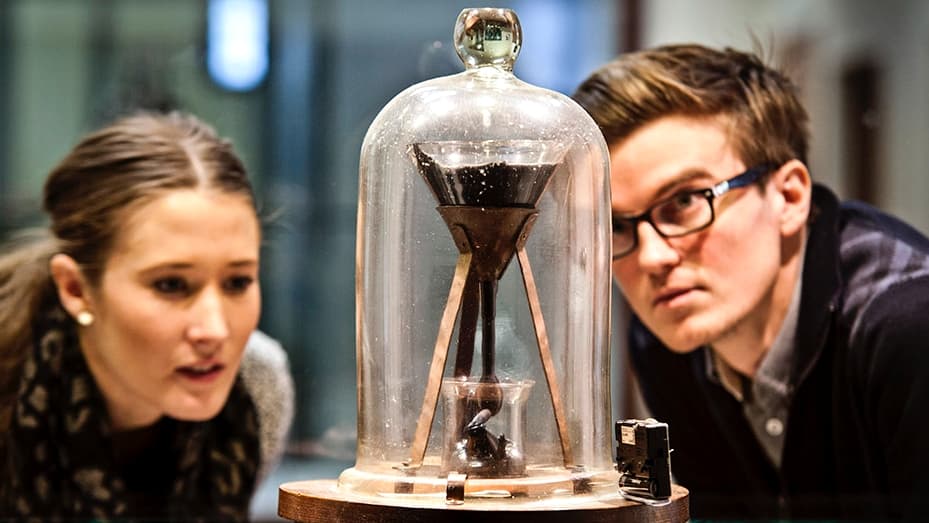
The 98-Year-Old Sticky Mess: Why Academia’s Longest Experiment Is a Monument to Obsolescence (And Who's Paying for It)
The world's longest-running lab experiment, the Pitch Drop, is nearing a century. But this slow science hides a dark secret about funding and relevance.

NASA’s February Sky Guide Is a Distraction: The Real Space Race is Happening in the Shadows
Forget Jupiter alignments. NASA’s February 2026 skywatching tips mask a deeper shift in space dominance and technological focus.

The Hidden Cost of 'Planned' Discovery: Why Science is Killing Serendipity (And Who Benefits)
Is modern, metric-driven science sacrificing accidental breakthroughs? The death of **scientific serendipity** impacts innovation and funding strategy.
