The Silent War: Why Artemis II Is Secretly Threatening The James Webb Telescope’s Legacy
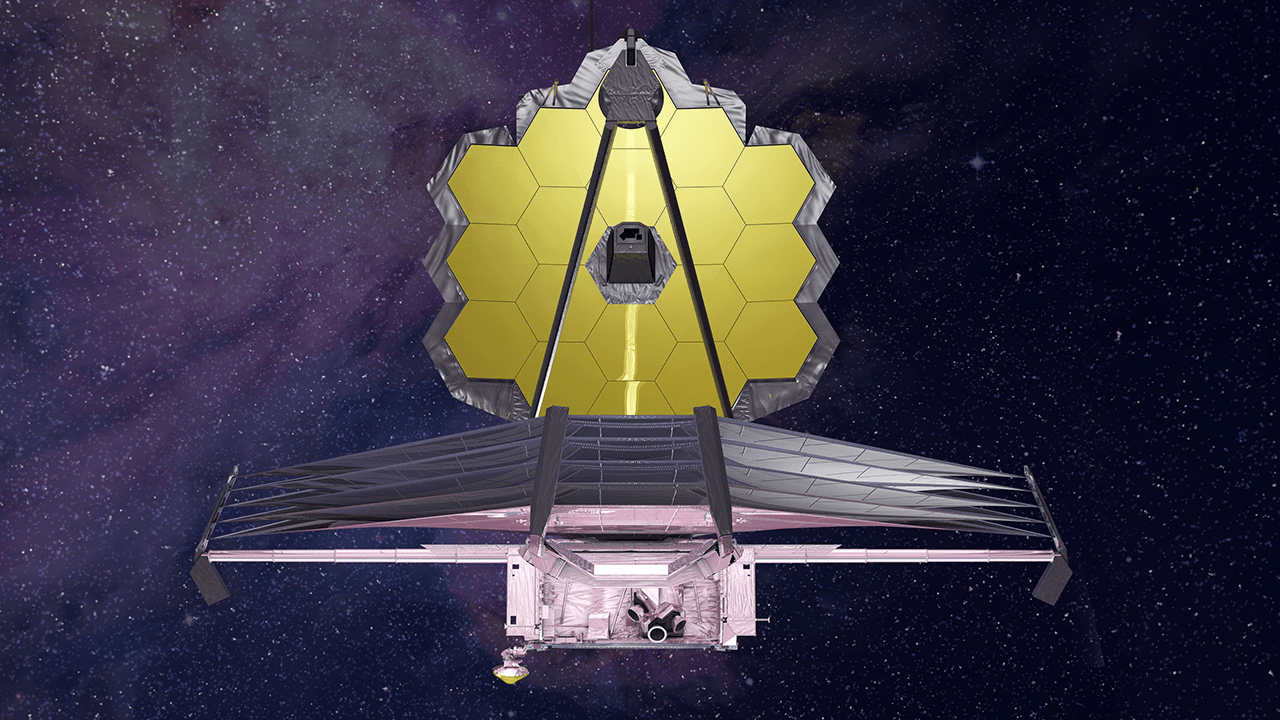
Forget the Moon landing hype. The real story: Artemis II poses an unseen risk to JWST science operations, pitting two NASA titans against each other.
Key Takeaways
- •Artemis II will strain the Deep Space Network (DSN), directly competing for critical communication bandwidth needed by JWST.
- •The hidden political agenda favors highly visible crewed missions over abstract, long-term scientific data collection.
- •This resource competition could lead to a measurable slowdown in JWST data acquisition and analysis.
- •The situation exposes a systemic failure to fund redundant, science-only communication infrastructure.
The Hook: More Than Just a Photo Op
When NASA announces a crewed mission like Artemis II, the public sees patriotic triumph—a return to deep space. What they don’t see is the bureaucratic knife fight happening behind the scenes. The unspoken truth is that the massive logistical and financial commitment required for the Artemis program is creating a direct, quantifiable threat to the most revolutionary scientific instrument of our generation: the James Webb Space Telescope (JWST). We are not just talking about minor scheduling conflicts; we are talking about the potential degradation of multi-billion dollar science deliverables.
The central conflict revolves around the Deep Space Network (DSN) and the operational bandwidth required for crewed missions. While JWST operates with delicate, continuous data streams, Artemis II—and the subsequent infrastructure build-out—will demand priority access to critical communication relays. This isn't about jealousy; it’s about finite resources. Every hour the DSN prioritizes telemetry for human life support and navigation during Artemis II is an hour that the STScI cannot use to download terabytes of revolutionary cosmological data. This is the hidden cost of returning to the Moon.
The Unspoken Truth: Who Really Wins?
The winners are obvious: aerospace contractors and the political establishment craving a visible national achievement. The losers? The astrobiology community, early universe cosmologists, and anyone hoping for definitive answers on exoplanet atmospheres. The JWST science operations are inherently vulnerable because they are non-urgent in the short-term political cycle. A human in space demands immediate attention; a delayed spectrum analysis of K2-18b does not.
The political calculus here is brutal. Crewed spaceflight sells tickets and secures budgets. Pure science, however profound, is abstract. We are witnessing a classic case of NASA prioritizing spectacle over pure discovery. This shift in focus impacts not just data acquisition but also the allocation of highly specialized engineering talent. The best minds needed to keep JWST running optimally might be temporarily diverted to solve immediate, high-stakes Artemis problems. This diversion carries significant risk, as the complexity of JWST maintenance leaves virtually zero margin for error.
Deep Analysis: The Economics of Orbital Priorities
The competition for bandwidth underscores a fundamental economic flaw in modern space exploration funding: the lack of dedicated, redundant infrastructure for deep space science. The DSN is a shared asset, and in any crisis or high-demand scenario, human safety protocols will always trump the continuous observation cadence required for programs like JWST. This dependency reveals a systemic weakness. If NASA truly valued the JWST's scientific output—which promises to redefine our understanding of cosmic origins—they would have funded a separate, dedicated science communication pipeline years ago. They didn't. Why? Because it doesn't generate the same immediate political return on investment as astronauts waving from a capsule.
This dynamic forces an uncomfortable truth: the era of uninterrupted, pure scientific exploration funded by the US government is potentially paused, overshadowed by a renewed, politically charged race back to the lunar surface. For more on the historical context of manned vs. unmanned mission funding, see reports from entities like the *New York Times*.
What Happens Next? The Prediction
My prediction is grim but logical: We will see a measurable, quantifiable dip in JWST data throughput during the 18 months surrounding the Artemis II mission window. This won't be due to hardware failure, but communication rationing. Furthermore, watch for subtle but significant delays in the release of Cycle 3 observation proposals, as the STScI staff struggles to manage both operational continuity and the necessary hardware/software updates required for the telescope's longevity. The true long-term impact is that this incident sets a dangerous precedent: future high-profile crewed missions will inevitably claim precedence, effectively placing a ceiling on the scientific productivity of our most advanced orbital assets.
The challenge for the scientific community is to weaponize public opinion. They must frame the preservation of JWST science as crucial to the national prestige, not just abstract research. Otherwise, the Moon will continue to eclipse the universe.
Gallery

Frequently Asked Questions
What is the Deep Space Network (DSN) and why is it crucial for JWST?
The DSN is NASA's international array of giant radio antennas used to communicate with spacecraft across the solar system. For the JWST, it is the only pipeline for sending commands and receiving the vast amounts of scientific data it collects.
Will Artemis II physically endanger the James Webb Space Telescope?
No physical danger is expected. The threat is purely operational: competition for communication time and engineering expertise, potentially leading to observation delays or reduced data quality if bandwidth is throttled.
What is the primary scientific area most likely to be affected by these scheduling conflicts?
Areas requiring continuous, long-duration observation or rapid response, such as deep field imaging and time-sensitive exoplanet atmosphere characterization, will suffer the most from communication interruptions.
How does Artemis II differ from the Apollo missions in terms of resource strain?
While Apollo was inherently resource-intensive, the current DSN infrastructure is far more integrated and shared across multiple high-priority missions (like Mars rovers and JWST), making the current competition for bandwidth more acute.

DailyWorld Editorial
AI-Assisted, Human-Reviewed
Reviewed By
DailyWorld Editorial