The Real Price of AI Doctors: Why ChatGPT Health Will Eat Google’s Lunch (And Terrify Your Physician)

The shift from 'Dr. Google' to 'ChatGPT Health' isn't just an upgrade; it's a hostile takeover of medical self-diagnosis. Who truly profits?
Key Takeaways
- •ChatGPT Health shifts the dynamic from information retrieval (Google) to algorithmic authority (AI synthesis).
- •The primary winners are the tech firms accumulating proprietary health interaction data for model training.
- •Physicians will be forced to specialize further, handling ambiguity while AI manages triage volume.
- •The next major hurdle will be determining legal liability when conversational AI provides harmful medical advice.
The Hook: The Silence After the Search Bar Closes
We’ve all been there: the late-night panic, the vague symptom, the inevitable descent into the murky waters of medical AI searches. For two decades, 'Dr. Google' has been our flawed, frustrating co-pilot. It offered too many results, too much liability, and zero synthesis. Now, OpenAI and its ilk are promising salvation: ChatGPT Health. But this isn't a mere feature update; it’s a fundamental restructuring of the patient-information dynamic, and the biggest winner isn't you, the patient, but the data aggregators funding the research.
The core issue with traditional search—the very thing Google built its empire on—is that it requires *you* to do the cognitive heavy lifting. You type keywords, sift through sponsored links, and ultimately try to synthesize conflicting medical advice. ChatGPT Health, conversely, offers a synthesized, conversational answer. This shift from information retrieval to *curated consultation* is the seismic event everyone is missing in the rush to praise the new interface. We are trading informational chaos for algorithmic authority.

The Unspoken Truth: Data, Liability, and the Physician’s Future
Who really wins here? Not the skeptical patient, initially. The immediate victors are the tech giants training these models on massive, proprietary health datasets. Every interaction with a generative AI tool refines its diagnostic capability, creating an insurmountable moat against smaller players. The true currency isn't the answer provided; it's the *training data* generated by millions of users self-reporting symptoms.
The hidden agenda? To bypass the gatekeepers. Physicians are expensive, slow, and heavily regulated. If an AI can handle 70% of initial triage—identifying common ailments, suggesting over-the-counter remedies, or flagging genuine emergencies—the economic incentive to deploy this technology widely is irresistible. This is a massive play in digital health transformation, aiming to drastically reduce primary care overhead.
But here is the contrarian view: Doctors won't be replaced; they will be *augmented* into hyper-specialists. The AI handles the noise; the physician handles the ambiguity. However, insurance companies and health systems will aggressively push patients toward the cheaper AI route first, effectively creating a two-tiered system: the affluent get human attention immediately; everyone else gets the chatbot.
Where Do We Go From Here? Prediction: The Great Liability Shuffle
The next 18 months will be defined by the liability crisis. When ChatGPT Health confidently misdiagnoses a rare condition leading to harm, who is sued? OpenAI? The hospital that integrated the API? The patient who relied on it? Current legal frameworks are utterly unsuited for this. My prediction is that we will see a rapid bifurcation:
- The 'Verified' Layer: Major health systems will deploy closed-loop AI, where the output is legally signed off by a supervising physician (or legally deemed 'informational only' with massive disclaimers).
- The 'Wild West' Layer: The public-facing models will become incredibly sophisticated but will carry liability shields so thick they border on uselessness for the consumer.
The transition from Google's informational chaos to AI's authoritative chaos will force regulators to move faster than ever before, defining what constitutes 'practice of medicine' in the age of Large Language Models (LLMs). This is not just about better answers; it’s about redefining medical accountability.
Frequently Asked Questions
Is ChatGPT Health replacing human doctors?
No, not immediately. It is designed to replace the initial information-gathering phase ('Dr. Google'). It augments physicians by handling high-volume, low-complexity triage, allowing human doctors to focus on complex or nuanced cases.
What is the biggest risk of using AI for medical queries?
The greatest risk is 'confident hallucination'—the AI presenting false or dangerous medical information with absolute certainty. Furthermore, over-reliance can lead users to delay seeking necessary in-person care.
How is this different from searching WebMD or Mayo Clinic?
Traditional search engines provide lists of potential sources that you must synthesize. ChatGPT Health synthesizes the information for you into a single narrative answer, removing the user’s critical step of cross-referencing and evaluating sources.
Related News

The Hidden Cost of 'Fintech Strategy': Why Visionaries Like Setty Are Actually Building Digital Gatekeepers
The narrative around fintech strategy often ignores the consolidation of power. We analyze Raghavendra P. Setty's role in the evolving financial technology landscape.
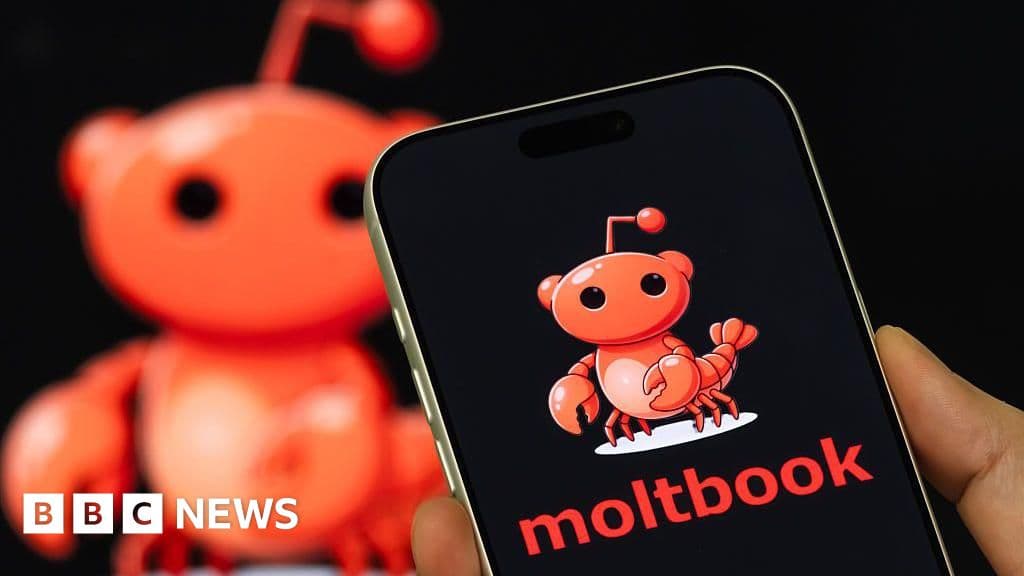
Moltbook: The 'AI Social Network' Is A Data Trojan Horse, Not A Utopia
Forget the hype. Moltbook, the supposed 'social media network for AI,' is less about collaboration and more about centralized data harvesting. We analyze the hidden risks.

The EU’s Quantum Gambit: Why the SUPREME Superconducting Project is Actually a Declaration of War on US Tech Dominance
The EU just funded the SUPREME project for superconducting tech. But this isn't just R&D; it's a geopolitical power play in the race for quantum supremacy.

DailyWorld Editorial
AI-Assisted, Human-Reviewed
Reviewed By
DailyWorld Editorial