The Quantum Trojan Horse: Why the Vanderbilt-EPB 'Innovation Institute' is Really About Power, Not Purity

Forget the press releases. The Vanderbilt-EPB quantum alliance isn't just about science; it's a strategic land grab in the future of **quantum computing** and **national security**.
Key Takeaways
- •The partnership's true value lies in leveraging EPB's existing high-speed fiber infrastructure for real-world quantum network testing.
- •This regional alliance directly challenges the centralized quantum development models favored by major coastal tech corporations.
- •The initiative signals a strategic shift toward securing decentralized, resilient quantum communication infrastructure.
- •Expect rapid replication of this public utility + research university model across other US regions.
The Quantum Trojan Horse: Why the Vanderbilt-EPB 'Innovation Institute' is Really About Power, Not Purity
Every time a university partners with a utility provider, the narrative is the same: noble pursuit of science. When **Vanderbilt University** links arms with **EPB**, the Chattanooga-based power giant, to launch a new quantum innovation institute, the official line screams collaboration and **technology** breakthroughs. But look closer. This isn't just about faster algorithms or developing better qubits. This is about **infrastructure control** and the race to secure the next generation of data integrity. ### The Unspoken Truth: Infrastructure as the Ultimate Weapon The real prize here isn't the theoretical physics papers. It’s the physical network. EPB operates one of the most advanced, publicly owned fiber optic networks in the US—a dream testing ground for quantum key distribution (QKD). While universities chase venture capital for abstract quantum processors, EPB offers the tangible, low-latency backbone required to deploy **quantum networking** *today*. The unspoken truth is that whoever controls the physical quantum network controls the unhackable communications layer of tomorrow's military, finance, and government sectors. Vanderbilt provides the academic legitimacy and the talent pipeline; EPB provides the real-world testbed that rivals Silicon Valley's closed ecosystems. ### Analysis: Why This Partnership Stings the Tech Giants Big Tech wants quantum to happen inside their walled gardens—Google, IBM, Microsoft. They want the data centers, the IP, and the talent pool centralized. This Nashville-Chattanooga corridor initiative is a direct, regional counter-punch. It leverages public infrastructure (EPB is municipally owned) to foster distributed, resilient quantum capabilities. This decentralization model is inherently more robust against single points of failure and, critically, less susceptible to the regulatory whims facing massive private tech monopolies. This move positions the Southeast as a viable, perhaps even superior, alternative to the established coastal quantum hubs. It’s a power play disguised as academic outreach. ### Where Do We Go From Here? The Prediction **Prediction:** Within three years, this institute will not just be researching QKD; it will be actively lobbying for federal standards that favor infrastructure built on open, accessible networks over proprietary corporate systems. Furthermore, expect this model—public utility + Tier 1 research university—to be aggressively replicated across the Sun Belt. States like Texas and Florida, sensing the intellectual capital shifting away from traditional hubs, will scramble to create similar public-private quantum alliances. The battle for quantum supremacy will pivot from the chip fabrication plant to the fiber conduit. This isn't just about innovation; it's about securing strategic national assets before the competition realizes what they’ve given away. The era of localized, powerful **quantum computing** ecosystems is dawning, and it’s being built on fiber optics, not just silicon.
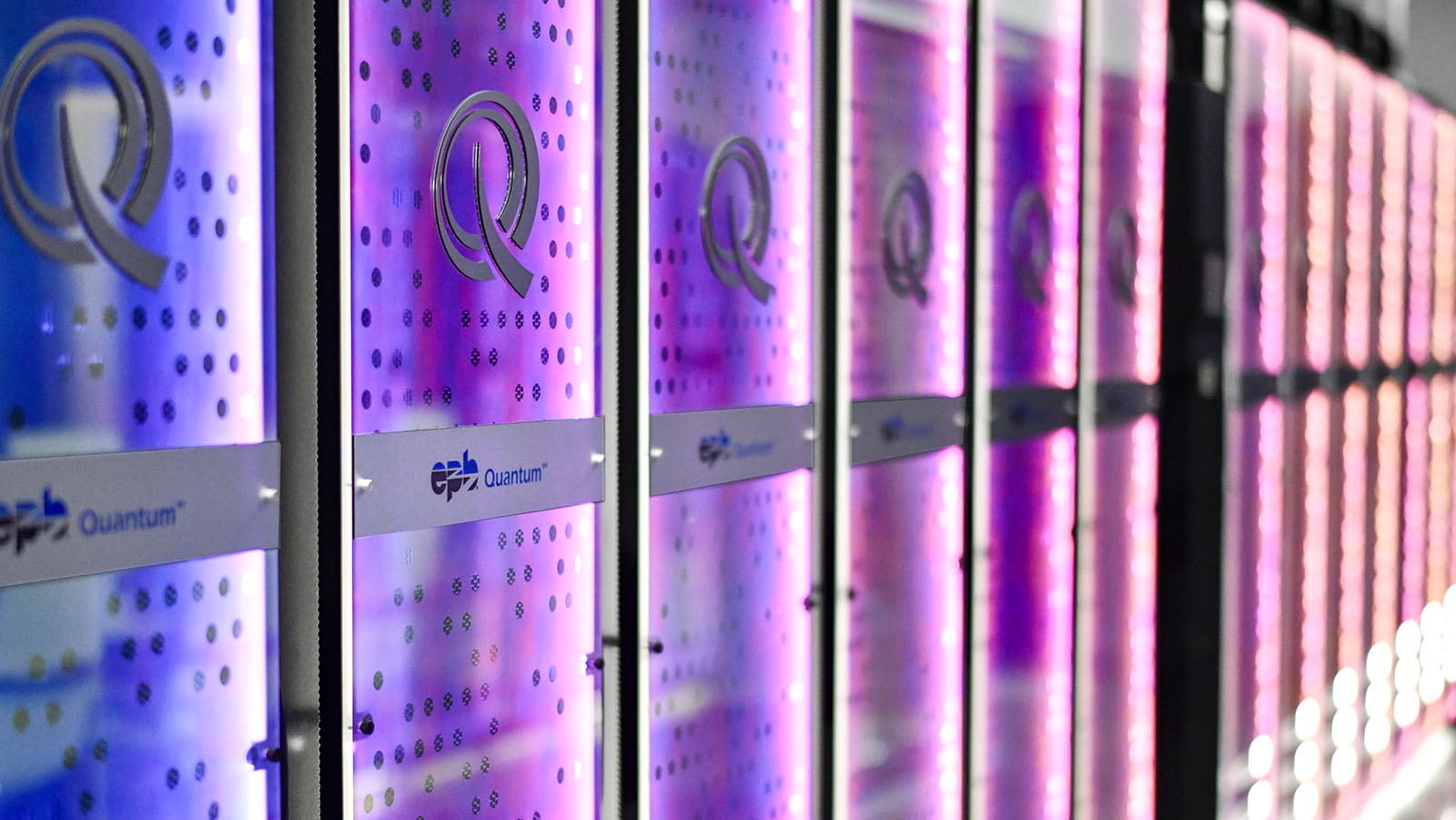
Gallery




Frequently Asked Questions
What is the primary goal of the Vanderbilt-EPB innovation institute?
While promoting general quantum science and technology breakthroughs, the core strategic goal appears to be accelerating the deployment and testing of quantum networking and quantum key distribution (QKD) using EPB's existing robust fiber infrastructure.
What is Quantum Key Distribution (QKD)?
QKD is a method of secure communication that uses the principles of quantum mechanics to exchange encryption keys. It offers theoretically 'unhackable' security because any attempt to eavesdrop disturbs the quantum state, immediately alerting the users.
How does this differ from standard quantum computing research?
Standard quantum computing focuses on building processors (qubits) to solve complex computational problems. This partnership emphasizes quantum *networking*—creating secure communication channels, which is an immediate, deployable application of quantum physics.
Why is EPB, a utility company, involved in quantum science?
EPB manages a massive, advanced fiber optic network. This network serves as the essential physical layer—the 'roads'—needed to test and scale quantum communication technologies beyond a controlled laboratory setting.
Related News

The Hidden Cost of 'Fintech Strategy': Why Visionaries Like Setty Are Actually Building Digital Gatekeepers
The narrative around fintech strategy often ignores the consolidation of power. We analyze Raghavendra P. Setty's role in the evolving financial technology landscape.

Moltbook: The 'AI Social Network' Is A Data Trojan Horse, Not A Utopia
Forget the hype. Moltbook, the supposed 'social media network for AI,' is less about collaboration and more about centralized data harvesting. We analyze the hidden risks.

The EU’s Quantum Gambit: Why the SUPREME Superconducting Project is Actually a Declaration of War on US Tech Dominance
The EU just funded the SUPREME project for superconducting tech. But this isn't just R&D; it's a geopolitical power play in the race for quantum supremacy.

DailyWorld Editorial
AI-Assisted, Human-Reviewed
Reviewed By
DailyWorld Editorial