The Quantum Illusion: Why Your Next Computer Will Still Follow the Old Rules of Heat
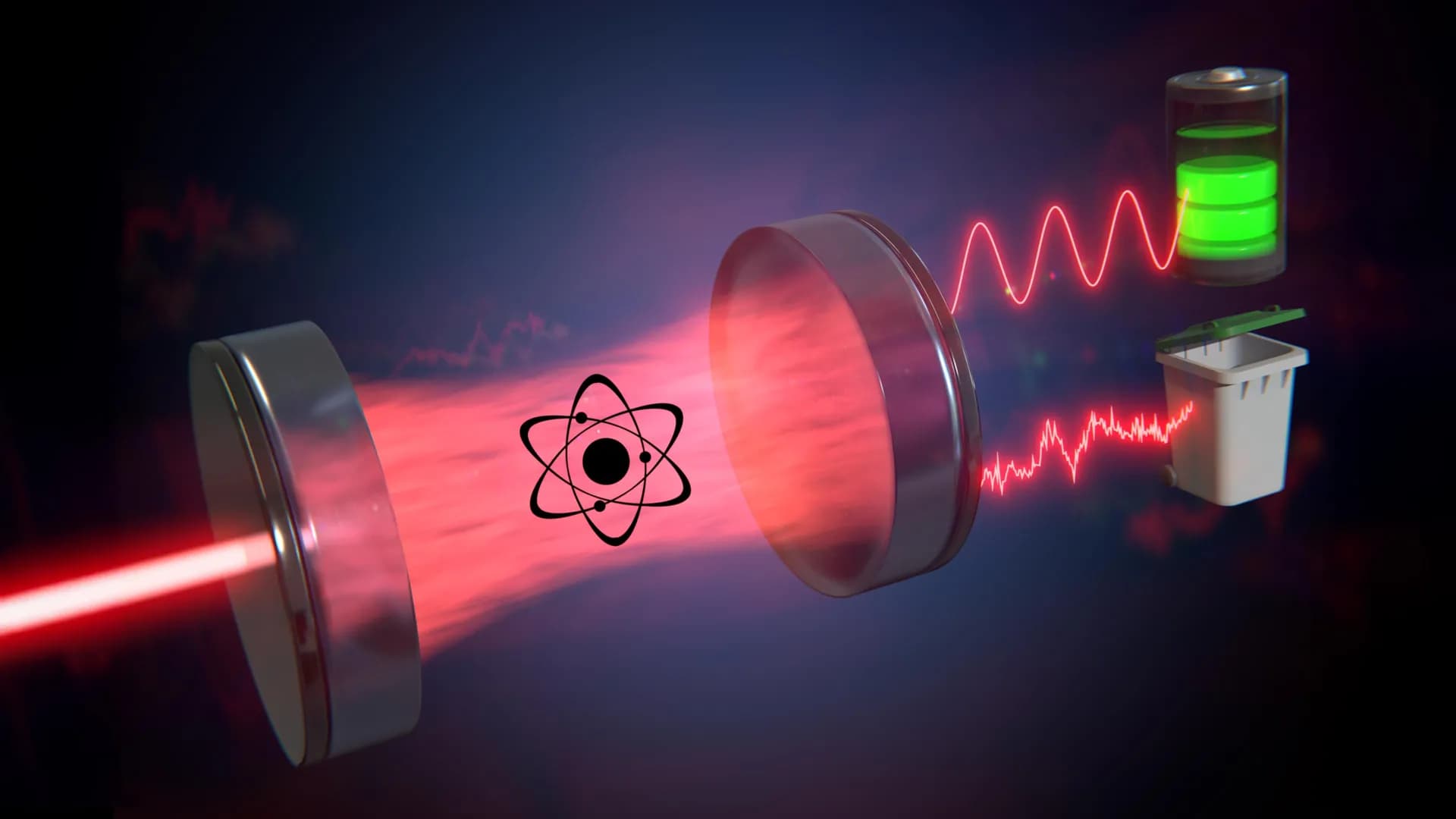
The breakthrough in quantum thermodynamics is real, but the real story is who controls the inevitable energy waste in future quantum computing.
Key Takeaways
- •Thermodynamics laws are now formally applied to quantum operations, setting hard efficiency limits.
- •This development primarily aids large-scale commercial quantum hardware development by defining energy costs.
- •The hidden cost is the massive energy required for sub-Kelvin cooling, which this research quantifies, not eliminates.
- •Future progress will pivot toward thermal management breakthroughs rather than just qubit count expansion.
The Quantum Illusion: Why Your Next Computer Will Still Follow the Old Rules of Heat
For decades, the laws of **thermodynamics** seemed to stand as an unbreakable barrier to the utopian promise of true quantum computation. How do you build a machine that exploits the delicate dance of superposition and entanglement while simultaneously obeying the brutal, universal truth that nothing is perfectly efficient? That question—the battle between quantum mechanics and classical thermal limits—has finally seen a significant theoretical victory. Physicists have successfully demonstrated how the fundamental principles of thermodynamics, like the inevitable generation of heat (entropy), can be mapped and even managed within the quantum realm. This isn't just an academic footnote; it’s a necessary prerequisite for scaling up quantum processors. But let’s be clear: this isn't a magic wand waving away energy bills.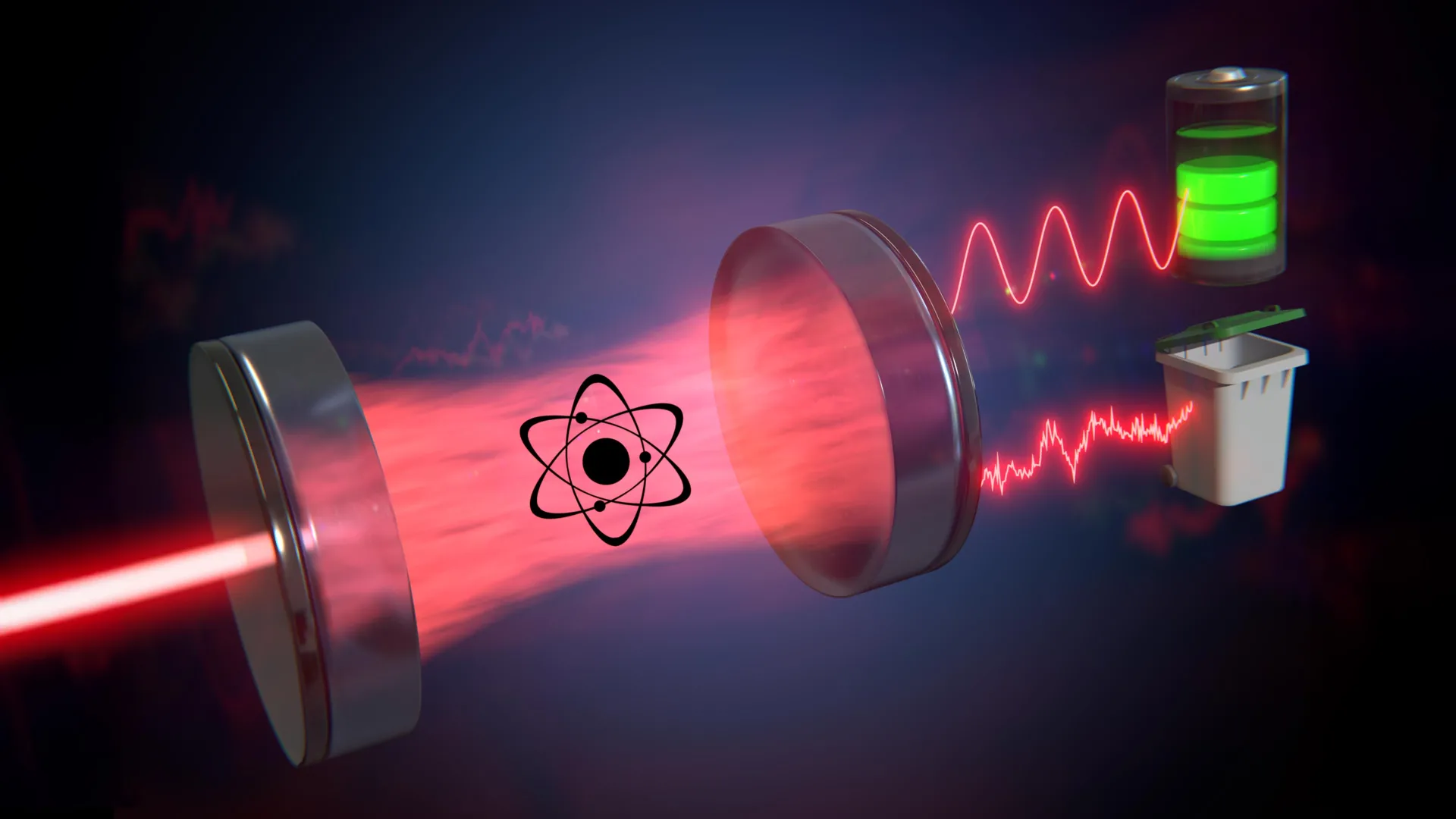 ### The Unspoken Truth: Entropy Always Wins
The mainstream narrative celebrates this as a triumph of control—a way to keep quantum states stable. The angle everyone is missing is the *cost* of that control. To maintain the fragile quantum coherence necessary for computation, you must actively fight against decoherence, which is fundamentally an entropic process. What this new framework allows is a precise accounting of the minimum energy required to perform a quantum operation without violating the Second Law of Thermodynamics.
Who wins? The foundries. Companies like IBM and Google, investing billions into cryogenic infrastructure, win because they now have a firmer theoretical ceiling on the energy overhead required for error correction. They can design more efficient cooling systems, making their quantum advantage slightly less expensive to maintain. Who loses? The public perception that quantum computers will somehow be inherently zero-emission marvels. They won't be. They will require massive, energy-intensive refrigeration units to keep qubits near absolute zero. The overhead is just now being quantified, not eliminated. This is a refinement of the engineering problem, not a dissolution of the physics problem.
### Deep Analysis: The Economic Entanglement
Why does this matter beyond the lab bench? Because the scalability of **quantum computing** hinges entirely on managing thermal budgets. If the energy cost to run a single logical qubit (a stable, error-corrected qubit) is too high, the entire economic model collapses. Current estimates for large-scale quantum machines suggest energy demands that dwarf even the largest supercomputers today, primarily due to cooling. This research provides the blueprint for minimizing that drain, making the transition from research curiosity to industrial tool economically feasible. It solidifies the path for high-performance computing, ensuring that the next generation of processors will still be bound by the physical realities first articulated centuries ago, even if the particles they manipulate are weirder. For more on the foundational principles, see the classic discussion on the **Second Law of Thermodynamics**.
### Where Do We Go From Here? A Prediction
Expect a sharp pivot in quantum research funding over the next three years. We will see less focus on simply achieving more qubits and more focus on *thermal optimization* of existing qubit architectures. The next major breakthrough won't be a new qubit material; it will be a novel, ultra-efficient cryogenic cycle or a new method of encoding information that minimizes the necessary thermal work. I predict that within five years, a major tech firm will announce a quantum computer whose primary bottleneck is no longer qubit count, but the sheer power draw of its dedicated cooling plant, directly proving the inescapable shadow of thermodynamics on the quantum age. Check the patents filed in the next 18 months—they will focus heavily on heat extraction mechanisms.
### Key Takeaways (TL;DR)
* The research successfully applies classical **thermodynamics** rules to quantum systems, clarifying energy limits.
* This benefits large tech companies by providing clearer engineering targets for cryogenic cooling.
* Quantum computers will not be magically energy-efficient; cooling requirements remain a massive hurdle.
* The focus of quantum engineering will shift from raw qubit count to thermal management efficiency.
### The Unspoken Truth: Entropy Always Wins
The mainstream narrative celebrates this as a triumph of control—a way to keep quantum states stable. The angle everyone is missing is the *cost* of that control. To maintain the fragile quantum coherence necessary for computation, you must actively fight against decoherence, which is fundamentally an entropic process. What this new framework allows is a precise accounting of the minimum energy required to perform a quantum operation without violating the Second Law of Thermodynamics.
Who wins? The foundries. Companies like IBM and Google, investing billions into cryogenic infrastructure, win because they now have a firmer theoretical ceiling on the energy overhead required for error correction. They can design more efficient cooling systems, making their quantum advantage slightly less expensive to maintain. Who loses? The public perception that quantum computers will somehow be inherently zero-emission marvels. They won't be. They will require massive, energy-intensive refrigeration units to keep qubits near absolute zero. The overhead is just now being quantified, not eliminated. This is a refinement of the engineering problem, not a dissolution of the physics problem.
### Deep Analysis: The Economic Entanglement
Why does this matter beyond the lab bench? Because the scalability of **quantum computing** hinges entirely on managing thermal budgets. If the energy cost to run a single logical qubit (a stable, error-corrected qubit) is too high, the entire economic model collapses. Current estimates for large-scale quantum machines suggest energy demands that dwarf even the largest supercomputers today, primarily due to cooling. This research provides the blueprint for minimizing that drain, making the transition from research curiosity to industrial tool economically feasible. It solidifies the path for high-performance computing, ensuring that the next generation of processors will still be bound by the physical realities first articulated centuries ago, even if the particles they manipulate are weirder. For more on the foundational principles, see the classic discussion on the **Second Law of Thermodynamics**.
### Where Do We Go From Here? A Prediction
Expect a sharp pivot in quantum research funding over the next three years. We will see less focus on simply achieving more qubits and more focus on *thermal optimization* of existing qubit architectures. The next major breakthrough won't be a new qubit material; it will be a novel, ultra-efficient cryogenic cycle or a new method of encoding information that minimizes the necessary thermal work. I predict that within five years, a major tech firm will announce a quantum computer whose primary bottleneck is no longer qubit count, but the sheer power draw of its dedicated cooling plant, directly proving the inescapable shadow of thermodynamics on the quantum age. Check the patents filed in the next 18 months—they will focus heavily on heat extraction mechanisms.
### Key Takeaways (TL;DR)
* The research successfully applies classical **thermodynamics** rules to quantum systems, clarifying energy limits.
* This benefits large tech companies by providing clearer engineering targets for cryogenic cooling.
* Quantum computers will not be magically energy-efficient; cooling requirements remain a massive hurdle.
* The focus of quantum engineering will shift from raw qubit count to thermal management efficiency.Frequently Asked Questions
What is the main challenge thermodynamics poses to quantum computers?
The main challenge is the Second Law of Thermodynamics, which dictates that any real-world process generates entropy (heat). Quantum computers require extreme cooling (near absolute zero) to maintain coherence, and the energy needed to run those cooling systems threatens to outweigh the computational gains.
Does this new finding mean quantum computers will run cooler or require less energy?
No. It means physicists now have a precise theoretical understanding of the *minimum* energy cost required to perform quantum operations while respecting physical laws. It allows for better engineering, but the fundamental need for intense cooling remains.
What is quantum coherence in this context?
Quantum coherence is the state where qubits can exist in superposition and entanglement. It is extremely fragile and easily destroyed by thermal noise (heat), which is why quantum systems must be kept incredibly cold.


DailyWorld Editorial
AI-Assisted, Human-Reviewed
Reviewed By
DailyWorld Editorial