The PFAS 'Cure' is Here. Here’s Who Gets Stuck Paying for the Toxic Cleanup.
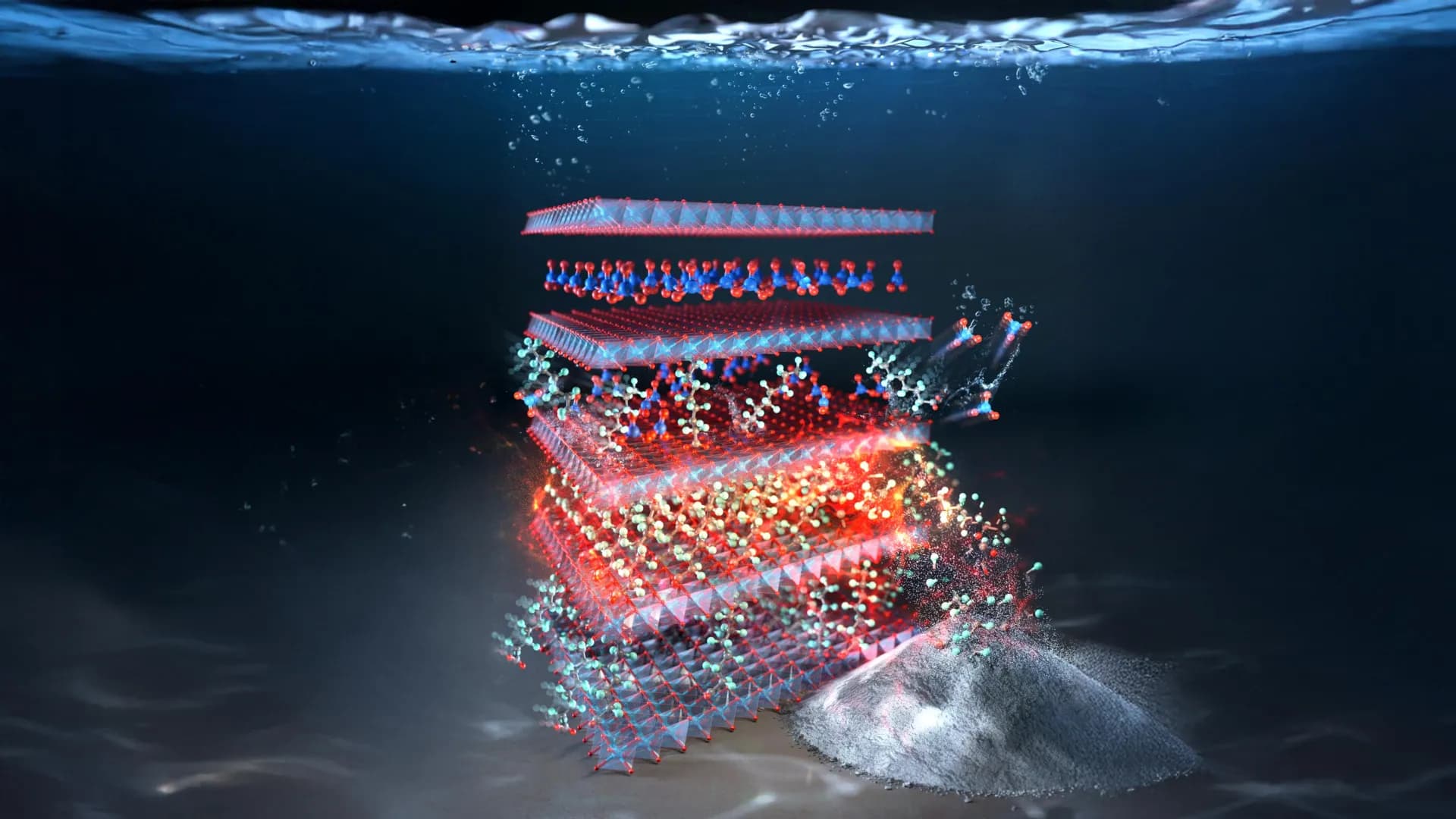
A breakthrough in PFAS elimination technology is here, but the real story is the liability shift looming over industry giants. This changes everything about toxic waste.
Key Takeaways
- •The new LDH material offers record-breaking speed for destroying PFAS, moving beyond simple filtration.
- •The real conflict will be over who pays for mass deployment: taxpayers or the original chemical manufacturers.
- •Expect industry to use the solution's existence to argue for reduced liability.
- •Adoption will likely be uneven, favoring politically powerful, wealthy municipalities first.
The Myth of the 'Clean Slate' PFAS Solution
The headlines scream salvation: a new material that obliterates 'forever chemicals'—Per- and Polyfluoroalkyl Substances (PFAS)—with unprecedented speed. This isn't just another incremental improvement in water filtration; it’s a potential game-changer in environmental remediation. But before you celebrate the end of one of the most insidious pollution crises of our time, stop. We need to talk about the economics of **PFAS cleanup** and who is truly poised to win from this technological leap.
The core innovation involves a novel layered double hydroxide (LDH) material capable of rapidly binding and destroying these notoriously stable compounds. This is a significant leap over older, energy-intensive methods like incineration or slow adsorption. For municipalities and water treatment plants struggling under the crushing weight of regulatory compliance and public health crises, this sounds like a miracle. But miracles rarely come cheap, and they certainly don't redistribute wealth fairly.
The Unspoken Truth: Liability vs. Innovation
This is where the story gets interesting. For decades, massive chemical manufacturers—the originators of these substances—have fought tooth and nail against liability, often hiding behind complex legal structures and lobbying efforts. The sheer scale of the contamination made remediation seem economically impossible for them, effectively kicking the can down the road to taxpayers. Now, a high-efficiency **PFAS removal** technology emerges.
Who benefits immediately? The technology developers, naturally. They own the patent, and the demand for rapid, effective destruction is infinite. But the deeper win is for the polluters who can now potentially argue that a viable, scalable solution exists, shifting the narrative from 'impossible contamination' to 'manageable remediation cost.' The question isn't *if* we can clean it; it's *who* will be forced to fund the deployment of this expensive new hardware across thousands of contaminated sites. Expect aggressive lobbying to secure government subsidies, framing this as a national security issue rather than corporate accountability for decades of environmental neglect.
The true test of this innovation isn't its speed in a lab; it’s its ability to survive the courtroom. Will this technology be used as leverage to force settlements where the responsible parties pay a fraction of the historical damage, or will it finally be the lever that forces comprehensive manufacturer liability? History suggests the latter is a long shot.
Where Do We Go From Here? The Prediction
The next 18 months will see a fierce battle waged in regulatory bodies, not just in the lab. Prediction: This technology will initially be adopted in high-profile, high-cost metropolitan areas where political pressure is highest. This creates a two-tiered system: affluent areas get rapid **forever chemical** destruction, while rural and poorer communities, often the hardest hit by initial contamination (think military bases or industrial zones), will be stuck waiting for state or federal funding that may never fully materialize. Furthermore, expect immediate R&D pivoting towards optimizing this LDH material for lower-cost, decentralized applications—a crucial step toward true mass deployment, but one that will take years.
This breakthrough is not the end of the PFAS crisis; it’s the beginning of the **PFAS cleanup** funding war. The focus must remain on accountability, not just on the efficiency of the scrubbing process.
Frequently Asked Questions
What exactly are PFAS and why are they called 'forever chemicals'?
PFAS (Per- and Polyfluoroalkyl Substances) are a group of man-made chemicals that include PFOA and PFOS. They are called 'forever chemicals' because their carbon-fluorine bonds are extremely strong, making them resistant to breaking down naturally in the environment or the human body.
How does the new layered double hydroxide (LDH) material work for PFAS removal?
The LDH material acts as a highly efficient adsorbent, binding strongly to the PFAS molecules in contaminated water. Crucially, unlike simple filters, this material appears capable of actively destroying the chemical bonds once adsorbed, rendering the contaminant inert.
If this technology works fast, why won't all water be clean tomorrow?
Scaling up is the major hurdle. Implementing new, specialized remediation hardware across thousands of water treatment facilities nationwide requires massive capital investment, regulatory approval, and time. The cost of the material itself is also a factor.
What is the main economic risk associated with this breakthrough?
The primary risk is that the existence of a viable cleanup technology will be leveraged by polluting industries to argue for lower settlement costs in ongoing litigation, shifting the long-term financial burden onto government agencies or ratepayers.
Related News

The NASA Tech Heist: Why Earthly 'Exploration' is Just a Trojan Horse for Corporate Control
Forget the stars. The real battle for **technology transfer** is happening on Earth, driven by overlooked **NASA innovations** and the looming specter of **government funding**.

The Hidden Agenda Behind Student Tech Councils: Who Really Controls the University's Digital Destiny?
The push for student tech representatives isn't about feedback; it's about institutional control. Unpacking the real power dynamics in university technology.
The NASA Tech Drain: Why 'Space Spin-Offs' Are Hiding a Dystopian Reality for Earth
Forget moon bases. NASA's true legacy isn't Mars; it's the weaponization and privatization of fundamental **technology** breakthroughs that are leaving the average citizen behind in this new **exploration** age.

DailyWorld Editorial
AI-Assisted, Human-Reviewed
Reviewed By
DailyWorld Editorial