The Odia Textbook Gambit: Why Localizing Science Education is a Trojan Horse for Political Power
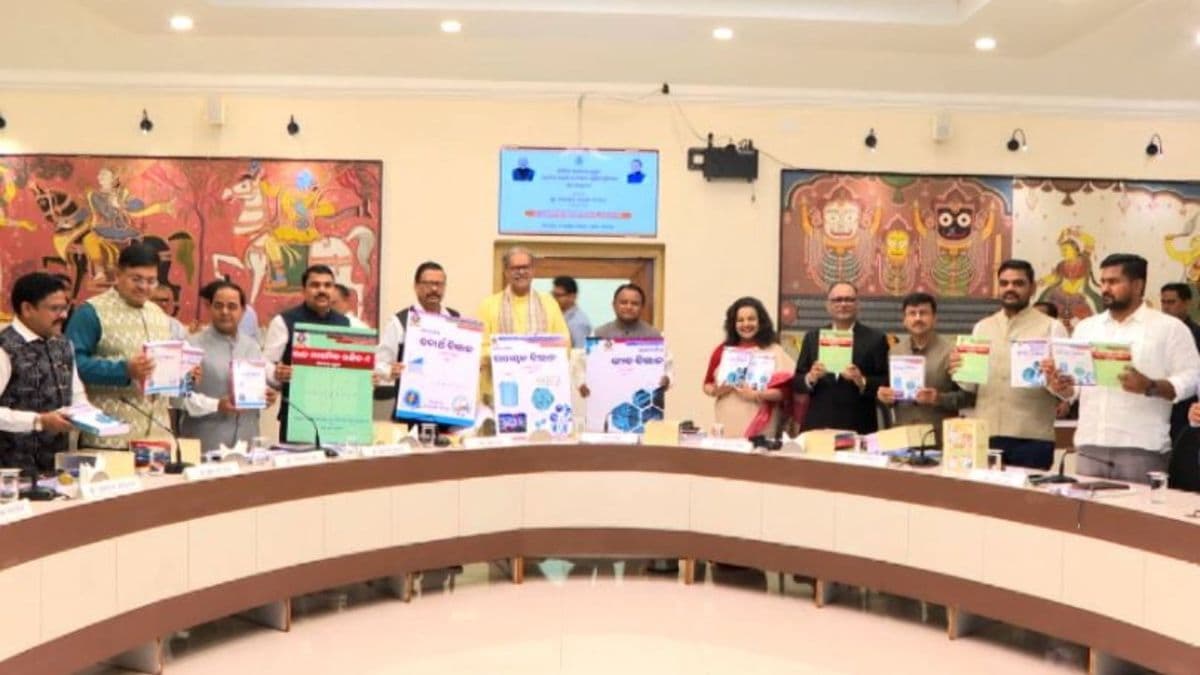
Odisha's move to release Class 11 Science and Math books in Odia is more than just education reform; it's a strategic realignment of regional intellectual capital.
Key Takeaways
- •The localization of Class 11 Math/Science in Odia is a strategic move toward regional intellectual control, not just accessibility.
- •There is a hidden risk of creating an intellectual silo, potentially hindering students' ability to engage with cutting-edge global research.
- •The policy signals a political commitment to retaining scientific talent within the state's borders.
- •Future friction will emerge when universities attempt to maintain rigorous postgraduate standards against the foundational language shift.
The Odia Textbook Gambit: Why Localizing Science Education is a Trojan Horse for Political Power
The Odisha government's recent release of Class 11 Mathematics and Science textbooks in the native Odia language is being hailed as a landmark victory for linguistic preservation. But let’s cut through the celebratory rhetoric. This isn't merely about making complex calculus accessible; it’s a calculated geopolitical move. While proponents champion **regional language education** as a tool for equity, the unspoken truth is that controlling the foundational language of high-level STEM instruction is the ultimate lever of regional intellectual and political autonomy. The real question isn't 'Can students learn better?' but 'Who controls the narrative of scientific thought in Odisha?'
The Illusion of Accessibility vs. The Gatekeepers of Global Knowledge
On the surface, this initiative addresses a genuine gap: the cognitive load incurred when students must simultaneously master advanced scientific concepts and navigate a secondary language barrier (English). This is the primary selling point for **Odisha education reform**. However, we must analyze the structural implications. By translating core texts, the state is implicitly creating a parallel, potentially siloed, academic ecosystem. While this boosts local publishing and employs more Odia-speaking educators, it risks decoupling the next generation of Odia scientists from the global, English-dominated discourse of cutting-edge research. Will these Odia texts reference the latest papers from MIT or CERN, or will they rely on slightly outdated, localized interpretations? The depth of translation determines the ceiling of aspiration.
The beneficiaries are clear: local academics gain relevance, and the state solidifies its cultural mandate. The losers? Perhaps the most ambitious students who will eventually need native-level English fluency to secure global fellowships or join multinational R&D teams. This initiative risks creating highly competent regional experts who struggle to compete on the international stage—a subtle form of intellectual protectionism disguised as empowerment. We are witnessing a strategic trade-off: immediate local comprehension for long-term global mobility.
The Deep Dive: Intellectual Sovereignty
This move transcends simple pedagogy; it is about establishing **language primacy in science**. For decades, the English medium has served as an unofficial gatekeeper, ensuring that intellectual capital flows outward, often through educational migration. By localizing the language of advanced learning, Odisha is attempting to anchor its brightest minds within its own borders. This is a powerful tool for retaining talent necessary for state-level industrialization and technological self-sufficiency. It signals a deliberate shift away from merely consuming global knowledge to actively developing and articulating local scientific solutions.
Compare this to other states wrestling with similar linguistic debates. Odisha is taking a bolder stance, tackling the most resistant domains: pure mathematics and hard science. This requires significant investment not just in translation, but in rigorous peer review to maintain academic rigor—a logistical nightmare that suggests deep political commitment, not just token gestures.
What Happens Next? The Prediction
The immediate future will see a surge in local publishing contracts and a temporary spike in performance metrics for students who struggled with English-medium instruction. **My prediction is this:** Within three years, the state will face a crisis of higher education alignment. Universities will struggle to find faculty capable of teaching postgraduate courses in Odia that match the rigor of international standards. To compensate, the government will be forced to subtly reintroduce mandatory, high-level English proficiency exams for entry into top state engineering and medical colleges, effectively creating a two-tiered system: Odia for foundational learning, English for elite progression. This will expose the inherent tension between cultural preservation and global scientific competitiveness.
This is not a failure of the policy, but the inevitable friction when a regional power asserts its identity against the universal language of modern science. It is a necessary, messy evolution, but one whose long-term costs are yet to be fully calculated.
Gallery
%2Fodishatv%2Fmedia%2Fagency_attachments%2F2025%2F07%2F18%2F2025-07-18t114635091z-640x480-otv-eng-sukant-rout-1-2025-07-18-17-16-35.png&w=3840&q=75)

%2Fodishatv%2Fmedia%2Fmedia_files%2F2026%2F02%2F01%2Fodisha-govt-releases-class-11-mathematics-and-science-books-in-odia-language-2026-02-01-15-35-08.jpg&w=3840&q=75)
%2Fodishatv%2Fmedia%2Fmedia_files%2F2025%2F09%2F22%2Fadvertise-with-us-2025-09-22-12-54-26.jpeg&w=3840&q=75)


Frequently Asked Questions
What is the primary goal of releasing science textbooks in Odia?
The stated goal is to reduce the cognitive burden on students by removing the language barrier in complex subjects like Mathematics and Science, thereby improving comprehension.
Will this negatively impact students seeking higher education abroad?
Potentially, yes. While foundational learning improves locally, fluency in English remains the lingua franca for advanced international research and top global universities. This policy might create a gap for globally competitive students.
What does 'intellectual sovereignty' mean in this context?
It refers to the state's effort to control the primary language through which its citizens access and generate high-level scientific knowledge, reducing reliance on external, often English-dominated, academic structures.
Are other Indian states implementing similar language reforms for STEM subjects?
Many states promote regional languages in primary and secondary education, but tackling Class 11 and 12 core STEM subjects in the native tongue represents a more aggressive push toward full academic localization.
