The Luxury Wardrobe Swap: Why Your New Orthopedic Hospital Is Actually a Five-Star Hotel Disguise
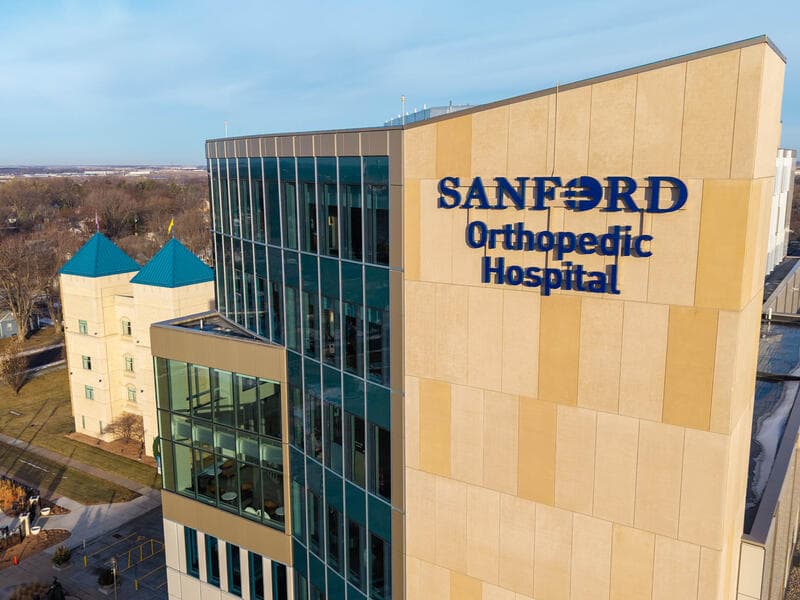
The new Sanford orthopedic center promises hospitality, but the real story behind this 'luxury healthcare' trend is a brutal cost shift.
Key Takeaways
- •The focus on 'hospitality' in new orthopedic centers is primarily a market differentiation strategy against rising competition.
- •This capital-intensive approach risks creating a two-tiered system where premium comfort is monetized heavily.
- •The true cost of this luxury experience will eventually be borne by consumers through higher premiums or facility fees.
- •The trend signifies the commoditization of elective procedures where experience trumps perceived medical differentiation.
The Hook: Is Your Next ACL Repair Served with a Complimentary Robe?
Another gleaming, glass-and-steel monument to modern medicine has opened its doors. Sanford Health’s new orthopedic facility is being hailed as a revolution, emphasizing “hospitality” alongside cutting-edge surgery. But let’s cut through the marketing sheen. This isn't about better knees; it’s about the **reimbursement crisis** in American healthcare. When providers invest heavily in patient experience—think spa-like waiting rooms and gourmet meal plans—someone, eventually, has to pay the premium. This trend in **orthopedic surgery** isn't altruism; it's strategic maneuvering in a broken system.
The core news is simple: A new specialized facility has launched, promising concierge-level care for joint replacements and sports injuries. The buzzwords are “patient comfort,” “reduced stress,” and “amenity-rich environment.” But for the astute observer, the real narrative centers on **healthcare economics** and market capture. Who wins when the waiting room looks like the lobby of the Four Seasons?
The Unspoken Truth: Hospitality as a Competitive Moat
The unspoken truth is that this focus on hospitality is a direct response to the shifting power dynamics between patients and payers. In an increasingly competitive market, especially for high-margin elective procedures like joint replacements, patient satisfaction scores directly impact referral networks and, critically, insurance contract negotiations. Sanford isn't building a hotel; they are building an unassailable competitive moat. They are banking on the fact that when consumers have choice (or think they do), they will gravitate toward the option that feels less like a clinical ordeal and more like a premium service.
The losers here are twofold. First, smaller, older facilities that cannot afford this massive capital expenditure on aesthetics will struggle to compete for high-value elective cases. Second, the insured public, who will inevitably face higher premiums or deductibles to subsidize this luxurious overhead. This shift weaponizes consumerism against affordability. We are trading genuine system efficiency for superficial comfort. The technology inside may be standard, but the packaging is decidedly bespoke.
Deep Analysis: The Commoditization of Care
This move signifies the final stage of **orthopedic surgery** commoditization. When the actual medical outcomes between Facility A and Facility B are statistically similar—a benchmark often achieved through standardized surgical pathways—the differentiator becomes the *experience*. This is Silicon Valley's playbook applied to musculoskeletal health. If you can’t innovate the core product (surgery), you innovate the wrapper (the stay). The emphasis on hospitality serves as a powerful (if misleading) proxy for quality. Patients equate marble countertops with superior surgical skill, a dangerous cognitive shortcut that benefits the hospital’s bottom line, not necessarily their long-term recovery.
Consider the implications for medical tourism, even within the US. These centers are designed to attract patients from farther afield, bypassing local community hospitals. For more on how market consolidation affects local access, see analyses from the Kaiser Family Foundation on regional healthcare disparities (KFF).
Where Do We Go From Here? The Prediction
Prediction: Within five years, specialized centers will begin offering tiered pricing based on room amenities. We won't just have “standard” and “deluxe.” We will see “The Executive Suite Recovery Package,” featuring dedicated physical therapy staff available on-demand, personalized nutritionists, and perhaps even automated concierge bots handling discharge paperwork. This will force Medicare and private insurers to create ultra-low-cost, bare-bones reimbursement tiers for basic procedures, creating a stark two-tiered system: the high-amenity, high-cost elective market, and the bare-minimum, necessary-care market. This divergence in **healthcare economics** will widen the gap between those who can afford premium recovery and those who simply survive it.
The Takeaway (TL;DR)
- The hospitality focus is a competitive strategy to attract elective surgery volume, not just patient kindness.
- This trend puts financial pressure on older, non-specialized hospitals.
- Patients may confuse luxury amenities with superior surgical outcomes.
- Expect further stratification: ultra-luxury recovery tiers versus basic care tiers.
Frequently Asked Questions
What is the main driver behind the trend of orthopedic centers emphasizing hospitality?
The main driver is market competition. As surgical outcomes for common procedures become standardized, providers use 'patient experience' and luxury amenities as key differentiators to attract high-value elective surgical volumes from competing facilities.
How does this luxury model affect overall healthcare costs?
It generally increases the overhead costs for the facility. While patients often feel they receive better service, these high capital investments are ultimately recouped through higher facility fees, insurance negotiations, or increased patient out-of-pocket expenses, potentially driving up the overall cost of elective orthopedic surgery.
Are these 'hospitality' features proven to improve orthopedic outcomes?
While reduced patient stress and better comfort can aid recovery, there is no definitive evidence proving that spa-like environments directly lead to significantly better long-term functional outcomes compared to traditional, high-quality surgical settings.
What is the long-term prediction for specialized healthcare facilities?
The prediction is a further bifurcation of care, where centers compete on extreme luxury tiers for affluent patients while basic, high-volume centers handle necessary, lower-margin procedures, increasing inequality in patient access to comfort.
Related News

The MRFF Grant Illusion: Who Really Wins When Billions Are 'Invested' in Medical Research?
The latest Medical Research Future Fund (MRFF) grant recipients are announced, but the real story behind this massive health funding shift is about political capital, not just cures.

The 15 Drugs Trump Picked: Why Medicare Price Negotiation Is A Political Weapon, Not Just Policy
The new Medicare drug price negotiation list isn't about saving seniors money; it’s a calculated political strike against Big Pharma.

Gracie Gold’s New Role Exposes the Toxic Lie Behind Olympic Mental Health
Figure skater Gracie Gold pivots to mental health advocacy, but the real story is the system's failure to protect elite athletes.

DailyWorld Editorial
AI-Assisted, Human-Reviewed
Reviewed By
DailyWorld Editorial