The Hidden Cost of AI in Stroke Care: Why Better Imaging Is Actually a Trojan Horse for Pharma
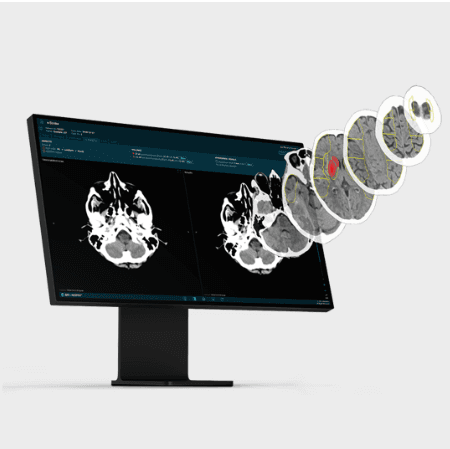
AI is boosting neuroprotective drug trials for stroke, but who truly profits from this precision medicine revolution? The real battle is over data ownership.
Key Takeaways
- •AI dramatically accelerates clinical trial validation for stroke drugs by objectively quantifying tissue salvage.
- •The true economic leverage shifts to the proprietary AI firms that own the validated interpretation software.
- •Expect pharmaceutical consolidation around these AI data-gatekeepers to secure future drug development pipelines.
- •Centralized algorithmic interpretation poses significant, unaddressed ethical risks regarding systemic bias.
The Hook: Are We Celebrating a Symptom Fix While Ignoring the Disease?
The headlines scream progress: AI technology is finally cracking the code on severe acute ischemic stroke treatment by precisely measuring the efficacy of novel neuroprotective drugs. It sounds like a win for humanity, doesn't it? But peel back the layers of this seemingly benevolent marriage between deep learning and medical imaging, and you find a much sharper reality. This isn't just about saving brain cells; it's about validating multi-billion dollar pharmaceutical pipelines using proprietary algorithms. The real story in stroke treatment technology isn't the drug itself, but the iron grip the AI providers gain on outcome data.
The 'Meat': Validation by Algorithm
The recent success involves using AI-driven analysis—often proprietary software analyzing standard MRI or CT scans—to rapidly quantify salvageable brain tissue (penumbra) versus irreversibly damaged core. This allows researchers to definitively prove if a neuroprotective drug candidate actually works faster and better than placebo in clinical trials. Before AI, this assessment was subjective, slow, and prone to human error. Now, it’s quantitative, rapid, and highly defensible to regulatory bodies like the FDA. This efficiency dramatically de-risks drug development for Big Pharma. Think of the money saved on protracted trials. This is the core driver.
The unseen player here is the imaging software company, often a startup backed by major venture capital, whose algorithm becomes the 'gold standard' benchmark. They aren't just selling software; they are selling medical imaging technology standardization. This creates an immediate, unavoidable dependency for any drug targeting ischemic injury.
The 'Why It Matters': The Data Monopoly
Here is the contrarian view: The primary winner isn't the patient, yet. The primary winner is the entity that owns the algorithm that interprets the scan. If a drug is approved based on AI-quantified efficacy, the entire market—hospitals, insurance companies, and subsequent drug developers—must adopt that specific AI platform to ensure compatibility and prove ongoing clinical utility. This locks in users. We are witnessing the birth of a new data gatekeeper in neurology, far more powerful than any single imaging hardware manufacturer. The true value isn't the drug; it's the dataset generated by millions of post-stroke scans processed through one specific, validated intelligence.
This centralization of diagnostic interpretation power is a massive regulatory and ethical tightrope walk. Who audits the auditor? If the algorithm contains systemic bias (perhaps trained predominantly on data from one demographic), that bias is now baked into the efficacy proof for the next generation of stroke interventions. See how the integration of advanced analytics profoundly reshapes medical economics. For further reading on the history of medical technology adoption, review this analysis on Reuters.
What Happens Next? The Prediction
Within five years, expect to see major pharmaceutical companies either acquiring the leading neuro-imaging AI firms outright or forcing exclusive data-sharing partnerships. The competitive edge won't be in discovering the next small molecule; it will be in controlling the most robust, real-world efficacy data stream, which only these AI platforms can provide. Furthermore, expect pushback from public health advocates demanding open-source validation of these critical diagnostic algorithms, arguing that life-saving efficacy standards should not reside behind proprietary paywalls. The fight for open science versus proprietary AI insight is coming to the stroke unit.
For a look at the broader landscape of AI in healthcare, consult resources like the World Health Organization.
Gallery
Frequently Asked Questions
What is the primary role of AI in severe acute ischemic stroke trials currently announced news is about this new finding that AI technology is helping to reveal efficacy of neuroprotective drug candidates in severe acute ischemic stroke patients. This means AI analyzes complex brain scans (like MRI/CT) far faster and more accurately than humans to determine how much brain tissue is truly salvageable, thus proving if a new drug is working effectively to protect that tissue during a stroke event. This significantly de-risks drug development for pharmaceutical companies by providing quantifiable proof of concept in trials. How does this impact patient care immediately? (The technology is currently used in trials to validate drugs. Immediate patient benefit comes when these validated drugs hit the market. The speed of validation means potentially faster access to effective new therapies, though the diagnostic tools themselves may be adopted later in standard care.)
Why is this AI validation process considered a 'Trojan Horse' for pharma, as suggested by the analysis? (The 'Trojan Horse' analogy suggests that while the AI appears to be a neutral tool for scientific advancement, it actually serves to lock in pharmaceutical companies to specific data standards and proprietary software platforms. Whoever controls the validated algorithm controls the proof of efficacy, creating a dependency that benefits the software owner economically and strategically, potentially overshadowing the actual therapeutic benefit of the drug.)
What are the main risks associated with using proprietary AI for medical efficacy measurement in stroke care? (The primary risks involve lack of transparency, as proprietary algorithms are often black boxes; potential for systemic bias if the training data is not diverse, leading to skewed efficacy results for certain patient populations; and regulatory capture, where agencies become overly reliant on a single vendor's interpretation method, stifling competition and innovation in diagnostics.)
What is the difference between a neuroprotective drug and a thrombolytic agent used for stroke? (Thrombolytic agents, like tPA, are 'clot-busters' designed to mechanically or chemically dissolve the blockage causing the stroke, aiming to restore blood flow quickly. Neuroprotective drugs, the focus of this AI analysis, are designed to protect the brain cells in the surrounding area (the penumbra) from the damage caused by the lack of blood flow, even after blood flow is partially restored or during the critical window before intervention.)
Related News

The Hidden Cost of 'Fintech Strategy': Why Visionaries Like Setty Are Actually Building Digital Gatekeepers
The narrative around fintech strategy often ignores the consolidation of power. We analyze Raghavendra P. Setty's role in the evolving financial technology landscape.

Moltbook: The 'AI Social Network' Is A Data Trojan Horse, Not A Utopia
Forget the hype. Moltbook, the supposed 'social media network for AI,' is less about collaboration and more about centralized data harvesting. We analyze the hidden risks.

The EU’s Quantum Gambit: Why the SUPREME Superconducting Project is Actually a Declaration of War on US Tech Dominance
The EU just funded the SUPREME project for superconducting tech. But this isn't just R&D; it's a geopolitical power play in the race for quantum supremacy.
