The Hidden Cost of 'Accelerated Science': Who Is Really Cashing In on the Research Gold Rush?

The narrative of 'science accelerated' masks a dangerous consolidation of power. Unpacking the true winners and losers in today's breakneck scientific progress.
Key Takeaways
- •Accelerated science is primarily driven by private capital, prioritizing ROI over foundational, slow-burn research.
- •The speed of discovery is eroding the effectiveness of traditional peer review, risking quality control.
- •The consolidation of IP rights creates new intellectual moats, centralizing power away from the public domain.
- •Expect significant political and legal battles over data transparency as public backlash grows.
The Hook: Faster, But For Whom?
We are living in an era where scientific advancement is touted as an unstoppable, purely benevolent force. The mantra is **science accelerated**, a beautiful, clean narrative of progress. But strip away the glossy press releases, and you find a far messier reality. The speed of modern research—driven by massive private capital and algorithmic efficiency—isn't democratizing knowledge; it’s centralizing control. The unspoken truth is that this acceleration benefits a hyper-elite few who can afford the entry ticket to the fast lane of discovery.
The 'Meat': Beyond the Breakthrough Hype
The current obsession with rapid discovery, often fueled by venture capital demanding near-immediate ROI, forces researchers into high-yield, low-risk territory. This isn't pure curiosity-driven exploration; it’s applied R&D with a quarterly report deadline. When we look at the recent surge in biotech and AI breakthroughs, who are the primary beneficiaries? Not the foundational academic institutions, but the highly specialized, heavily funded private labs. This trend warps scientific priorities. We see massive investment in areas promising quick returns—like personalized medicine for the wealthy or optimization algorithms for finance—while critical, slow-burn public health issues languish for lack of immediate monetization potential. This shift fundamentally alters the definition of 'valuable' **scientific research**.
The pressure to publish quickly also breeds systemic vulnerabilities. Peer review, the traditional gatekeeper of quality, is struggling to keep pace. What we are seeing is a dangerous trade-off: sacrificing rigor for velocity. This isn't about slowing down progress, but about acknowledging the fragility introduced when the pursuit of knowledge becomes inextricably linked to the pursuit of profit.
The 'Why It Matters': The New Gatekeepers of Innovation
The real power shift is occurring in intellectual property. When research is accelerated by private money, the resulting patents and data become proprietary assets, not public goods. This creates an intellectual moat around crucial technologies. Consider the recent pace of gene editing or large language model development. While the public consumes the output, the blueprints are locked down. This centralization means fewer entities dictate the ethical boundaries, accessibility, and ultimate direction of humanity's next great leaps. The democratization of **scientific discovery** is a myth when the infrastructure required for true acceleration—massive computing power, specialized datasets, regulatory capture—is prohibitively expensive.
Furthermore, this acceleration deepens global scientific inequality. Nations or institutions without access to this high-speed pipeline risk being relegated to consumers of technology rather than creators. This creates a new form of technological colonialism, where foundational knowledge flows outward from a few global hubs.
The Prediction: Where Do We Go From Here?
The next inevitable phase of this trend is a severe, public backlash against proprietary science. As the public begins to feel the tangible negative externalities—whether through exorbitant drug prices or opaque AI decision-making—the demand for 'Open Science 2.0' will become a political rallying cry. We predict that within five years, major legislative bodies will be forced to mandate greater data transparency for any research that receives significant public funding or impacts national security/public health. This will cause significant friction with established corporate science entities, leading to high-stakes legal battles over IP rights that will define the next decade of innovation policy. The fight will shift from 'Can we discover it?' to 'Who owns what we discover?'
Gallery



Frequently Asked Questions
What is the main criticism of 'accelerated science'?
The main criticism is that accelerating research through private funding often warps scientific priorities toward monetizable outcomes, neglecting crucial but less profitable areas, and potentially sacrificing rigorous peer review for speed.
How does accelerated research affect intellectual property?
It heavily favors the entities funding the acceleration, leading to the proprietary locking down of critical intellectual property, which restricts broader academic and public access to foundational knowledge.
Is scientific progress slowing down or speeding up?
While the pace of *certain* applied discoveries is accelerating rapidly due to computational power and funding, fundamental, curiosity-driven exploration might be stagnating or shifting focus away from public good.
What is the long-term risk of centralized scientific control?
The long-term risk is that a small number of private entities will dictate the ethical standards, accessibility, and direction of technologies that profoundly impact society, leading to increased inequality.
Related News

The Silent Coup: How One Scientist's Pivot Reveals the UK's Dangerous Science-to-Policy Pipeline
Dr. Thanuja Galhena's jump from materials science to UK policy isn't a success story—it's a warning about captured expertise.

The Evolution Trust Crisis: Why Doubting Scientists on Darwin Isn't Just About Faith Anymore
The debate over **evolutionary theory** is shifting. It’s no longer just faith vs. science; it's about institutional trust and **scientific consensus** in the age of information warfare.
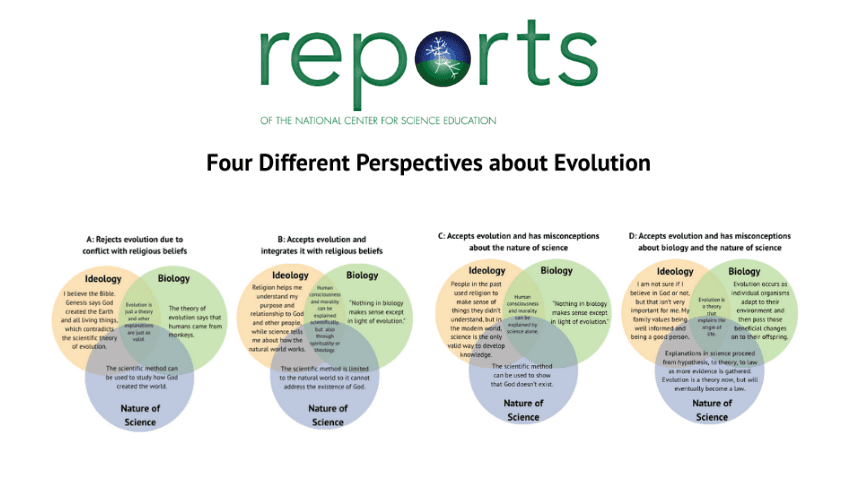
The Invisible War: Why the New Science Journal Release Hides a Bigger Battle Over Education
The latest RNCSE issue is out, but the real story is the escalating culture war over science education standards.

DailyWorld Editorial
AI-Assisted, Human-Reviewed
Reviewed By
DailyWorld Editorial