The Health Care Crisis: Why South Africans Are Giving Up on the State (And Who’s Profiting)
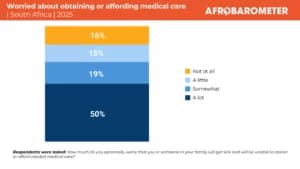
New Afrobarometer data shows collapsing trust in basic health care. This isn't just incompetence; it's a structural failure benefiting the private elite.
Key Takeaways
- •Public health failure acts as a hidden subsidy for the private medical sector.
- •Dissatisfaction is not just policy failure but a structural outcome benefiting elite providers.
- •The current environment guarantees a massive brain drain of skilled medical professionals.
- •True universal care is being undermined by a deepening reliance on dual, unequal systems.
The latest Afrobarometer survey (AD1098) confirms what every citizen queuing outside a crumbling public clinic already knows: South African basic health care delivery is in catastrophic decline. But stop focusing on the mismanagement statistics. The real story isn't the government's failure; it's the strategic success of the parallel system it enables. The persistent collapse of public health infrastructure isn't accidental; it’s the most effective marketing campaign private medical aid schemes have ever run.
The Unspoken Truth: A Two-Tiered Reality Confirmed
When citizens express profound dissatisfaction with their ability to access essential services, we usually frame it as a policy breakdown. Here, it’s a feature, not a bug. The data reveals a deep chasm where the majority—those reliant on the public sector—are essentially being pushed into the arms of private providers, whether they can afford it or not. This manufactured scarcity in the public sphere ensures a constant, desperate flow of capital into medical insurance and private hospitals. Healthcare access in South Africa is now the ultimate status symbol, not just a right.
Who benefits? The shareholders of the largest medical aid providers and the specialists who operate exclusively within the private bubble. They thrive on the failure of the state, which acts as a permanent, unpaid lead generator. The political class, meanwhile, uses the public system's failure as a shield, pointing to the complexity of the problem while their own families utilize state-of-the-art private care, often paid for by taxpayer-subsidized benefits.
Deep Analysis: The Erosion of Social Contract
This isn't just about long waiting times for antiretrovirals or broken X-ray machines. This is the slow, deliberate unraveling of the post-apartheid social contract. Universal health care was supposed to be the great equalizer. Instead, what we have is a system where the quality of your life—or death—is dictated by your income bracket. The sheer scale of public sector neglect forces the middle class to pay twice: through taxes funding a failing system, and through premiums funding a privileged one. This dynamic breeds profound social resentment, far deeper than simple economic inequality.
The reliance on the private sector also distorts medical training and research priorities, focusing innovation on lucrative, high-margin treatments rather than foundational primary care for the masses. For more on the structural inequities in global health financing, see the work reviewed by the World Health Organization.
What Happens Next? The Predicted Exodus
Our prediction is grimly straightforward: Expect a mass exodus of skilled medical professionals within the next five years. The current environment—characterized by burnout, inadequate resources, and moral injury from being unable to provide decent care—is unsustainable for dedicated practitioners. While the government discusses grand reforms like National Health Insurance (NHI), the reality on the ground is emigration. Doctors and nurses, trained at public expense, will seek environments where their skills are valued and resources are available. This brain drain will hollow out the remaining capacity of the public sector, making the reliance on private care not a choice, but the only remaining option for survival.
The NHI debate, while necessary, is a distraction from the immediate bleeding. Until accountability is enforced and resources are ring-fenced for frontline primary care, the narrative of public failure will only strengthen the private monopoly. The future of South African basic health care looks increasingly privatized, unequal, and precarious for the majority.
Frequently Asked Questions
What is the main finding of the recent Afrobarometer survey (AD1098) on South African health?
The survey confirms high levels of public dissatisfaction and lament regarding the government's performance in improving basic health care services across the country.
How does the failure of public health benefit the private sector?
When public facilities fail to deliver essential care, citizens who can afford it are forced into private medical aid schemes and hospitals, guaranteeing a steady stream of high-value customers for private entities.
What is the predicted long-term consequence of the current health care environment in South Africa?
The prediction is a significant exodus (brain drain) of skilled doctors and nurses from the public sector within the next five years, further crippling state capacity and increasing reliance on expensive private care.
What role does National Health Insurance (NHI) play in this dynamic?
While NHI is proposed as a solution, the current, ongoing decay of the public system may undermine its successful implementation, as the private sector remains deeply entrenched and profitable.
Related News

The 40-Year Illusion: Why ECU Health's Anniversary Hides a Looming Healthcare Crisis
Forty years of service sounds noble, but the real story behind ECU Health's milestone reveals the unsustainable strain on regional healthcare access and staffing.

The Quiet Coup: Why 'Community Health Networks' Are the Trojan Horse for Healthcare Centralization
Unpacking the mandate of Community Health Networks reveals a dangerous trend toward centralized control, not local care.

The Quiet War for Healthcare Talent: Why University Health Science Programs Are the New Battleground
Forget pharma hype. The real fight in modern healthcare isn't drugs; it's the looming shortage of skilled professionals, and university programs are the front lines.

DailyWorld Editorial
AI-Assisted, Human-Reviewed
Reviewed By
DailyWorld Editorial