The Cognitive Conspiracy: How Numbers Secretly Distort Your Reality (And Who Benefits)
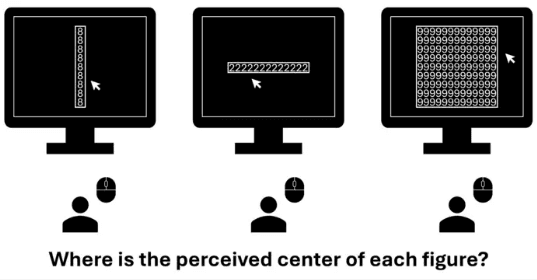
New science reveals numbers distort spatial perception. Unpacking the hidden agenda behind this fundamental cognitive bias.
Key Takeaways
- •Numbers are not abstract; they are spatially mapped in the brain, creating inherent perceptual distortion.
- •This cognitive glitch affects high-stakes decisions in finance and consumer choice.
- •The presentation layer (UX/Marketing) is the key battleground for exploiting this spatial-numerical conflation.
- •Future data interfaces must actively compensate for this fundamental human limitation.
The Hook: Are Your Eyes Lying to Your Brain?
We trust our senses implicitly. We believe the world is objectively out there, waiting to be measured. But what if the very tools we use to quantify existence—numbers—are actively sabotaging our perception of space? Recent findings on spatial numerical association suggest that our brains are hardwired to conflate quantity with physical location. This isn't just an academic footnote; it’s a fundamental vulnerability in human cognition that has massive, unexamined implications.
The core finding, often buried under layers of academic jargon, is that the mental representation of numbers is not abstract; it’s spatial. Large numbers feel “further right” or “further up,” while small numbers cluster to the left or down. This phenomenon, the Spatial Numerical Association (SNA), is so ingrained that it demonstrably warps how we judge distances and sizes. When you look at a crowded room, your brain isn't just counting; it's spatially mapping the count, creating a cognitive friction point.
The 'Meat': Why This Cognitive Glitch Matters More Than You Think
This isn't about simple arithmetic errors. This is about the bedrock of decision-making. Consider the financial markets. Traders, analysts, and algorithmic trading systems rely on parsing massive streams of numerical data—stock prices, trading volumes, market cap. If the brain automatically maps a $1 Trillion valuation to a physically 'larger' or 'more distant' mental space than a $1 Billion valuation, it introduces a systemic, non-rational bias into high-stakes decision-making. We are seeing cognitive bias at scale.
The unspoken truth here is that our reliance on standardized metrics—from GDP to survey ratings—is inherently flawed because the human hardware processing these metrics is spatially compromised. Who loses? The consumer who sees a '5-star rating' and perceives it as physically 'closer' or 'more accessible' than a '4-star option,' even if the functional difference is negligible. Who wins? Those who master the presentation layer. Marketing firms and sophisticated UX designers are already leveraging this knowledge, framing data visually to trigger these spatial associations, effectively hacking our perception of value.
The Deep Dive: Economics, Architecture, and Control
This research confirms that our relationship with cognitive processing is inherently analog, despite the digital world we inhabit. Think about urban planning or architecture. When designers use numerical scales for density or height, they are inadvertently triggering pre-set spatial biases in the populace. A skyscraper labeled '100 stories' might feel psychologically 'further away' or 'more imposing' than one labeled '300 meters tall,' even if the objective height is identical. This is the subtle architecture of control.
Furthermore, the uniformity of numerical presentation across the globe (the base-10 system) enforces a single, dominant cognitive framework. Imagine the historical implications if different cultures had adopted base-12 or base-60 as primary counting systems—the spatial mapping of their mathematics, and thus their science and philosophy, would have diverged profoundly. For more on the history of measurement, see the foundational work on the history of weights and measures. [Link to a high-authority source on measurement history, e.g., NIST or Britannica].
What Happens Next? The Prediction
The next frontier in data visualization will not be about making data 'prettier'; it will be about actively counteracting or weaponizing the SNA effect. I predict that within five years, we will see the rise of 'Cognitive Load Testing' for digital interfaces, specifically measuring the spatial-numerical dissonance they induce. Companies that fail to account for this inherent human flaw in their data presentation will suffer from subtle but measurable dips in conversion rates and user trust. Conversely, those who learn to manipulate the spatial mapping of large numerical data will gain an unfair advantage in advertising and political persuasion. Expect to see a push for non-numerical, purely analog rating systems as a reaction against this perceived manipulation.
Key Takeaways (TL;DR)
- Our brains map numbers spatially (SNA), confusing quantity with physical location.
- This introduces systemic, non-rational bias into decisions involving financial and large datasets.
- Marketers and UX designers can already exploit this cognitive vulnerability to influence perception of value.
- The future of data presentation will focus on neutralizing or weaponizing this innate spatial bias.
Gallery



Frequently Asked Questions
What exactly is Spatial Numerical Association (SNA)?
SNA is the finding that the mental representation of numbers is tied to physical space. Generally, smaller numbers are associated with locations on the left or bottom, while larger numbers are associated with locations on the right or top, influencing how we perceive magnitude spatially.
How does this affect financial trading?
When processing large financial figures (e.g., trillions vs. billions), the brain's spatial mapping can create an unconscious bias, making larger numbers feel subjectively 'further away' or 'less immediate,' potentially leading to risk miscalculation.
Can this cognitive bias be overcome?
While the underlying mechanism is hardwired, awareness is the first step. Sophisticated data visualization techniques can be employed to decouple numerical magnitude from spatial arrangement, though this requires deliberate design effort.
Is this a learned behavior or innate?
Research suggests SNA is present from a very young age, indicating a deep, potentially innate evolutionary component, though cultural factors (like writing direction) can influence the specific left-right orientation. See studies on cross-cultural numerical cognition.
