The Cognitive Blackout: Why Your Brain Forgets Everything Under Pressure Is a Feature, Not a Bug
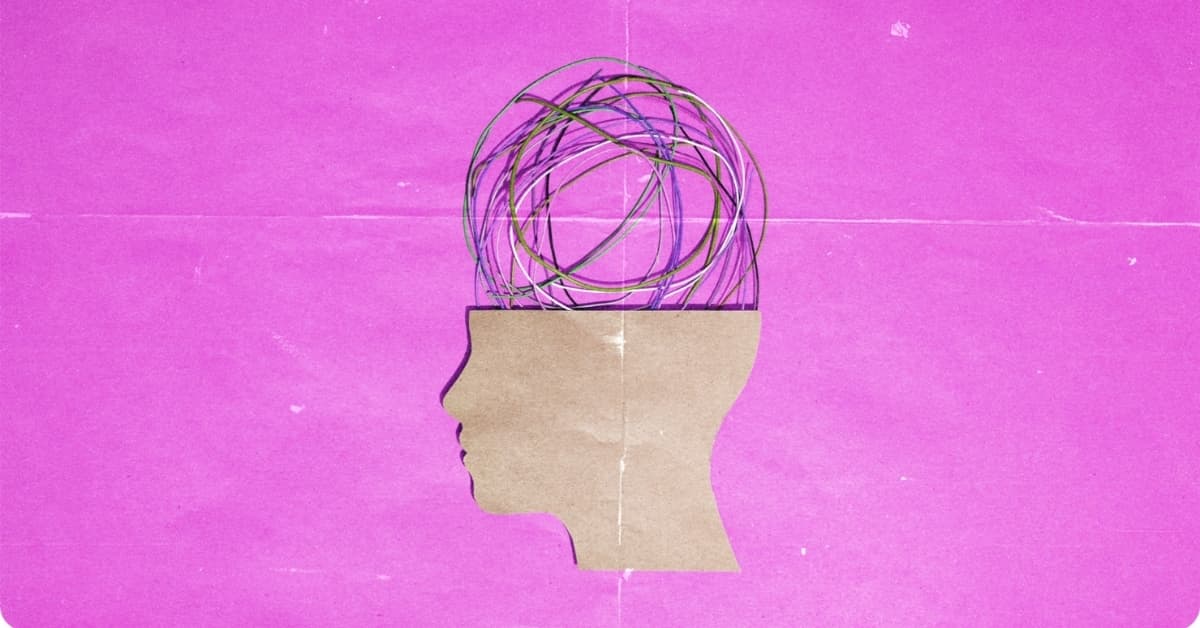
New science reveals the truth behind 'mind going blank'—it's not failure, it's a strategic shutdown. Unpacking the cognitive blackout.
Key Takeaways
- •The cognitive blackout is an active, protective system shutdown under extreme cognitive load.
- •Trying too hard to remember often exacerbates the problem by overloading the prefrontal cortex.
- •This research invalidates many current high-pressure testing methodologies.
- •Future success depends on training cognitive de-escalation techniques.
The Hook: Are You Actually Forgetting, Or Is Your Brain Hiding Something?
We’ve all been there: standing before the audience, the crucial data point vanishes, the name on the tip of your tongue evaporates. The conventional wisdom blames stress, anxiety, or poor recall. But what if the latest neuroscience on the cognitive blackout suggests something far more radical? What if the moment your mind goes blank isn't a failure of memory, but a hyper-efficient, albeit brutal, triage mechanism?
Recent research into attentional control and working memory suggests that when the pressure gauge hits maximum—whether giving a TED Talk or recalling a password during a security audit—the brain doesn't just get overwhelmed; it actively shuts down non-essential processing streams. This isn't simple forgetting; it’s a calculated, systemic resource reallocation. The working memory bottleneck is real, and scientists are finally mapping its emergency override switch.
The Meat: Performance Anxiety is Misdiagnosed
The study, focusing on prefrontal cortex activity, points to an over-activation of the very regions meant to suppress irrelevant thoughts. Think of it like a computer trying to run too many high-demand programs simultaneously. Instead of crashing slowly, the system initiates a hard reboot on everything except the bare minimum survival functions.
The unspoken truth here is the role of cognitive load management. We praise people for multitasking, but this research confirms that the brain despises it under high stakes. When you feel that paralyzing freeze, it is your brain screaming: “Too much input! Dumping non-critical data buffers now!” The very act of trying too hard to remember is what triggers the shutdown. The loss of access to information is a byproduct of an aggressive, self-preservation protocol designed to prevent total system failure.
This reframes performance anxiety. It’s not a character flaw; it’s an overzealous security guard locking the doors because they perceive an immediate threat. This mechanism might have served our ancestors perfectly when facing a saber-toothed tiger, but in the modern boardroom, it just costs us the promotion.
The Why It Matters: The Economics of Mental Bandwidth
Who benefits from understanding the working memory deficit? Primarily, those who design high-stakes evaluation systems. If corporations and educational institutions continue to test recall under extreme duress, they are testing the efficiency of the brain's emergency shutdown, not genuine competence. We are penalizing the ability to perform under manufactured pressure.
Furthermore, this discovery has massive implications for training protocols. If the goal is robust performance, training must shift from rote memorization to context-switching resilience. We need to teach the brain how to modulate the panic response, not just how to absorb more facts. The future of high-performance careers hinges on managing this internal circuit breaker.
Where Do We Go From Here? The Prediction
We are on the cusp of an industrial shift in cognitive training. Expect to see the rise of 'Cognitive De-escalation' protocols—biofeedback and targeted mindfulness that specifically target the prefrontal cortex overdrive identified in these studies. Within five years, specialized executive coaching will focus less on 'what' you know and more on 'how' you prevent the system from initiating the blank-out sequence. Furthermore, expect standardized testing bodies to face increasing pressure to adopt 'low-stakes' testing environments, as the current high-pressure models become scientifically indefensible for measuring true intelligence.

TL;DR: Key Takeaways
- The 'mind going blank' is an active resource reallocation (triage), not passive memory loss.
- Extreme pressure triggers an aggressive shutdown in the prefrontal cortex, overriding access to working memory.
- Current high-stakes testing penalizes this protective biological mechanism, not true knowledge.
- Future training will focus on managing the panic response rather than simply absorbing more data.
Frequently Asked Questions
Is the cognitive blackout the same as forgetting something later?
No. Forgetting is retrieval failure; the cognitive blackout is an active, near-instantaneous resource management shutdown initiated by the brain to prevent total system failure under perceived threat.
What part of the brain is responsible for this 'mind going blank' effect?
The research strongly implicates the prefrontal cortex, which becomes hyperactive, leading to the suppression of other necessary cognitive streams.
Can I train my brain to stop this from happening?
Yes. By practicing targeted mindfulness and biofeedback techniques aimed at modulating prefrontal cortex activity during stress simulations, individuals can improve their resilience against the blackout.
What is the key difference between stress and cognitive load?
Stress is the emotional response, while cognitive load is the objective measure of information processing demands. The blackout occurs when the cognitive load exceeds the brain's current processing capacity, triggering a stress-induced shutdown.