The Billionaire Space Race Is Hiding a Terrifying Truth About Our Future
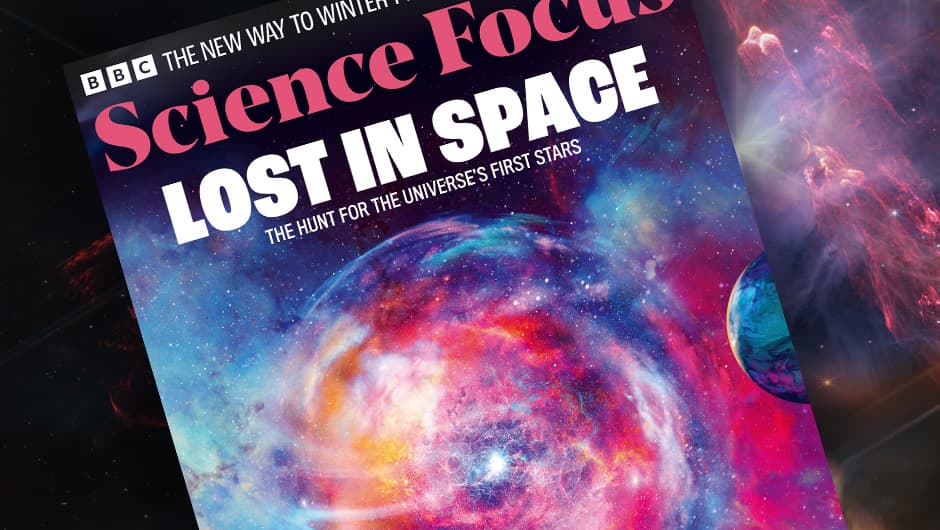
The 'Lost in Space' narrative distracts from the real power grab happening in orbital economics and space debris.
Key Takeaways
- •The modern space race is fundamentally about controlling LEO infrastructure, not exploration.
- •Unregulated mega-constellations are rapidly accelerating the risk of Kessler Syndrome (orbital chain reaction).
- •The current international legal framework is obsolete for managing private space industry growth.
- •A major, non-military collision is highly probable within the next five years, forcing political intervention.
The Black Canvas: Why 'Lost in Space' Is the Ultimate Distraction
The latest buzz surrounding space exploration, often framed by glossy magazine covers like the BBC Science Focus 'Lost in Space' issue, feels dangerously nostalgic. We are constantly fed a narrative of heroic discovery, yet the real story unfolding above our heads is one of profound geopolitical risk and unchecked private power. Forget the romantic notion of astronauts adrift; the critical conversation revolves around **orbital mechanics**, the weaponization of the high frontier, and the looming crisis of **space debris**.
The current space race isn't about flags and footsteps; it’s about infrastructure control. When Elon Musk or Jeff Bezos launch another constellation, they aren't just building satellites; they are laying claim to the global data pipeline. The unspoken truth? Whoever controls low Earth orbit (LEO) controls global communication, surveillance, and, critically, the next generation of military advantage. This rush creates an invisible, escalating tension that traditional media willfully ignores in favor of simpler, more digestible narratives about Mars colonization.
The Hidden Cost of the New Space Economy
The primary loser in this gold rush is the environment—specifically, the orbital environment. The proliferation of mega-constellations exponentially increases the risk of the Kessler Syndrome: a cascade failure where collisions create so much debris that LEO becomes unusable for decades. This isn't science fiction; it’s a predictable outcome of unregulated capitalism applied to the final frontier. We are treating Earth's orbit as an infinite dumping ground, a catastrophic oversight that threatens global GPS, weather monitoring, and military reconnaissance capabilities. The term **space junk** is too benign for what is essentially an active threat to global stability.
Who profits? The shareholders of companies that can afford to launch, service, and de-orbit their assets. Who pays? Every nation reliant on satellite communication, from farmers using precision agriculture to militaries depending on real-time intelligence. The regulatory framework, governed by outdated treaties, is laughably inadequate for the current technological pace. This asymmetry of power—vast private capability versus sluggish international governance—is the real danger.
Prediction: The First 'Orbital Incident' Will Not Be an Attack, But an Accident
We are approaching a critical mass. My prediction is that within the next five years, a major, non-military collision involving one of the massive satellite constellations will occur. This event will not be an act of war, but a catastrophic failure of **space debris** mitigation, perhaps triggered by a micrometeorite or a simple component failure. The fallout will be immediate: massive disruption to global communications, grounding of essential services, and a panicked, knee-jerk attempt by national governments to unilaterally impose traffic control over LEO.
This 'accident' will force a reckoning. It will expose the fragility of our interconnected world and shatter the illusion that private entities can manage shared global resources responsibly. The subsequent political scramble will be messy, likely leading to temporary, unilateral 'no-fly zones' imposed by major space powers, effectively creating segregated orbital highways—a chilling echo of terrestrial geopolitical division.
The Real Takeaway
The romanticism of 'Lost in Space' is a smokescreen. The real issue is terrestrial greed manifesting as orbital chaos. We must pivot from celebrating launches to demanding rigorous, enforceable international treaties on orbital traffic management and liability *now*, before the high ground becomes permanently unusable.
Frequently Asked Questions
What is the Kessler Syndrome and why is it a threat?
The Kessler Syndrome is a theoretical scenario where the density of objects in low Earth orbit (LEO) is high enough that collisions between objects could cause a cascade, generating more space debris and rendering space activities impractical for generations. It threatens all satellite-dependent infrastructure.
Are private companies responsible for space debris mitigation?
While national agencies like NASA and ESA provide guidelines, enforcement is weak. Private companies are nominally responsible for de-orbiting their satellites, but the sheer volume of new launches outpaces current verifiable mitigation strategies, creating a massive environmental liability in orbit.
What is the primary geopolitical concern regarding LEO control?
Control over LEO grants unparalleled advantages in global surveillance, communications jamming, and early warning systems. Nations or corporations that dominate this domain gain a massive strategic edge over those reliant on shared or vulnerable infrastructure.
How does the current 'Lost in Space' narrative benefit industry players?
The focus on heroic exploration and 'the next giant leap' distracts the public and policymakers from the immediate regulatory failures, environmental degradation (debris), and concentration of power in the hands of a few private aerospace billionaires.
Related News

The Silent War in Space: Why NASA's IMAP Mission Isn't Just About the Solar Wind
NASA’s IMAP mission is live, but the real prize isn't just solar wind data—it's the geopolitical edge in understanding cosmic threats.

The Hidden Cost of Rwanda's 'Green Revolution': Why Danforth's Biotech Play Isn't About Charity
The Donald Danforth Center's move into Rwandan crop biotechnology isn't just about feeding Africa; it’s about global seed control and the future of American agricultural dominance.

DailyWorld Editorial
AI-Assisted, Human-Reviewed
Reviewed By
DailyWorld Editorial