The AI Regulation War: Why Silicon Valley Is Secretly Cheering for Government Control

Forget the Capitol Hill theater. The real fight over AI regulation isn't about safety; it's about market capture. Discover the unspoken truth.
Key Takeaways
- •Major tech companies secretly favor complex regulation as a barrier to entry for startups.
- •The public focus on existential AI risk distracts from the immediate anti-competitive agenda.
- •Future regulation will likely function as a compliance tax favoring incumbents with deep pockets.
- •This centralization risks technological stagnation over the next decade.
The AI Regulation War: Why Silicon Valley Is Secretly Cheering for Government Control
America is bracing for a regulatory showdown over Artificial Intelligence, a battle framed publicly as a necessary check on existential risk. But peel back the layers of Senate hearings and white papers, and you find the **AI governance** debate is less about saving humanity and more about suffocating competition. The unspoken truth is that Big Tech—the very entities supposedly being reined in—are actively lobbying for complex, burdensome rules. Why? Because only they can afford to comply. We are witnessing the calculated engineering of regulatory moats. The current discourse around **AI safety** is a smokescreen. When giants like Google, Microsoft, and OpenAI speak of the need for 'guardrails,' they aren't expressing altruism; they are drawing battle lines. These proposed regulations—mandating massive compliance teams, proprietary auditing standards, and extensive data reporting—are prohibitively expensive for any startup hoping to challenge the incumbents. This isn't about slowing down a runaway train; it’s about ensuring only the largest, most capitalized players can afford the ticket. ### The Deep Game: Weaponizing Bureaucracy Consider the economic reality. Developing cutting-edge **generative AI** models costs hundreds of millions. Now, layer on a regulatory framework requiring continuous, expensive third-party validation for every model iteration. For a scrappy startup operating on venture capital runways, this compliance cost is a death sentence. For Alphabet or Amazon, it’s an operational expense, a minor tax on market dominance. This is classic regulatory capture, where incumbents leverage the political process to legally bar future rivals. Historically, regulation follows disruption. Here, it precedes it, designed to solidify the existing power structure. The irony is palpable: the loudest voices demanding immediate, sweeping regulation are those who stand to benefit most from locking out the next wave of innovation. The focus on abstract risks—the 'superintelligence problem'—distracts from the immediate, tangible risk: the monopolization of the most important technological platform since the internet itself. This isn't about preventing Skynet; it’s about preventing the next disruptive search engine or cloud provider. ### What Happens Next? The Great Stagnation
My prediction is that the first major piece of federal AI legislation, when it finally lands, will be a Trojan horse. It will be framed as a consumer protection bill but will function primarily as an anti-competitive measure. We will see the establishment of an AI oversight body, likely modeled after the FDA or FCC, which will immediately become bogged down in defining technical standards that favor incumbent architectures. Innovation won't stop, but it will certainly slow down and become hyper-centralized. Startups will either be acquired quickly (the 'acqui-hire' model optimized for regulatory compliance) or they will be forced into niche, non-generalist applications that avoid the heavy regulatory lifting.
This regulatory embrace, championed by Silicon Valley elites, will lead to a decade of technological stagnation, where incremental improvements on existing models replace genuine paradigm shifts. We are trading dynamic competition for perceived, managed safety, and the cost will be borne by consumers and the long-term dynamism of the American tech sector. The real casualty in this war over **AI governance** won't be a rogue algorithm; it will be the small company that could have built something better.
For context on historical regulatory capture, look at how early internet communication was shaped by incumbents lobbying for specific telecom rules (see analysis from the Federal Communications Commission archives). The pattern repeats itself, only this time the stakes involve general intelligence.
### What Happens Next? The Great Stagnation
My prediction is that the first major piece of federal AI legislation, when it finally lands, will be a Trojan horse. It will be framed as a consumer protection bill but will function primarily as an anti-competitive measure. We will see the establishment of an AI oversight body, likely modeled after the FDA or FCC, which will immediately become bogged down in defining technical standards that favor incumbent architectures. Innovation won't stop, but it will certainly slow down and become hyper-centralized. Startups will either be acquired quickly (the 'acqui-hire' model optimized for regulatory compliance) or they will be forced into niche, non-generalist applications that avoid the heavy regulatory lifting.
This regulatory embrace, championed by Silicon Valley elites, will lead to a decade of technological stagnation, where incremental improvements on existing models replace genuine paradigm shifts. We are trading dynamic competition for perceived, managed safety, and the cost will be borne by consumers and the long-term dynamism of the American tech sector. The real casualty in this war over **AI governance** won't be a rogue algorithm; it will be the small company that could have built something better.
For context on historical regulatory capture, look at how early internet communication was shaped by incumbents lobbying for specific telecom rules (see analysis from the Federal Communications Commission archives). The pattern repeats itself, only this time the stakes involve general intelligence.Frequently Asked Questions
What is regulatory capture in the context of AI?
Regulatory capture occurs when a regulatory agency, created to act in the public interest, instead advances the commercial or political concerns of the very industry it is charged with regulating. In AI, this means Big Tech influencing rules to burden smaller competitors.
Who benefits most from strict AI regulation right now?
The companies that already possess the vast computational resources, massive proprietary datasets, and deep legal teams necessary to navigate complex compliance frameworks benefit the most, typically the current market leaders in AI development.
What is the difference between AI safety and AI governance?
AI safety generally refers to technical measures preventing harmful outcomes from AI systems. AI governance refers to the laws, policies, and oversight structures (like licensing or auditing) implemented by governments or bodies to manage AI development and deployment.
Are current AI regulations focused on existential risk or market control?
While existential risk is the compelling public narrative, the practical implementation of proposed regulations heavily favors market control by creating high compliance barriers that only large firms can afford.
Related News

The Hidden Cost of 'Fintech Strategy': Why Visionaries Like Setty Are Actually Building Digital Gatekeepers
The narrative around fintech strategy often ignores the consolidation of power. We analyze Raghavendra P. Setty's role in the evolving financial technology landscape.
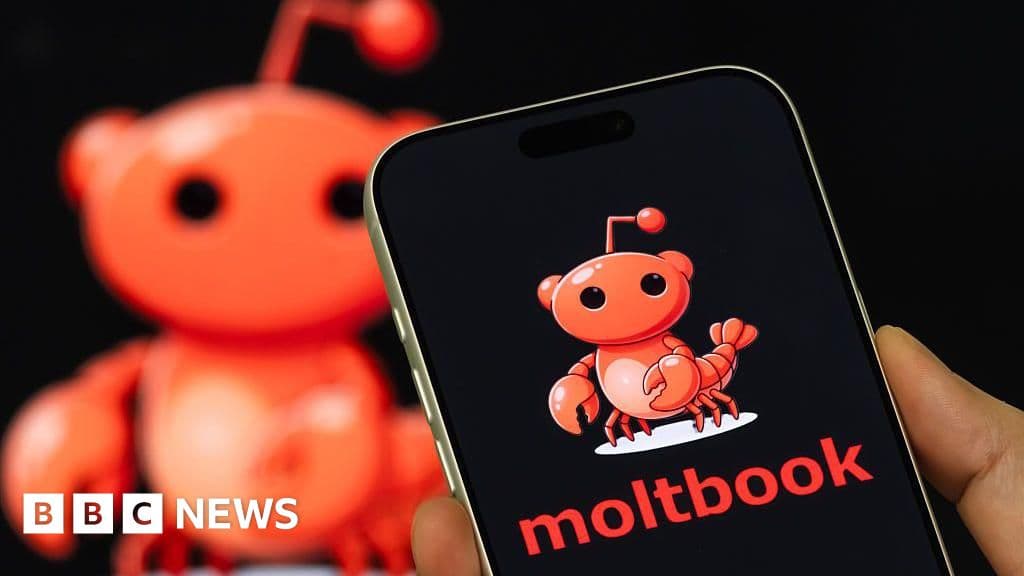
Moltbook: The 'AI Social Network' Is A Data Trojan Horse, Not A Utopia
Forget the hype. Moltbook, the supposed 'social media network for AI,' is less about collaboration and more about centralized data harvesting. We analyze the hidden risks.

The EU’s Quantum Gambit: Why the SUPREME Superconducting Project is Actually a Declaration of War on US Tech Dominance
The EU just funded the SUPREME project for superconducting tech. But this isn't just R&D; it's a geopolitical power play in the race for quantum supremacy.

DailyWorld Editorial
AI-Assisted, Human-Reviewed
Reviewed By
DailyWorld Editorial