The Star That Ate Itself: Why the 'Vanishing Giant' Hides a More Terrifying Cosmic Truth
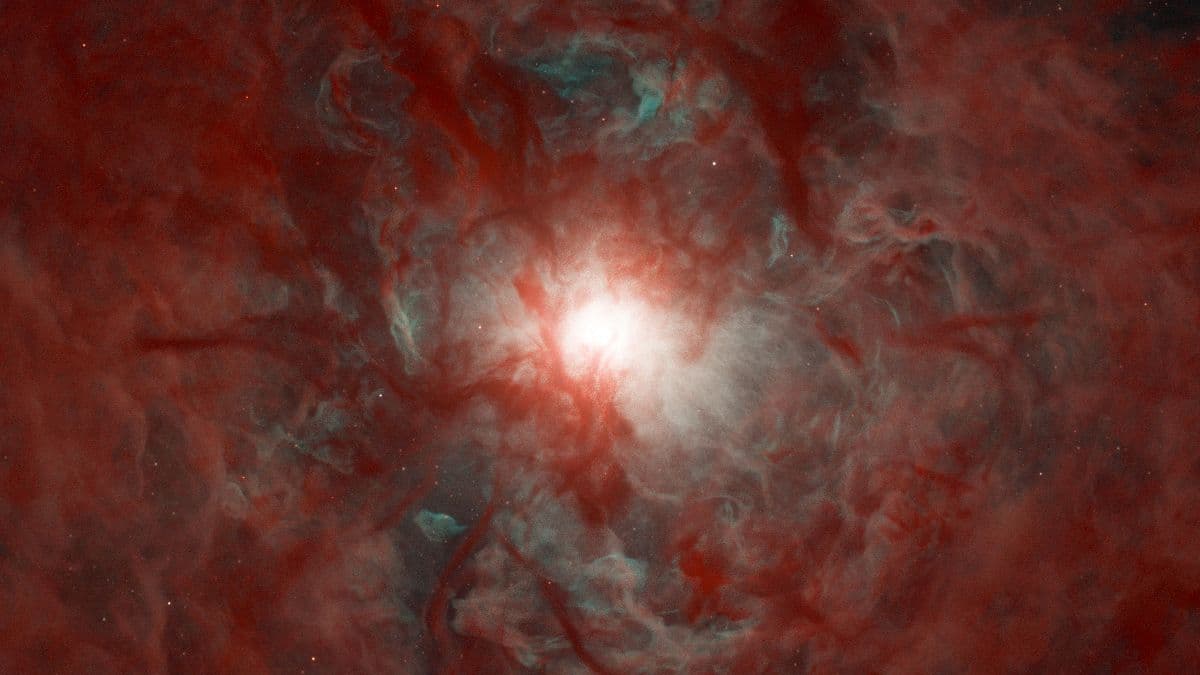
The sudden disappearance of a massive star isn't just a curiosity; it exposes the blind spots in our understanding of black hole formation and cosmic consumption.
Key Takeaways
- •A massive star vanished without the expected supernova explosion, suggesting a stealth collapse.
- •The leading theory involves the star being consumed by an already present or rapidly formed stellar-mass black hole.
- •This challenges current models of cosmic distance measurement and stellar death timelines.
- •Future research will focus on detecting anomalous dimming rather than just explosive events.
The Cosmic Disappearance: More Than Just a Faint Light
Astronomers are buzzing over the vanishing act of a massive star, a truly gigantic stellar object that simply winked out of existence over the last few years. The leading theory suggests it was quietly consumed by an invisible predator: a stellar-mass black hole. This isn't just a footnote in astrophysics; it’s a fundamental crack in our observable universe model. For decades, we’ve tracked supernovae—the spectacular, glorious death throes of giant stars. But this event suggests a far stealthier, more insidious end for cosmic behemoths. We are obsessed with the explosion, but perhaps we should be terrified of the silence.
The target star, located in a distant galaxy, didn't explode with the expected brilliant fanfare. Instead, it dimmed, faded, and disappeared from view. Why? The hypothesis points to a black hole that was either already formed or formed internally so rapidly that the resulting accretion disk choked out the star's light before it could fully erupt. This challenges the established timeline of stellar death. If black hole formation can be this subtle, how many other massive stars have simply faded away, uncounted, leaving behind only cosmic ghosts?
The Unspoken Truth: Who Really Wins in the Dark?
The immediate winners are the theorists who have long argued for a 'quiet' collapse pathway—the alternative to the supernova explosion. They gain validation, pushing their models to the forefront of gravitational physics. The losers? Anyone relying on standard candle measurements for galactic distance calibration. If massive stars are disappearing unpredictably, our cosmic yardsticks are suddenly suspect. Furthermore, the public narrative of space exploration—the desire for dramatic, visible events—is undermined. We prefer the fireworks; nature might prefer the stealth operation.
This event forces us to confront the sheer efficiency of gravity. A stellar-mass black hole, already possessing immense gravitational influence, might not need an external catalyst to begin consuming its host. It's a self-contained demolition crew. This has profound implications for galactic evolution. If large stars routinely die by stealth, the chemical enrichment of the universe—the creation of heavier elements—is happening far less visibly, and perhaps less efficiently, than we calculate based on supernova rates. It’s cosmic bookkeeping gone awry.
Where Do We Go From Here? The Prediction
The next five years will see a complete overhaul in how large-scale infrared and optical surveys monitor massive stars. We won't just look for flares; we will actively hunt for anomalous dimming signatures. My prediction is that within 36 months, using next-generation observatories like the Vera C. Rubin Observatory, astronomers will identify at least two more 'silent disappearances.' More importantly, the most controversial prediction is this: a significant fraction of the 'missing stellar mass' currently unaccounted for in certain ancient star clusters is not in the form of faint white dwarfs, but in undiscovered, dormant stellar-mass black holes that are slowly starving their parent stars to death.
This isn't just about one star; it’s about redefining the final chapter of stellar life. The universe is showing us that the most powerful events often leave the quietest evidence. The age of the spectacular supernova may be giving way to the age of the slow, inexorable cosmic chokehold. The real mystery isn't where the star went, but what other cosmic secrets have simply faded away without our noticing.
Gallery

Frequently Asked Questions
What is the difference between a supernova and a silent stellar collapse?
A supernova is a massive, brilliant explosion marking a star's death, scattering heavy elements. A silent collapse, as hypothesized here, involves the star shrinking and fading away, likely consumed by its own gravity forming a black hole without the characteristic bright outburst.
Why is the disappearance of a star important for astronomy?
It affects how we calibrate the distances to far-off galaxies, as we rely on the predictable brightness of stellar deaths (supernovae) as 'standard candles.' If stars die quietly, our cosmic map is inaccurate.
Are stellar-mass black holes common?
They are the expected end-state for the most massive stars. However, detecting them is difficult unless they are actively feeding on a companion star or causing gravitational lensing effects, making events like this crucial for study.
What is the Vera C. Rubin Observatory's role in this?
This observatory is designed to map the entire visible sky repeatedly, making it perfectly suited to detect transient events like stars suddenly dimming or disappearing, which ground-based telescopes might miss.
Related News

The Universe is Hiding Something: Why NASA's 'Darkest Galaxy' Discovery Changes Everything We Thought About Cosmic Evolution
NASA's Hubble just found one of the darkest galaxies ever. This isn't just astronomy; it's a fundamental challenge to our understanding of **galaxy formation** and **dark matter** distribution.

The Hidden War for Cosmic Truth: Why Roman Telescope Data Will Make or Break Dark Energy
The Vera C. Rubin Observatory (Roman Telescope) is poised to revolutionize cosmology, but the real battle isn't just finding supernovae—it's controlling the narrative around dark energy.

The 'Impossible' Chemistry Breakthrough: Why Textbook Publishers Are Already Sweating
A 100-year-old chemical law has been shattered. This isn't just science news; it's an economic earthquake for material science.

DailyWorld Editorial
AI-Assisted, Human-Reviewed
Reviewed By
DailyWorld Editorial