The Ocean Policy Pipeline: Why Elite US Universities Are Manufacturing Future Regulators (And Who Gets Left Underwater)
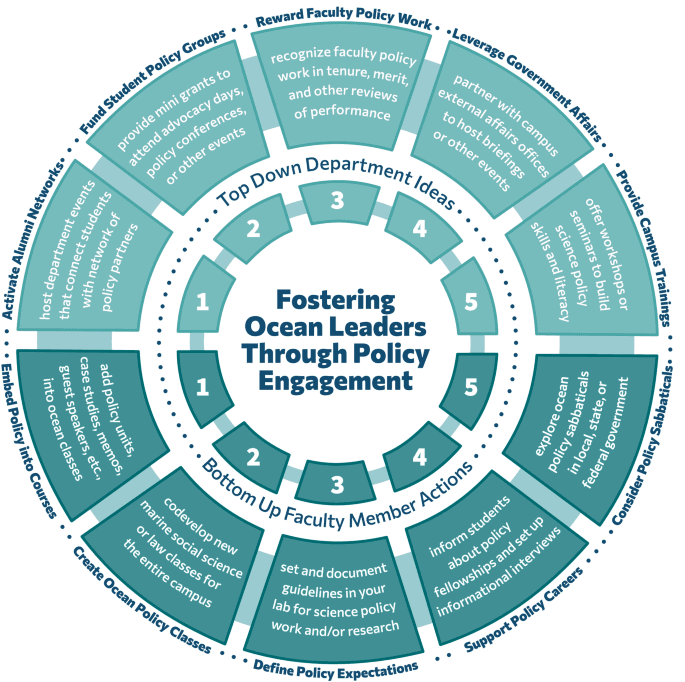
The push for science-policy integration in US academia isn't about saving the seas—it's about controlling the narrative. Unmasking the hidden agenda.
Key Takeaways
- •The focus on science-policy integration in US academia creates a centralized regulatory pipeline controlled by elite institutions.
- •This system risks marginalizing grassroots knowledge in favor of credentialed, technocratic expertise.
- •The hidden agenda is often regulatory capture, ensuring future policies favor established, large-scale economic interests.
- •Prediction: Increased regulatory complexity will consolidate power, forcing conservationists toward decentralized 'guerrilla science'.
The Ocean Policy Pipeline: Why Elite US Universities Are Manufacturing Future Regulators (And Who Gets Left Underwater)
The latest buzzword echoing from the hallowed halls of academia is science-policy integration, specifically targeting the next generation of ocean leaders. A recent piece in *Nature* highlights U.S. academic institutions actively fostering this nexus. On the surface, this sounds noble: bridging the gap between complex marine science and actionable governance. But peel back the glossy veneer of sustainability reports, and you find something far more telling: the systematic cultivation of a specialized regulatory class. This isn't just education; it's a strategic **ocean governance** pipeline being built by institutions with deep ties to existing power structures.
The Unspoken Truth: Who Really Wins in the 'Science-Policy' Game?
The immediate beneficiaries are clear: the universities securing grants and the established policy bodies needing 'expert' validation. The unspoken truth is that by centralizing the training of these 'ocean leaders' within a few elite academic spheres, we risk creating an echo chamber. These programs, often funded by interests that benefit from the status quo—think established blue economy players or government agencies seeking streamlined compliance—are designing the very experts who will write the rules. The real losers are the grassroots conservation efforts, independent researchers, and coastal communities whose practical, localized knowledge is often dismissed as 'unscientific' by this newly minted, credentialed elite. We are trading democratic input for technocratic control over crucial **marine science** decisions.
Deep Analysis: The Technocratic Capture of the Blue Economy
Why does this matter on a grand scale? Because the oceans are the next great frontier for resource extraction, climate mitigation, and geopolitical maneuvering. When the bridge between science and policy is built primarily within institutions that value theoretical modeling over boots-on-the-ground reality, the resulting regulations favor scalable, industrial solutions. This process effectively marginalizes disruptive, localized, or truly transformative conservation methods. We are seeing the professionalization of advocacy, where fluency in bureaucratic language becomes more valuable than empirical evidence gathered outside the grant-funded loop. This centralization of expertise is a quiet but powerful form of regulatory capture, ensuring that future **environmental policy** aligns with established, well-funded interests. Look at the history of large-scale environmental regulation; expertise is often co-opted to manage risk for industry, not truly protect the ecosystem.
Where Do We Go From Here? The Prediction
My prediction is stark: Within the next five years, expect a significant regulatory bottleneck. As these highly trained individuals filter into key governmental and NGO positions, we will see an explosion in complex, data-heavy regulations that are functionally impossible for small businesses or independent environmental groups to navigate or challenge. The result will be a consolidation of ocean resource management, ironically under the banner of 'evidence-based governance.' The only countermeasure will be the rise of 'guerrilla science'—unfunded, decentralized data collection efforts that actively work to bypass the slow, bureaucratic science-policy apparatus entirely. The fight for the oceans will move from the conference room to the sensor network.
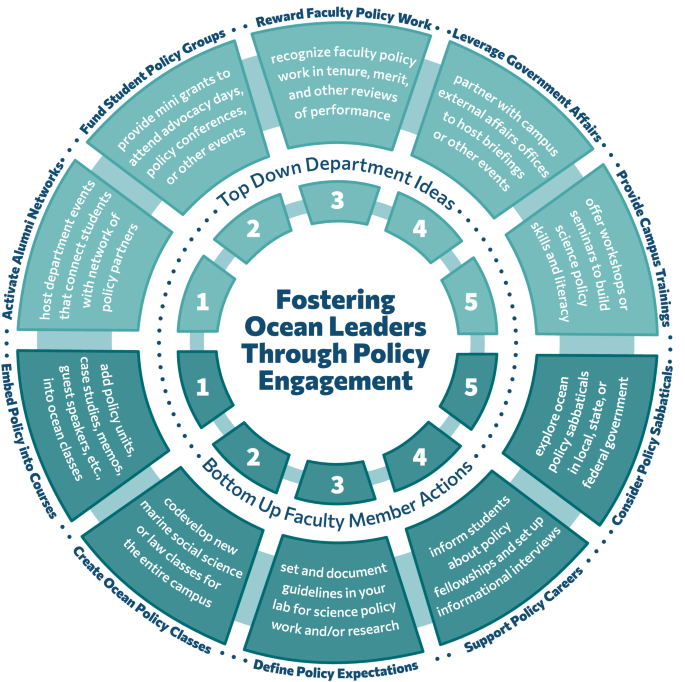
This focus on formalizing the science-policy interface is a necessary step, but its current execution is dangerously narrow. To truly save the oceans, we need more than just well-trained policy implementers; we need radical thinkers willing to challenge the very economic structures that put our seas at risk. The current pipeline is designed for maintenance, not revolution.
Frequently Asked Questions
What is the primary criticism of current science-policy support programs in ocean studies?
The main criticism is that these programs centralize expertise within elite academic circles, potentially leading to regulatory capture where the resulting policies favor established economic powers over broader ecological needs or local community input.
What does 'science-policy integration' actually mean in this context?
It refers to formal mechanisms designed to translate complex scientific findings directly into actionable governmental or organizational policies, often involving training scientists to communicate effectively with policymakers.
What is the 'blue economy' and why is it relevant?
The blue economy refers to the sustainable use of ocean resources for economic growth, improved livelihoods, and jobs while preserving the health of ocean ecosystems. It is relevant because this is the sector most impacted by new ocean governance rules.
How might future environmental policy be affected by this trend?
Future environmental policy is predicted to become highly complex, data-intensive, and bureaucratic, potentially favoring large entities capable of compliance over smaller, independent conservation efforts.
Related News

Hawking's Final Theory Isn't About Black Holes—It's About Who Controls Scientific Legacy
The true battle over Stephen Hawking's final theory isn't physics; it's about legacy curation and the multi-million dollar industry of posthumous genius.

The Hidden Cost of Compassion: Why Local Charity Support for Stem Cell Science is a Trojan Horse
Local support for stem cell research hides a massive ethical and economic battleground. Who truly profits from this 'good cause'?

The Real Reason Scientists Are Backpedaling on Intermittent Fasting: It's Not About Your Health
Intermittent fasting studies are facing a scientific reckoning. Discover the hidden conflict behind the sudden shift in the intermittent fasting debate.
