The Majorana Myth: Why This Quantum Breakthrough Will Be Stolen By Big Tech
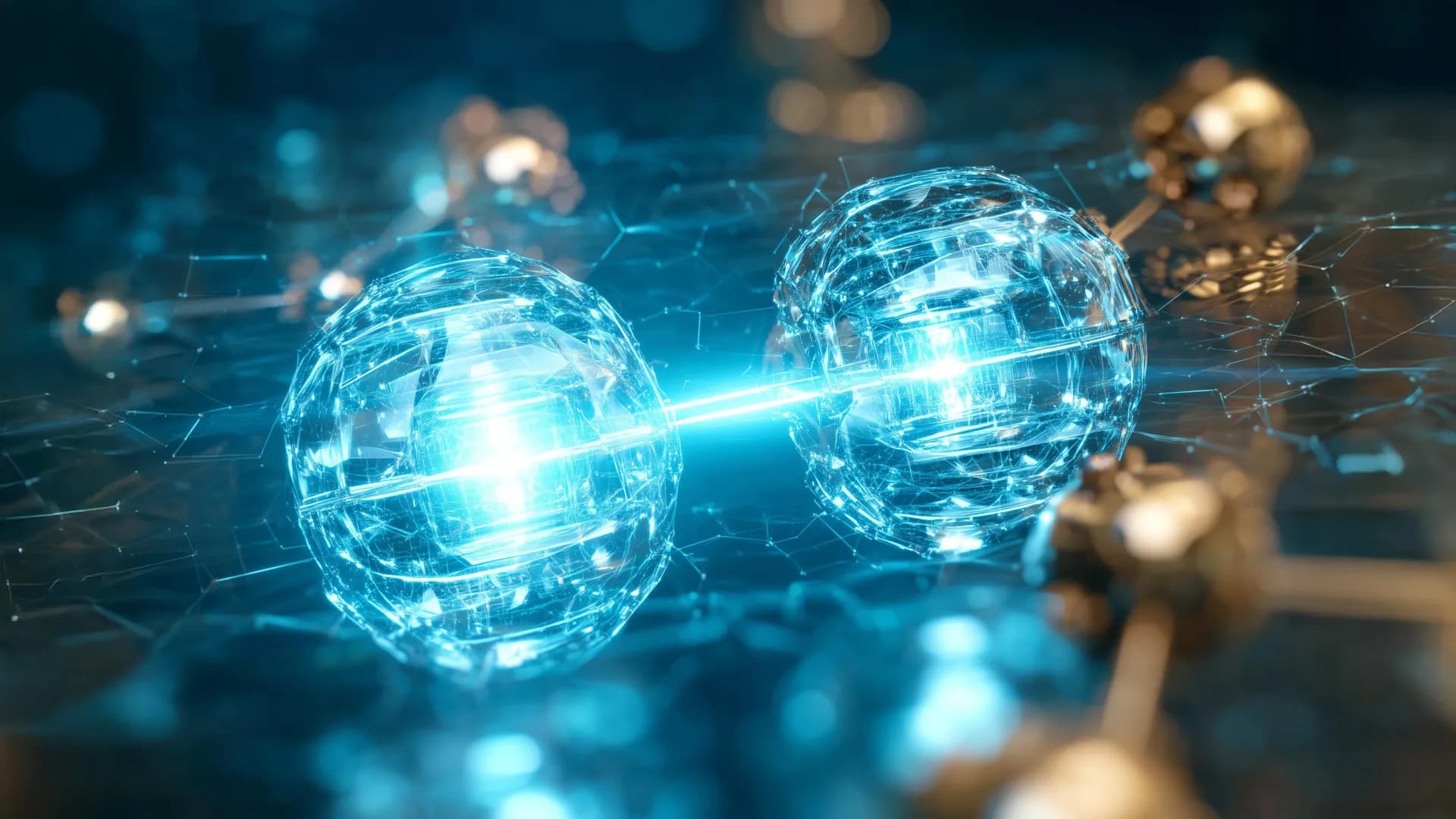
The recent Majorana qubit decoding is a watershed moment in quantum computing, but the real story is who controls the roadmap.
Key Takeaways
- •The Majorana breakthrough validates the extremely difficult topological error-correction path in quantum computing.
- •The practical result is massive validation for the corporations already heavily funding this specific, capital-intensive research.
- •This development widens the gap between quantum leaders and smaller players due to high R&D costs.
- •The next logical step is corporate acquisition to secure proprietary control over scalable fault-tolerant quantum hardware.
The Quantum Whispers Are Getting Louder: Decoding the Majorana Hype
The news cycle is buzzing about a breakthrough in Majorana qubits—those elusive, exotic particles promising fault-tolerant quantum computing. If you’re reading the press releases, this is the dawn of a new computational age. But let’s cut through the noise. Decoding the behavior of these quasi-particles, which exist as their own antiparticles, is a monumental feat of solid-state physics. It moves the needle from theoretical pipe dream to engineering challenge. The core concept? Topological protection. This isn't just faster processing; it’s the holy grail of error correction in quantum computing.
The immediate winners are the research labs and the universities publishing the papers. They secure grants, prestige, and tenure. But the real, seismic shift happens further down the line, and that’s where we need to look. This breakthrough validates a specific, incredibly expensive architectural path. It means that the behemoths—Google, IBM, Microsoft—who have heavily invested in this specific topological approach, just got a massive internal validation boost.
The Unspoken Truth: Who Actually Wins?
The unspoken truth is that this is less a victory for open science and more an acceleration of the **quantum race**. Majorana qubits are notoriously difficult to create and manipulate. They require near-absolute zero temperatures and incredibly complex semiconductor heterostructures. This complexity acts as a moat. Smaller startups or open-source initiatives simply cannot afford the capital expenditure or the sheer intellectual property density required to scale this technology.
The real winners are the IP holders and the governments backing them. Think of it: whoever perfects the scalable, stable Majorana processor controls the next generation of cryptography breaking, materials science simulation, and AI optimization. This isn't about democratizing computing; it’s about centralizing unparalleled computational power. The agenda is clear: achieve quantum supremacy first, then dictate the terms of engagement.
Deep Analysis: Why This Changes the Economic Landscape
Why does this specific qubit matter more than superconducting or trapped-ion alternatives right now? Because topological qubits offer inherent resilience against local environmental noise—the bane of all quantum efforts. If you can tame the noise, you can build a truly useful, large-scale quantum computer without needing millions of physical qubits to compensate for errors. This dramatically reduces the required physical footprint for achieving true fault tolerance.
Economically, this solidifies the 'hardware divide.' Companies succeeding here will effectively own the next decade of high-end computational modeling. Think pharmaceutical giants using these machines to design drugs in weeks instead of years, or defense contractors simulating weapons systems with previously impossible fidelity. The barrier to entry just got exponentially higher, making the gap between the 'quantum haves' and 'have-nots' a chasm.
Where Do We Go From Here? The Prediction
My prediction is bold: Within 36 months, expect a major tech conglomerate (likely one heavily invested in topological quantum mechanics) to announce a strategic acquisition of a leading Majorana research spin-off, effectively privatizing the most promising path to scalable error correction. This won't be a partnership; it will be a capture. Furthermore, expect current cryptographic standards to face an accelerated, highly secretive review by national security agencies, anticipating the threat posed by this perfected qubit architecture. The race to build the machine is almost over; the race to control its output has just begun.
Key Takeaways (TL;DR)
- Majorana qubit decoding validates the difficult, but potentially superior, topological approach to quantum computing.
- This breakthrough serves primarily to validate massive R&D investments made by tech giants, raising entry barriers.
- The real fight now shifts from physics demonstration to engineering scale-up and IP ownership.
- Expect accelerated consolidation (acquisitions) in the sector to secure this specific hardware advantage.
Frequently Asked Questions
What makes Majorana qubits different from standard qubits?
Standard qubits (like those in superconducting circuits) are prone to decoherence from environmental noise. Majorana qubits are 'topologically protected,' meaning their quantum information is stored non-locally, making them inherently more resistant to local errors, which is critical for fault-tolerant quantum computing.
Why is this breakthrough being called a 'decoding' rather than a 'creation'?
The challenge has long been confirming the existence and controlling the behavior of these quasi-particles predicted by theory. 'Decoding' implies scientists have successfully observed, measured, and understood the necessary conditions to manipulate them reliably enough for computation.
How does this relate to breaking current encryption standards?
While this step doesn't mean today's encryption is broken, achieving stable, large-scale topological quantum computers using Majorana qubits is the most promising path to building a machine powerful enough (like one running Shor's algorithm) to break RSA encryption.
Related News

The Real Reason COSI Wins Best Science Museum: It’s Not About Dinosaurs, It’s About The Talent Drain
COSI's sixth win as the top science museum hides a deeper truth about STEM investment and America's future.

The AI Steering Wheel Is Broken: Why This New 'Fix' Actually Exposes Deeper Control Problems
Forget safety updates. A new AI steering method reveals the terrifying fragility of current large language models, exposing who *really* controls the narrative.

The NSF's AI Farm Payout: Why This 'Green Tech' Initiative Is Really a Trojan Horse for Corporate Control
The NSF's new AI-ENGAGE awards promise agricultural revolution, but are they funding innovation or cementing Big Ag's data monopoly? Unpacking the true cost of 'smart farming'.

DailyWorld Editorial
AI-Assisted, Human-Reviewed
Reviewed By
DailyWorld Editorial