The Hidden Casualty of the Surgery Downgrade: Why Your Local Hospital is Already Doomed
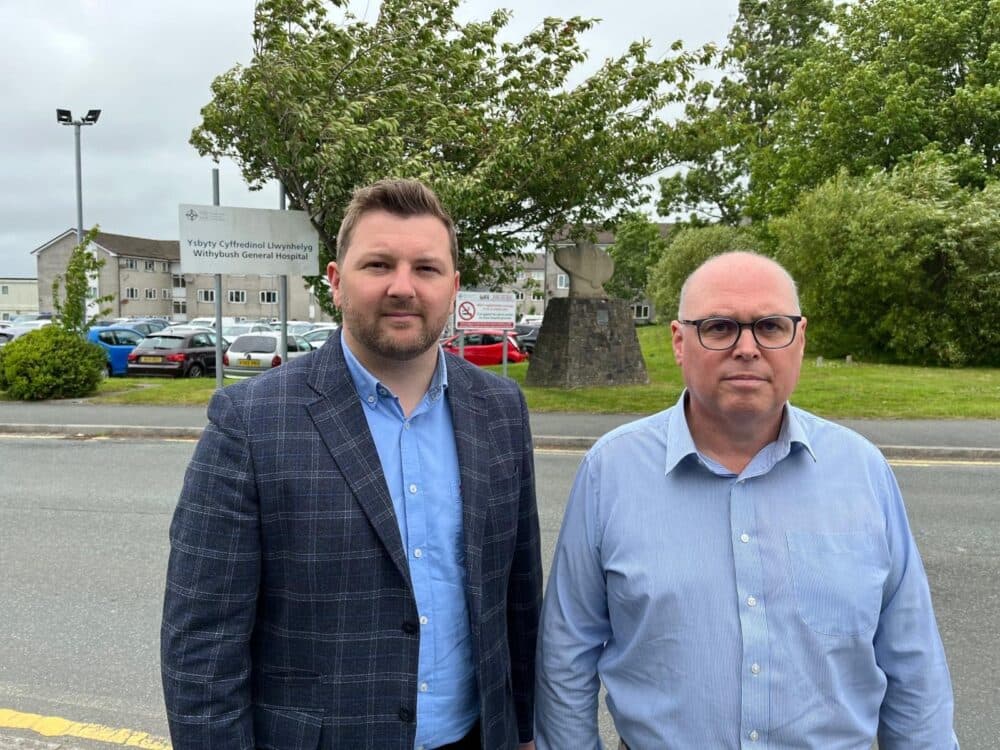
The political outrage over emergency surgery downgrades hides a brutal truth about the centralization of Welsh healthcare and patient risk.
Key Takeaways
- •The emergency surgery downgrade at Hywel Dda is a predictable result of systemic underfunding and centralization strategy.
- •The true cost is increased mortality risk in rural areas due to extended emergency transfer times.
- •Politicians' condemnation is performative; the structural issues driving the decision remain unaddressed.
- •This 'temporary' shift will likely become the permanent operational standard for regional hospitals.
The Politics of Panic: Why Condemnation Isn't Enough
The predictable chorus of political condemnation ringing out over the emergency surgery downgrade at Hywel Dda University Health Board is deafening, but ultimately hollow. When politicians rush to denounce decisions made by the very structures they fund and oversee, it signals not leadership, but desperation. The core issue isn't just a temporary shift in service; it's the **accelerating centralization of Welsh healthcare** and the institutionalized acceptance of 'safe zones' miles away from vulnerable populations.
The immediate narrative focuses on inconvenience and political point-scoring. But the unspoken truth is that this downgrade, framed as a temporary safety measure, is the inevitable endpoint of years of underinvestment and strategic service consolidation. We are witnessing the slow-motion death of true local access, disguised as prudent risk management. The key players—the health board executives—are merely executing the logic dictated by shrinking budgets and workforce crises. They are not the villains; they are the functionaries of a failing model.

The Economic Gravity Well: Who Really Wins?
Who benefits from this geographical triage? Not the patient facing a critical delay. The actual winners are the administrators who can now point to 'improved outcomes' at the centralized hub hospitals, conveniently ignoring the increased mortality risk posed by extended transfer times. This is the grim arithmetic of efficiency: sacrifice accessibility for statistical averages. For rural communities, this downgrade isn't a minor inconvenience; it's an economic death knell. Businesses rely on stable local services; when healthcare vanishes, so does investment. This trend accelerates the decline of the Welsh periphery, forcing more people to migrate toward the few remaining urban centers, thereby exacerbating the very centralization problem they claim to solve. This is a classic feedback loop of regional decline.
The target keywords—**Welsh healthcare**, **surgery downgrade**, and **patient safety**—are being weaponized. Politicians use 'patient safety' to justify the closure, while opponents use it to attack the board. Meanwhile, the underlying structural weakness in **Welsh healthcare** remains unaddressed. We need to understand the implications of this **surgery downgrade** on long-term planning.
Contrarian View: The Illusion of Choice
Many argue that modern complex surgery *requires* centralization for quality. This is partially true, but it ignores the critical first hour of trauma. A highly specialized unit an hour away is functionally useless for a patient suffering acute internal bleeding right now. The contrarian take is that the health board has created a false dichotomy: either substandard local service or excellent remote service. The real failure is the inability, or refusal, to fund a hybrid model that maintains high-level emergency response capability locally, even if elective procedures move centrally. This signals a profound lack of political will to invest adequately in regional infrastructure. Look at how other nations manage distributed emergency care; the UK model often defaults to the easiest, cheapest administrative solution.
What Happens Next? Prediction: The Permanent Shift
This is not a temporary measure. Expect the 'emergency' status to become the 'new normal' within 18 months. Once patients and staff adjust to the new geography, the political energy to reverse the decision will dissipate. The next step will be the quiet downgrading of other emergency services—maternity, stroke care—following the same pattern. The long-term prediction is the establishment of 'Super-Hubs' servicing huge geographical areas, leaving smaller, local hospitals as little more than diagnostics and minor injury centers. This structural shift will be irreversible without radical, immediate central government intervention and funding that current political realities make impossible.
Key Takeaways (TL;DR)
- The downgrade is a symptom of chronic underfunding, not just a temporary operational issue.
- Rural communities face disproportionate economic and health risks due to increased transfer times.
- Politicians are reacting politically rather than offering structural solutions for regional healthcare.
- This move is likely permanent, setting a precedent for further centralization across Wales.
Frequently Asked Questions
What exactly was downgraded at the Hywel Dda Health Board?
The board downgraded the provision of emergency surgery services, meaning complex, life-threatening trauma cases requiring immediate surgical intervention must now be transferred to a different, more centralized location, increasing travel time.
Why do politicians claim this downgrade is necessary for patient safety?
The official line is that centralization allows for higher patient volumes at fewer sites, theoretically leading to better outcomes for complex procedures. Critics argue this ignores the critical risks associated with extended transfer times for acute emergencies.
What is the long-term impact of this centralization on rural Wales?
The long-term impact is the erosion of local service infrastructure, potentially leading to depopulation as essential services move away, making rural areas less viable for residents and businesses alike.
Are there alternative models for maintaining emergency surgery locally?
Yes, alternative models focus on robust local stabilization units supported by rapid, advanced transfer logistics, often seen in Scandinavian or Canadian systems, though these require significantly higher, sustained investment than the current Welsh model.
Related News
The Hidden Cost of Diabetes Tech: Why 'Affordable Access' Is a Trojan Horse for Pharma Profit
The unified call for affordable diabetes technology masks a deeper regulatory battle. Who truly benefits from this 'access' push?

The Accreditation Shell Game: Why the Huntsman Mental Health 'Win' is Actually a Red Flag for Future Healthcare Education
The University of Utah's new accreditation isn't just a win; it signals a dangerous corporatization of vital **mental health education** and **healthcare training**.

The Digital Ghost Town: Why New Zealand's Pae Ora Health IT Overhaul Is Failing the Front Lines
The massive Pae Ora health restructure promised digital transformation, yet frontline performance lags. We expose the hidden bureaucratic inertia crushing IT progress.
