The Climate Lie That Just Rewrote Easter Island's Collapse: It Wasn't Just Deforestation
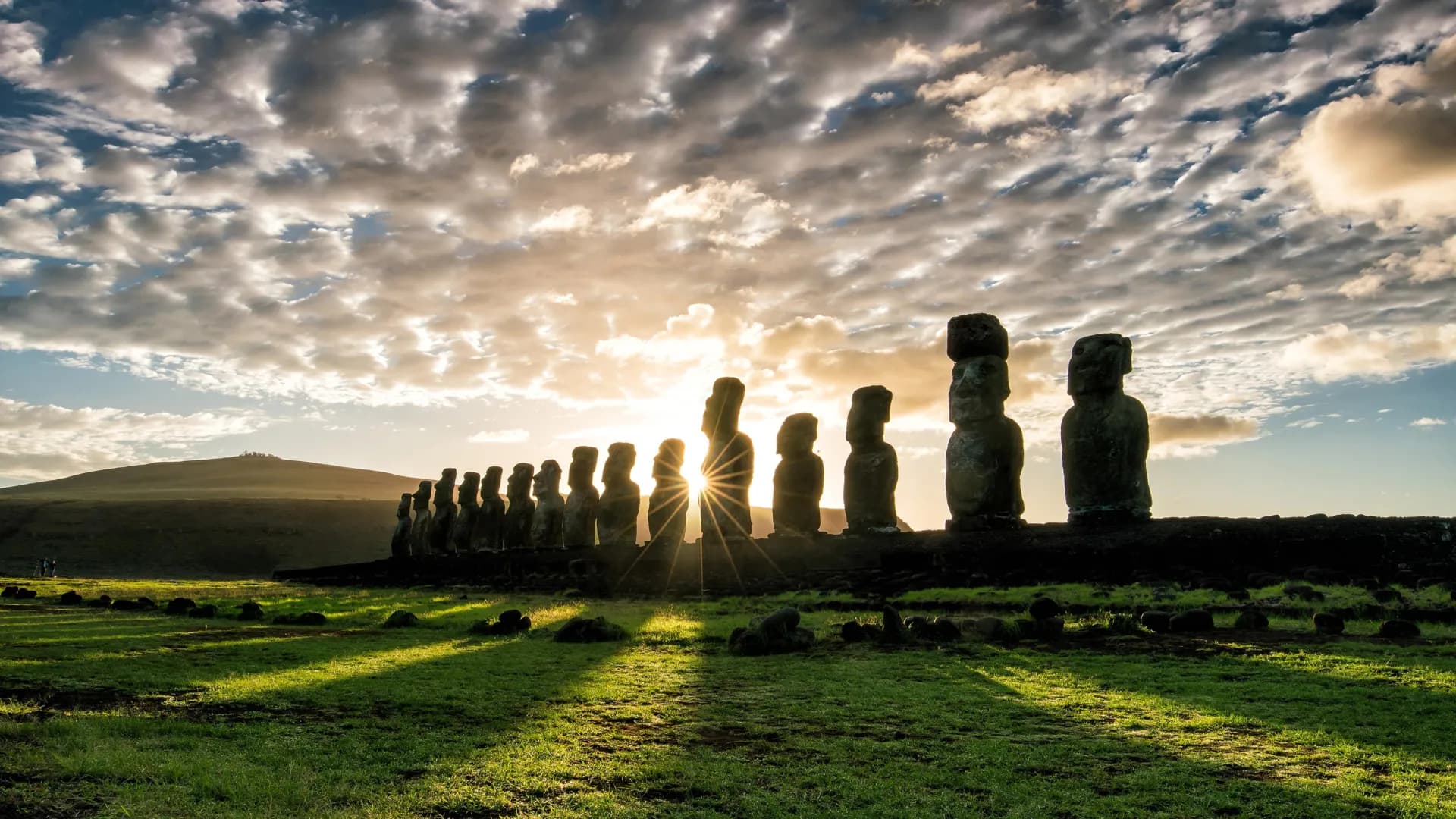
New science on the Easter Island climate shock reveals a deeper, darker truth about ancient societal collapse and modern climate denial.
Key Takeaways
- •New evidence suggests a sudden, extreme climate shock (like prolonged drought) caused the Rapa Nui societal collapse, not just gradual deforestation.
- •The historical narrative of pure self-inflicted ecological doom is being dismantled, shifting blame partially to unpredictable external forces.
- •This history serves as a warning: modern complex societies are highly vulnerable to rapid, chaotic climate events, not just slow degradation.
- •The focus must now shift from mere emissions reduction to building resilience against sudden environmental bottlenecks.
The narrative surrounding Rapa Nui, or Easter Island, has always been a neat, tragic cautionary tale: Ecological Suicide. A paradise, stripped bare by its own inhabitants until the towering Moai statues lay toppled, mirroring the collapse of their civilization. But the latest scientific deep-dive into the island’s paleoclimate data isn't just refining this story; it's detonating it.
The Unspoken Truth: A Climate Hammer Blow, Not Just a Sledgehammer
The prevailing, politically convenient narrative suggests the Rapa Nui people were simply too greedy, too shortsighted—a perfect allegory for modern environmental recklessness. However, new research points squarely at a colossal, sudden climate shock event that hit the island centuries ago. This wasn't a slow, linear decline caused by chopping down the last tree. This was a sudden, devastating environmental trauma—likely a prolonged, extreme drought cycle.
Who benefits from this shift? The narrative of self-inflicted doom allows external observers to lecture indigenous or isolated populations without accountability for external forces. If the collapse was purely internal, it’s an easy moral lesson. If it was a massive, unpredictable climate shift—a historical analogue to our current volatility—it undermines the simplistic 'blame the victim' framework. The real winner here is the historical revisionist who prefers clean causality over messy, chaotic reality.
This new data suggests that while deforestation certainly weakened the social fabric, the killing blow was delivered by forces beyond the islanders' control. Think of it like this: poor fiscal management (deforestation) makes a company vulnerable, but a sudden market crash (the climate shock) forces bankruptcy. The two are intertwined, but the latter dictates the timing and severity of the final implosion.
Deep Analysis: Why This Matters for Modern Societies
The implications for our current global climate discussion are profound. We are obsessed with linear projections—if we cut X emissions by Y date, we achieve Z outcome. Rapa Nui, according to this research, proves that history rarely follows a straight line. Ancient societies were often far more resilient than we give them credit for, capable of managing resources for centuries. Their undoing was not gradual mismanagement; it was an unforeseen environmental bottleneck.
This forces us to confront our own fragility. We are globalized, interconnected, and arguably more specialized than the Rapa Nui ever were. If a sudden, multi-year drought or an unexpected ocean current shift—both entirely possible under current warming models—hits major agricultural hubs simultaneously, our complex systems will not just strain; they will shatter. The Moai statues becoming symbols of human hubris is comforting; the statues becoming symbols of vulnerability to chaotic natural forces is terrifying. The scientific paper itself details these complex proxy records, showing the abruptness of the change.
What Happens Next? The Prediction
Expect a pivot in how we discuss ancient collapses. The focus will shift from simplistic resource depletion models to complex **paleoclimate** vulnerability assessments. Furthermore, this discovery will be weaponized by those skeptical of climate change mitigation efforts. They will argue: 'If Rapa Nui collapsed despite minimal impact, why worry about our industrial output?'
The contrarian prediction: The focus on Rapa Nui will ultimately serve as a stark warning, not an excuse. Governments and planners will quietly begin prioritizing resilience against sudden shocks (water security, localized food networks) over purely efficiency-based global supply chains. The lesson isn't 'we can't stop climate change,' but 'we must prepare for the chaos that is inevitable, regardless of our actions today.' The era of slow-motion environmental decline is over; the era of sudden shocks has begun. We are all Rapa Nui now.
Frequently Asked Questions
What was the traditional theory for Easter Island's collapse?
The traditional theory, popularized for decades, blamed the Rapa Nui population for massive deforestation, leading to soil erosion, famine, and civil war, symbolized by the toppling of the Moai statues.
What evidence supports the new climate shock theory?
Scientists analyzed sediment cores and lake bed data, finding sharp, abrupt shifts in temperature and precipitation records that correlate with periods of societal stress, indicating a sudden environmental trauma rather than a slow decline.
How does this change our understanding of ancient societies?
It suggests that ancient societies, which often seemed primitive, were capable of long-term sustainability until hit by truly catastrophic, unpredictable natural events, challenging the narrative that they were inherently incapable of resource management.
What is the significance of the Moai statues in this context?
The Moai were status symbols. Their toppling during the crisis suggests a breakdown in the political and religious authority that commanded their construction, likely accelerated when environmental failure (drought) undermined the leaders' perceived divine mandate.
Related News
Hawking's Final Theory Isn't About Black Holes—It's About Who Controls Scientific Legacy
The true battle over Stephen Hawking's final theory isn't physics; it's about legacy curation and the multi-million dollar industry of posthumous genius.

The Hidden Cost of Compassion: Why Local Charity Support for Stem Cell Science is a Trojan Horse
Local support for stem cell research hides a massive ethical and economic battleground. Who truly profits from this 'good cause'?

The Real Reason Scientists Are Backpedaling on Intermittent Fasting: It's Not About Your Health
Intermittent fasting studies are facing a scientific reckoning. Discover the hidden conflict behind the sudden shift in the intermittent fasting debate.

DailyWorld Editorial
AI-Assisted, Human-Reviewed
Reviewed By
DailyWorld Editorial