The Carbon Fiber Conspiracy: Why Speed Skating's Blade Tech Is Rigged Against the Athlete
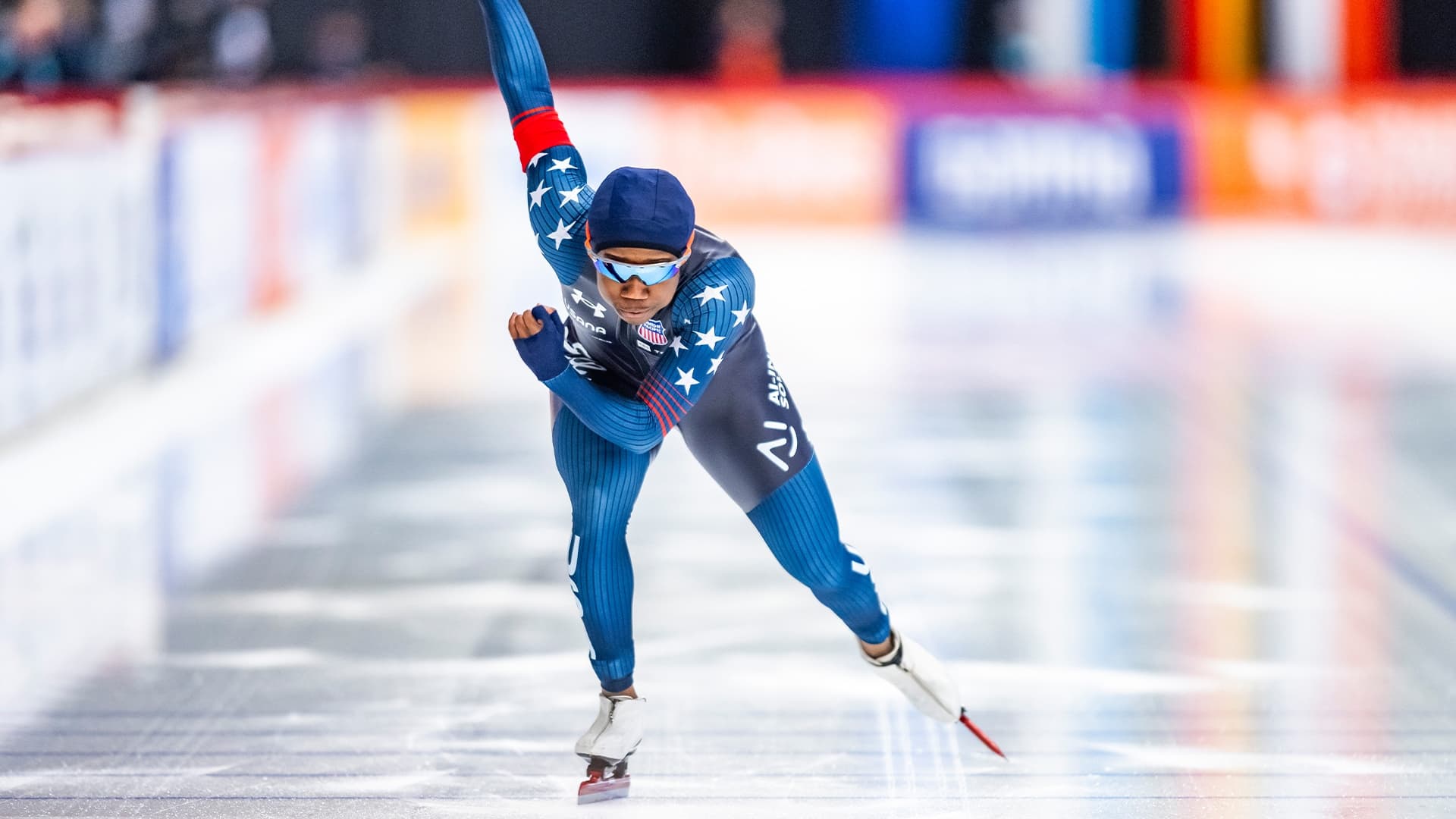
Beyond the ice, the real battle in speed skating is fought in the machine shop. Unpacking the blade tech secrets that dictate Olympic victory.
Key Takeaways
- •The technology gap in speed skate blades is now a greater determinant of victory than marginal differences in athlete training.
- •Elite access to proprietary, continuously iterated blade holders and mounting systems creates an economic barrier to entry.
- •Governing bodies are focused on superficial rules while ignoring the deep technological stratification.
- •The next major innovation will come from computational modeling and independent 'Blade Whisperer' consultants, not traditional coaching.
The Ice is a Lie: Who Really Controls Speed Skating Gold?
We watch the blur of blades, marveling at the human engine pushing past 60 km/h. But the narrative—the heroic struggle of human conditioning—is a carefully curated distraction. The true, unspoken truth of modern speed skating performance isn't found in lung capacity or muscle fiber type; it's found in the metallurgy of a few millimeters of steel. This is less a sport of pure athleticism and more a high-stakes, high-tech arms race where the IOC has effectively outsourced victory to material science.
The focus on blade stiffness, rocker geometry, and the infamous 'clap skate' mechanism is standard fare for any Olympic science breakdown. But the critical angle everyone avoids is the stratification of access. Only a handful of elite manufacturers—often backed by national sporting bodies with deep pockets—have the R&D budget to constantly iterate on these microscopic advantages. For the developing nation or the scrappy independent skater, mastering the speed skating science is financially impossible. The equipment gap is now wider than the talent gap.
The Hidden Cost of a Millimeter: The Economics of Edge
Consider the blade holder, the chassis upon which the steel rides. We talk about carbon fiber boots providing stiffness, but the subtle adjustments in the holder’s torsional rigidity—often proprietary composites or custom-milled aerospace aluminum—translate directly into milliseconds saved per lap. A slight increase in torque transfer means less energy wasted fighting the ice. This isn't just optimization; it's engineering dominance. When an athlete shaves off a tenth of a second, it’s often not because they trained harder in the last month, but because their team secured a new prototype holder months before it was publicly released.
The governing bodies, obsessed with 'leveling the playing field' through superficial rule changes, ignore the elephant in the room: technological parity. They police wax on skis but allow proprietary, black-box blade technology to dictate podium placements. This creates a closed loop where only those already at the top can afford the marginal gains required to stay there. It's wealth concentrating power, disguised as athletic achievement.
What Happens Next? The Rise of the 'Blade Whisperers'
The future of speed skating will pivot entirely away from physiological training and towards data science and manufacturing partnerships. My prediction? We will see the emergence of specialized, independent 'Blade Whisperer' consulting firms. These aren't coaches; they are computational engineers who treat the skate setup like an F1 car suspension. They will use advanced pressure mapping and AI simulations to create personalized blade profiles that are theoretically superior to off-the-shelf pro models.
The governing bodies will eventually be forced to intervene, not by banning materials, but by mandating open-source designs or standardized component specifications. Until then, the real competition isn't between skaters; it’s between the engineering labs trying to keep their innovations secret. The pursuit of speed is now fundamentally a pursuit of proprietary knowledge.
Frequently Asked Questions
What is the clap skate mechanism and why is it important?
The clap skate utilizes a hinge mechanism, allowing the blade to stay on the ice longer during the push-off phase, significantly increasing efficiency and speed compared to traditional fixed skates. It revolutionized the sport after its introduction.
How much does blade stiffness affect speed skating performance?
Blade stiffness is crucial as it directly impacts the transfer of power from the skater's leg through the blade to the ice. A stiffer, properly tuned blade minimizes energy loss due to flexing, saving critical milliseconds over a long race.
Are there regulations controlling speed skating blade technology?
Regulations exist primarily for overall skate dimensions and the mechanism itself (like the clap skate system). However, the specific materials and proprietary geometries of the blade holders and the steel itself are often loosely regulated, allowing for significant technological advantages among sponsored athletes.
What is the primary material used in modern speed skate blades?
Modern speed skate blades are typically made from high-grade, hollow-ground steel or carbon steel alloys chosen for their hardness, edge retention, and low friction coefficient on the ice.


DailyWorld Editorial
AI-Assisted, Human-Reviewed
Reviewed By
DailyWorld Editorial