The $15.5 Million Lie: Why Syndex Bio’s mcPCR Hype Masks a Looming Tech Graveyard

Syndex Bio's $15.5M seed funding and mcPCR reveal the truth about next-gen sequencing bottlenecks.
Key Takeaways
- •Syndex Bio's mcPCR is an incremental improvement, not a fundamental disruption to sequencing bottlenecks.
- •The $15.5M seed funding primarily benefits early investors and validates the conference circuit hype.
- •True future growth in diagnostics lies in bypassing amplification (e.g., direct biosensors), not refining PCR.
- •The likely endgame for Syndex is acquisition by an established player, slowing market penetration.
The Hook: Are We Still Chasing Incrementalism in Genomics?
The fanfare around Syndex Bio’s microfluidic quantitative PCR (mcPCR) technology, unveiled at AGBT 2026 after securing a hefty $15.5 million seed round, smells less like a breakthrough and more like a desperate attempt to dominate a saturated market. In the relentless world of genomic sequencing, where Moore’s Law meets biological complexity, incremental improvements are no longer enough. The real story isn't the funding; it’s what this technology implies about the current state of high-throughput molecular diagnostics.
Let’s cut through the press release gloss. mcPCR claims superior sensitivity and throughput by miniaturizing the PCR process. Sounds great, right? But the truth is, the entire field is grappling with the sequencing bottleneck. We can generate terabytes of raw data faster than ever, but the cost, time, and complexity of reliable library preparation and initial amplification—the very steps mcPCR targets—remain astronomical for true point-of-care adoption. Syndex is trying to polish a Model T engine while everyone else is building rockets.
The Unspoken Truth: Who Really Wins From This Hype Cycle?
The immediate winners are clear: the venture capitalists who just cashed in on the seed round, and the academic conferences like AGBT, which thrive on showcasing 'disruptive' tech to attract sponsors. The unspoken loser? The clinical labs waiting for a true paradigm shift in molecular diagnostics that doesn't require a PhD and a six-figure machine to operate.
The real battle isn't about squeezing a few more cycles out of PCR; it's about moving beyond sequencing altogether toward faster, cheaper, direct detection methods. Syndex Bio is betting heavily on the persistence of PCR, a technology born in the 1980s. While their miniaturization is clever engineering, it’s an evolutionary step, not a revolutionary leap. Consider the regulatory hurdles alone; shoehorning a novel microfluidic platform into existing clinical workflows is a multi-year, multi-million-dollar quagmire that eats margins alive. This isn't just about better amplification; it's about market capture against established giants.
Deep Analysis: The Cost of Legacy Tech
Why does this matter beyond the biotech bubble? Because the promise of truly personalized medicine hinges on rapid, ubiquitous diagnostic testing. If Syndex succeeds, they will likely be bought out by a larger entity—Illumina or Thermo Fisher—who will then integrate the tech slowly, maintaining their existing revenue streams from reagents and consumables. This is the classic cycle: fund innovation just enough to acquire it, then manage its integration to protect incumbent profits. The $15.5 million is likely runway to prove viability for acquisition, not to build an independent, world-dominating platform. The PCR technology market is mature; disruption requires killing the core process, not refining it.
What Happens Next? A Prediction
My prediction: Syndex Bio will successfully prove superior performance in specialized research settings over the next 18 months. They will secure a Series A based on validation studies, but widespread clinical adoption will stall. The real disruption will come from companies focusing on CRISPR-based detection or advanced biosensor arrays that bypass amplification entirely. Syndex will either pivot aggressively toward becoming a highly profitable reagent supplier for existing platforms, or they will become a cautionary tale of over-optimization in a field hungry for true simplification. Keep your eye on direct-read technologies, not just better tubes for old science.
Gallery

Frequently Asked Questions
What is mcPCR technology and why is it significant?
mcPCR, or microfluidic quantitative PCR, involves miniaturizing the Polymerase Chain Reaction process onto small chips. Its significance lies in potentially reducing reagent costs and increasing sample throughput compared to traditional benchtop PCR machines.
What is the 'sequencing bottleneck' in genomics?
The sequencing bottleneck refers to the fact that while DNA sequencing machines can generate data rapidly, the preceding steps—sample preparation, library construction, and amplification—often remain slow, expensive, and complex, limiting the speed of true genomic analysis.
What is AGBT and why is its mention important?
AGBT stands for Advances in Genome Biology and Technology, a premier, high-profile scientific conference where major players in genomics often announce critical new technologies and funding milestones.
How does this technology relate to personalized medicine?
Rapid and affordable molecular diagnostics, like advanced PCR systems, are foundational to personalized medicine, enabling faster identification of genetic markers for targeted therapies and disease screening.
Related News

The Quiet Coup: Why 'Agentic AI' Will Destroy the Mid-Tier Data Scientist
Forget better models. Agentic AI is a systemic shift that threatens to automate experimentation itself, making mid-level data science obsolete.
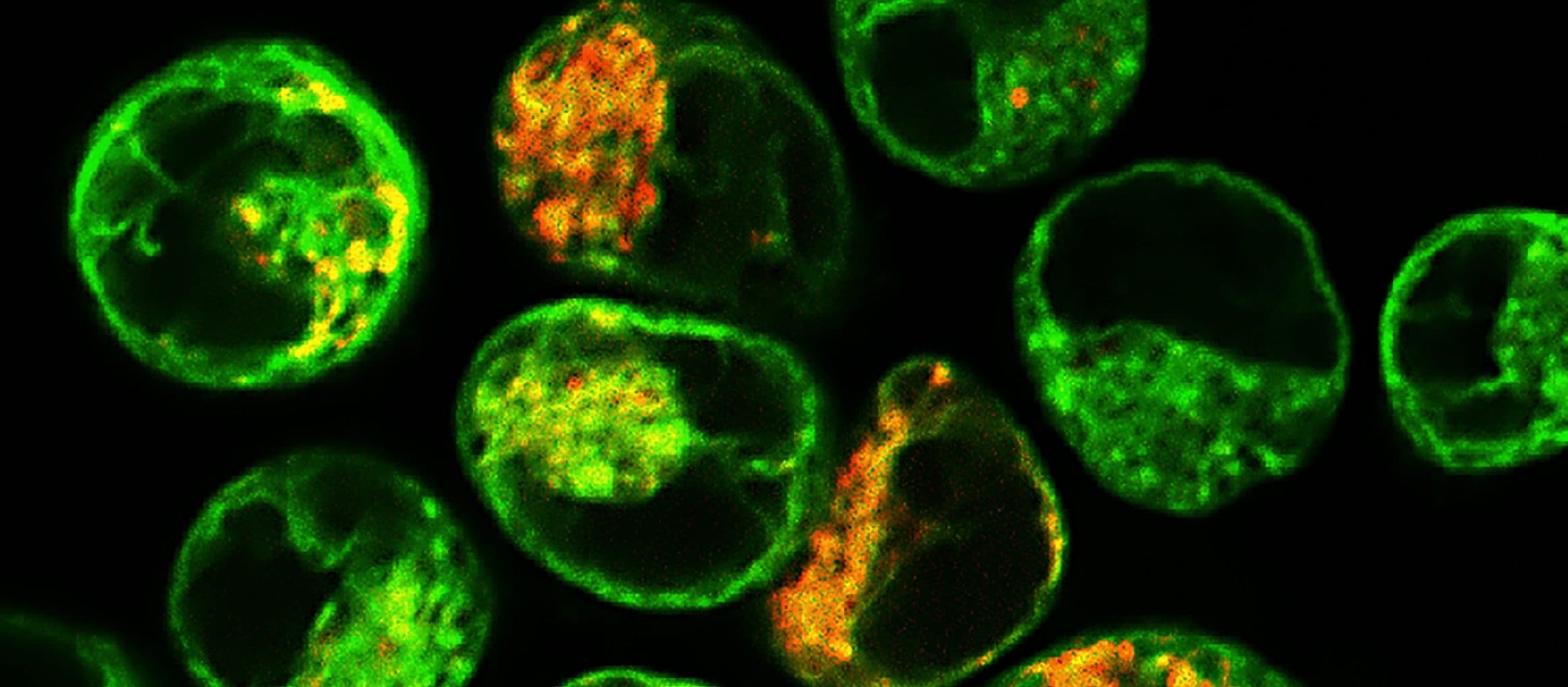
The Fluorescent Lie: Why This New Drug Tracking Tech Is Actually a Gift to Big Pharma
New cellular imaging is hailed as a breakthrough, but the real story behind this **drug response technology** is who controls the data pipeline.
The Fluorescent Lie: Who Really Profits When We Can See Drugs Fail in Real-Time?
A new fluorescent technology promises drug response tracking, but the real story is about Big Pharma's control over clinical trial visibility.

DailyWorld Editorial
AI-Assisted, Human-Reviewed
Reviewed By
DailyWorld Editorial