Forget Silicon Valley: The Real Tech Revolution Started 160,000 Years Ago in China
New evidence rewrites human innovation history. Discover how ancient hafted technology in Central China reveals a forgotten blueprint for human technological advancement.
Key Takeaways
- •Stone tools bound to handles (hafted technology) found in Central China date back as far as 160,000 years.
- •This discovery challenges existing timelines, suggesting complex engineering cognition arose earlier in Asia than previously believed.
- •Hafting represents a critical cognitive leap, enabling superior leverage and efficiency for hunting and processing.
- •The finding implies technological superiority in these ancient populations, influencing migratory success.
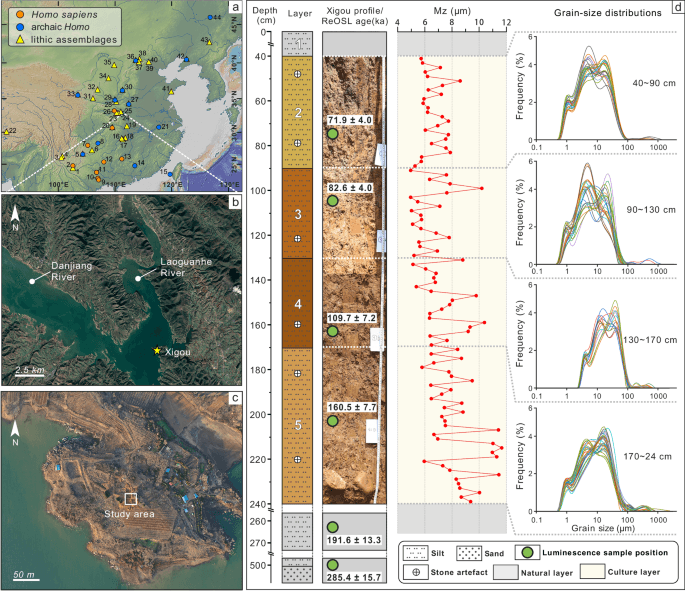
Stop looking at your smartphone. The true story of technological innovation isn't in the latest M3 chip; it’s carved in stone, buried deep in Central China, and it’s over 160,000 years old. A recent study published in Nature has unearthed irrefutable proof of sophisticated hafted technology—the binding of a stone tool head to a handle—dating back to between 160,000 and 72,000 years ago. This isn't just archaeology; it’s a radical reassessment of when and where humanity developed the critical leap from simple hand-held stones to complex, composite tools.
The Unspoken Truth: Efficiency Over Genius
What is the unspoken truth here? It’s that our narrative of progress is hopelessly Eurocentric and recent. We celebrate the Industrial Revolution, the microchip, and AI as singular explosions of genius. But this Chinese discovery confirms that the fundamental concept—creating leverage and applying force through an intermediary object (the haft)—was mastered by early *Homo sapiens* in Asia tens of thousands of years before widely accepted timelines. The winning secret wasn't a sudden flash of brilliance; it was the relentless, incremental pressure of survival forcing human technological advancement.
Who wins? The evidence wins. It shatters previous models suggesting this complexity only emerged later, perhaps in Africa or Europe. Who loses? The romanticized notion of linear, singular evolutionary paths. This suggests parallel, independent innovation driven by environmental necessity. These ancient artisans weren't just chipping rocks; they were engineers calculating stress points and material science.
Deep Analysis: Why Hafting Changes Everything
Hafting is the difference between throwing a rock and throwing a spear. It’s the difference between smashing a nut and efficiently butchering large game. It dramatically increases striking power, accuracy, and safety for the user. In the grand scheme, this isn't about old axes; it’s about cognitive load. Mastering hafting requires abstract thought: visualizing an object that doesn't yet exist (the assembled tool) and understanding the mechanics of binding materials (resin, sinew) to stone. This level of planning and material science indicates a cognitive capacity we often reserve for much later periods of human development. It suggests that the neurological hardware for complex engineering was fully operational in these populations far earlier than previously credited.
This forces us to re-examine migration patterns. If complex toolmaking was occurring in Central China this early, it radically alters our understanding of which groups were technologically superior and where the most adaptive populations resided. Compare this ancient ingenuity to the rudimentary tools found in some contemporary sites elsewhere; the competitive edge provided by these composite tools cannot be overstated. For more on the significance of early tool use, see the general principles of lithic technology on Wikipedia.
What Happens Next? The Prediction
The next logical step for archaeologists will be a frantic, global re-dating of known sites. If Central China harbors this level of complexity, other under-examined regions—Siberia, Southeast Asia—will be scoured for similar evidence. Prediction: Within five years, we will find evidence of even earlier, more complex composite tools (perhaps involving fire-hardened wood or early composite arrows) dating past 200,000 years ago in Asia, forcing a complete redrawing of the global technological timeline. The race is now on to prove that the cradle of complex engineering wasn't where we thought it was.
The current focus on AI and quantum computing distracts us from the foundational truth: human technological advancement is a marathon, not a sprint, and the starting gun fired far earlier than our textbooks admit. These stone tools are the original disruptive technology. You can read more about the broader context of early human migration on the National Geographic website.
Gallery

Frequently Asked Questions
What exactly is hafted technology?
Hafted technology refers to the process of securely attaching a sharpened stone or bone tool-head (like a spear point or scraper) to a handle or shaft using binding materials such as resin, sinew, or plant fibers. It turns a simple hand-tool into a composite weapon or implement.
Why is the 160,000-year date significant for human innovation?
This date pushes back the established timeline for complex, multi-part tool assembly. It indicates advanced planning and material science capabilities in early human populations much earlier than many mainstream models previously allowed, suggesting parallel or leading technological development in this region.
Does this mean early humans in China were smarter than others?
Not necessarily 'smarter,' but it proves they were highly adaptable and solved critical engineering problems independently. Tool complexity often correlates with environmental pressure and successful adaptation; these findings show a high level of problem-solving in that geographic area during that time frame.
What is the connection between ancient tools and modern technology?
The connection lies in the principle: modern technological advancement, from microprocessors to aerospace engineering, relies on the same foundational concept demonstrated by hafting—the creation of leverage and composite systems to amplify basic function.
