Forget Fusion: The Quiet War Between Westinghouse and Oklo Is About Who Actually Controls America's Energy Future
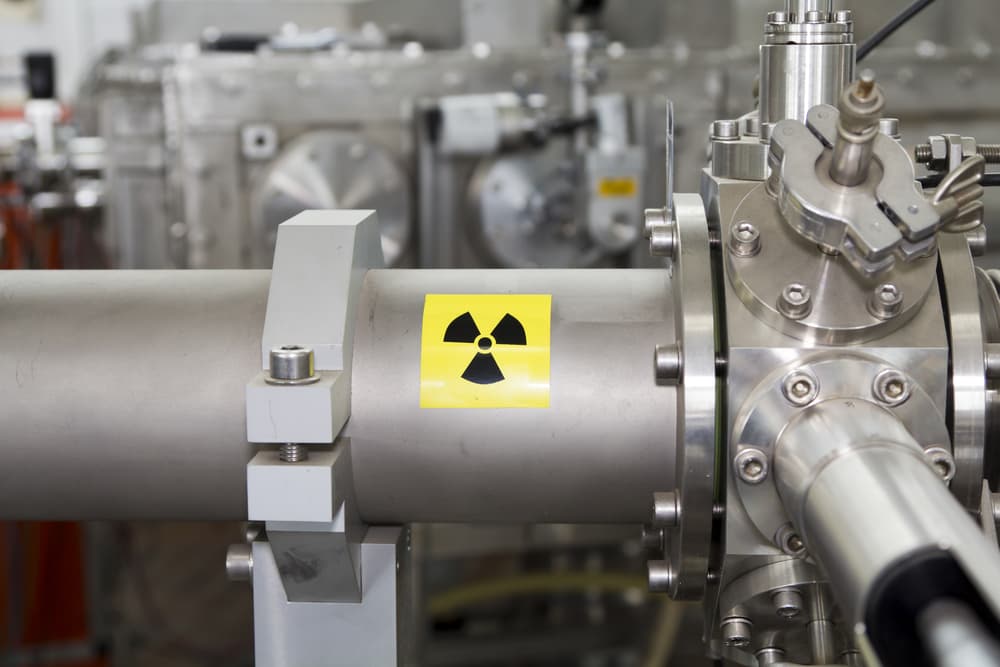
The race for **small modular reactor (SMR) technology** isn't just about clean power; it's a geopolitical battle where established giants clash with disruptive startups like Oklo for **nuclear innovation** dominance.
Key Takeaways
- •The SMR race is fundamentally a regulatory battle over licensing speed, not just engineering superiority.
- •Westinghouse represents the incumbent system; Oklo represents the disruptive regulatory bypass.
- •The likely outcome is a bifurcated market with two incompatible SMR standards, increasing complexity.
- •The true cost burden remains hidden, transferred via government funding regardless of which technology prevails.
The Hook: Why Your Portfolio Is Missing the Real Nuclear Story
Everyone is looking up, dreaming of limitless fusion energy, but the real seismic shift in **energy technology** is happening underground, in the concrete bunkers housing the next generation of fission reactors. The narrative being sold—that this is a harmonious race toward decarbonization—is a comforting lie. The reality is a cutthroat competition, epitomized by the standoff between the legacy titan, Westinghouse, and the agile disruptor, Oklo. This isn't just about megawatts; it's about regulatory capture, intellectual property hoarding, and who writes the rules for the next century of power generation.
The Meat: Legacy vs. Disruption in SMRs
Westinghouse, steeped in the complex, expensive history of gigawatt-scale nuclear projects, is pivoting hard toward its Small Modular Reactor (SMR) designs. They represent the establishment: proven supply chains, deep government ties, and a cautious, incremental approach to safety and deployment. Their strength is inertia; their weakness is cost and speed.
Then there is Oklo. They are the Silicon Valley archetype applied to nuclear engineering. Focused on microreactors and advanced fuels, Oklo champions speed, flexibility, and a radically different regulatory pathway. They are betting that the cumbersome, decades-long licensing process that plagued older designs must be bypassed entirely for SMRs to be economically viable. This is where the conflict intensifies. If Oklo succeeds in normalizing its streamlined approach, it threatens to devalue the decades of regulatory infrastructure Westinghouse relies upon.

The Unspoken Truth: Who Really Wins?
The winner isn't necessarily the company with the 'best' reactor; it's the one that successfully navigates the Department of Energy (DOE) and the Nuclear Regulatory Commission (NRC). **The hidden agenda is regulatory control.** Westinghouse thrives in the existing bureaucratic ecosystem. Oklo needs that ecosystem to fundamentally change to prove its economic model. If regulators bend too far for the startups, they risk alienating the established players who still form the bedrock of global nuclear capability. If they don't bend, SMRs remain an academic curiosity, not a scalable solution.
The real losers? The consumers who will be saddled with financing the massive first-of-a-kind deployment costs, regardless of which technology wins. The promise of cheap, distributed power masks the reality of massive upfront capital expenditure and technology risk transfer onto the public sector.
Where Do We Go From Here? The Prediction
Expect a regulatory compromise that favors neither side fully. Westinghouse will secure key government development contracts, validating their established methodology for the first wave of deployments, likely for defense or remote industrial sites. However, Oklo and similar microreactor developers will force the NRC to create a parallel, faster track for smaller, inherently safer designs. The market will bifurcate: large, subsidized utility-scale SMRs (Westinghouse-aligned) and smaller, factory-built, rapid-deployment units (Oklo-aligned). This bifurcation will create volatility in **nuclear innovation** stocks as investors try to guess which regulatory path will receive the next tranche of subsidies. Ultimately, the US will end up with two distinct, potentially incompatible, supply chains—a recipe for inefficiency, but a boon for geopolitical leverage.

For deeper context on the regulatory hurdles facing advanced nuclear development, see the analysis from the U.S. Energy Information Administration (EIA). The global implications for energy independence are also discussed by leading geopolitical analysts at the Reuters wire.
Gallery

Frequently Asked Questions
What is the main difference between Westinghouse's SMR approach and Oklo's?
Westinghouse focuses on larger, proven designs integrated into existing utility structures, requiring established regulatory pathways. Oklo focuses on smaller, factory-built microreactors designed to operate with radically streamlined, faster regulatory approval processes.
Why is regulatory control considered the 'hidden agenda' in SMR competition?
The company that successfully sets the standard for licensing and deployment—whether it's the traditional slow route or a new fast track—gains massive competitive advantages in securing government contracts and market share for the next 50 years.
Are SMRs a viable competitor to renewable energy sources like solar and wind?
SMRs are positioned as baseload power competitors, offering 24/7 dispatchable energy that renewables currently cannot provide without massive storage solutions. They aim to replace retiring coal and gas plants, not necessarily solar farms.
What does the term 'nuclear innovation' imply in the context of these two companies?
For Westinghouse, it means incremental improvements to proven Generation III+ technology. For Oklo, it implies fundamental innovation in fuel cycles, reactor size, and factory production methods to drastically reduce deployment timelines and costs.
